

Refresh only what changed. Use a little water for flattened or misshapen curls, a trace of leave-in cream for rough or frizzy sections, or 1 to 2 drops of finishing oil for clean, dry lengths and ends. If the scalp feels oily, itchy or coated, wash instead of adding another layer.
A refresh should be smaller than wash-day styling. Reapplying the original amount across the entire head can leave yesterday's product underneath today's product, even when only two curls and the ends needed attention.
First decide what actually needs fixing
Stand in natural light and look at the hair before reaching for a bottle.
| What you notice | First route to try |
|---|---|
| A few curls are flattened or stretched | Light water refresh and reshaping |
| The pattern is mostly intact but the surface is frizzy | Targeted water, then a trace of approved leave-in if needed |
| The ends feel rough but the curls still hold | Controlled dry-hair cream or measured finishing oil |
| The roots are oily but the lengths look fine | Dry shampoo may absorb oil temporarily; plan a proper wash |
| Hair feels coated, sticky, flaky or hard to reshape | Wash and reset rather than adding more |
| Scalp is itchy, sore, burning or persistently flaky | Stop layering products and address the scalp concern |
The best refresh may use no new product. Water, hands and a few minutes of drying can be enough when the original styling layer still has usable hold.
Route 1: refresh flattened curls with water
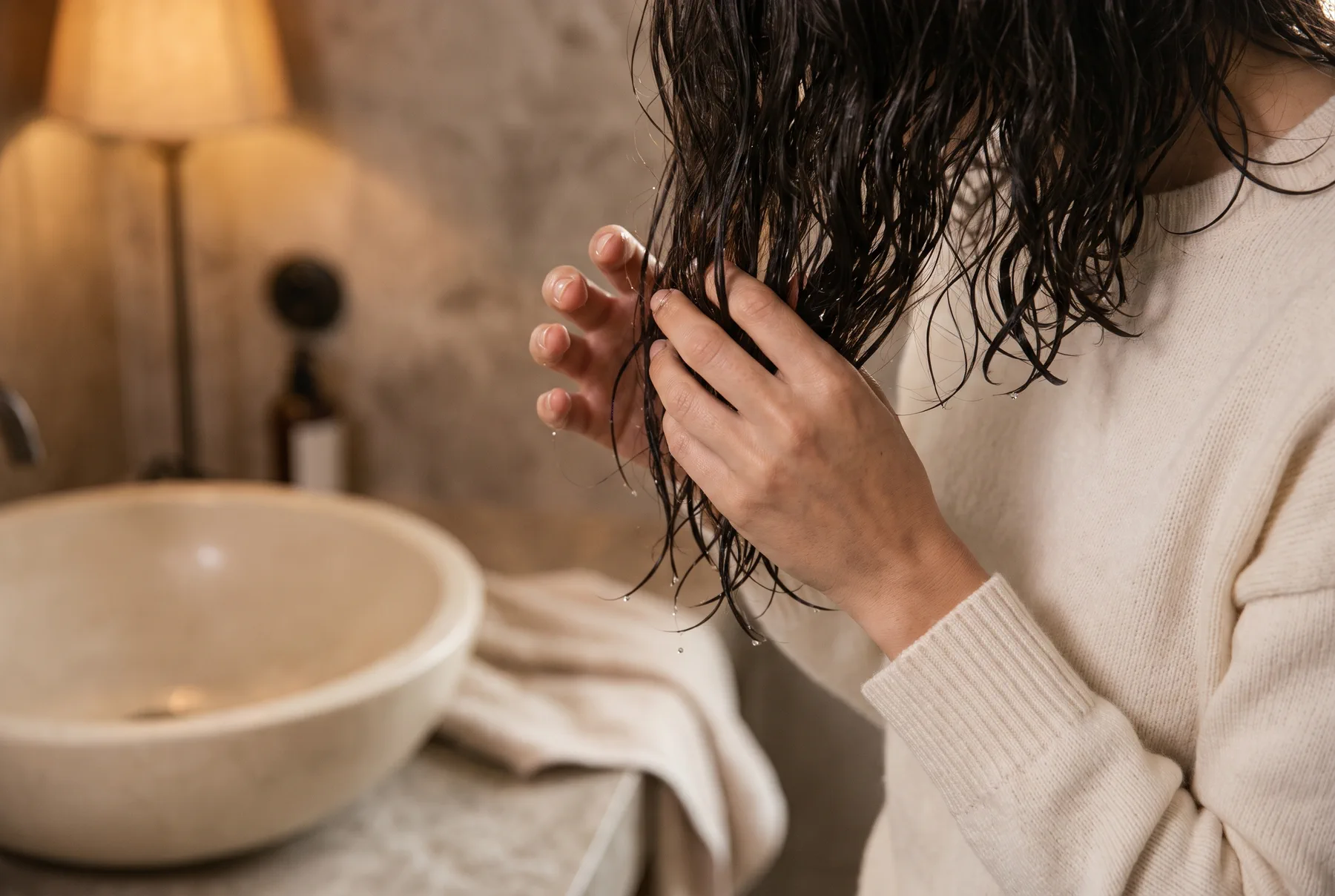
Use this route when sleep, a hat, weather or handling changed the shape but the hair does not feel dry or coated.
- Identify the flattened sections. Leave the curls that still look good alone.
- Mist or wet your hands with a small amount of clean water.
- Smooth the water over the affected section. Do not soak the entire head by default.
- Reshape by scrunching, finger-coiling or using the technique that created the original pattern.
- Let the section air-dry, or diffuse only if you also follow the required heat-protection directions.
- Avoid touching it repeatedly while it sets.
Start with less water than you think you need. If the section becomes dripping wet, drying takes longer and the boundary between a quick refresh and a partial restyle disappears.
When water alone is enough
Water is often enough when curls still feel soft, the ends are not rough and the original product responds to rewetting. Stop when the shape returns. A successful refresh does not need a product step added for appearance.
When water is not enough
If the section reshapes but dries rough or frizzy, add a trace of a leave-in product that has an approved refresh method. If it feels tacky, coated or flaky as soon as it is wet, existing buildup may need shampoo rather than another layer.
Route 2: refresh frizz or rough sections with leave-in cream

Celine Claire Multi Complex Hair Cream has an approved dry-hair refresh method. Use less than the normal damp-hair amount, spread it very thinly between both palms and touch only the areas that need help.
- Decide whether the section needs water first. Slightly damp hair may help a small amount spread.
- Place a trace amount of cream in one palm.
- Rub both palms together until the product is almost invisible across the hands.
- Press or smooth it over flyaways, frizzy sections or rough ends.
- Rescrunch curls if the pattern needs support.
- Let the section dry completely before deciding whether to add more.
Do not use the full damp-hair amount on top of the previous day's styling. If hair dries limp, greasy or separated, use less on the next refresh and keep the product farther from the roots.
Visit Multi Complex Hair Cream for its complete directions.
Where Curl Essence fits
Curl Essence is the primary Celine Claire leave-in for wash-day curl definition. Its current approved method starts with clean, conditioned, towel-dried hair and approximately a penny-sized amount.
That does not automatically create a dry-hair refresh direction. Use Curl Essence according to its verified label and product page. Until a between-wash method is confirmed, use water alone for reshaping or choose the approved dry-refresh method of Multi Complex Hair Cream.
For the complete Curl Essence sequence, read Curl Routine With Leave-In Conditioner or visit Curl Essence.
Route 3: smooth dry ends with finishing oil
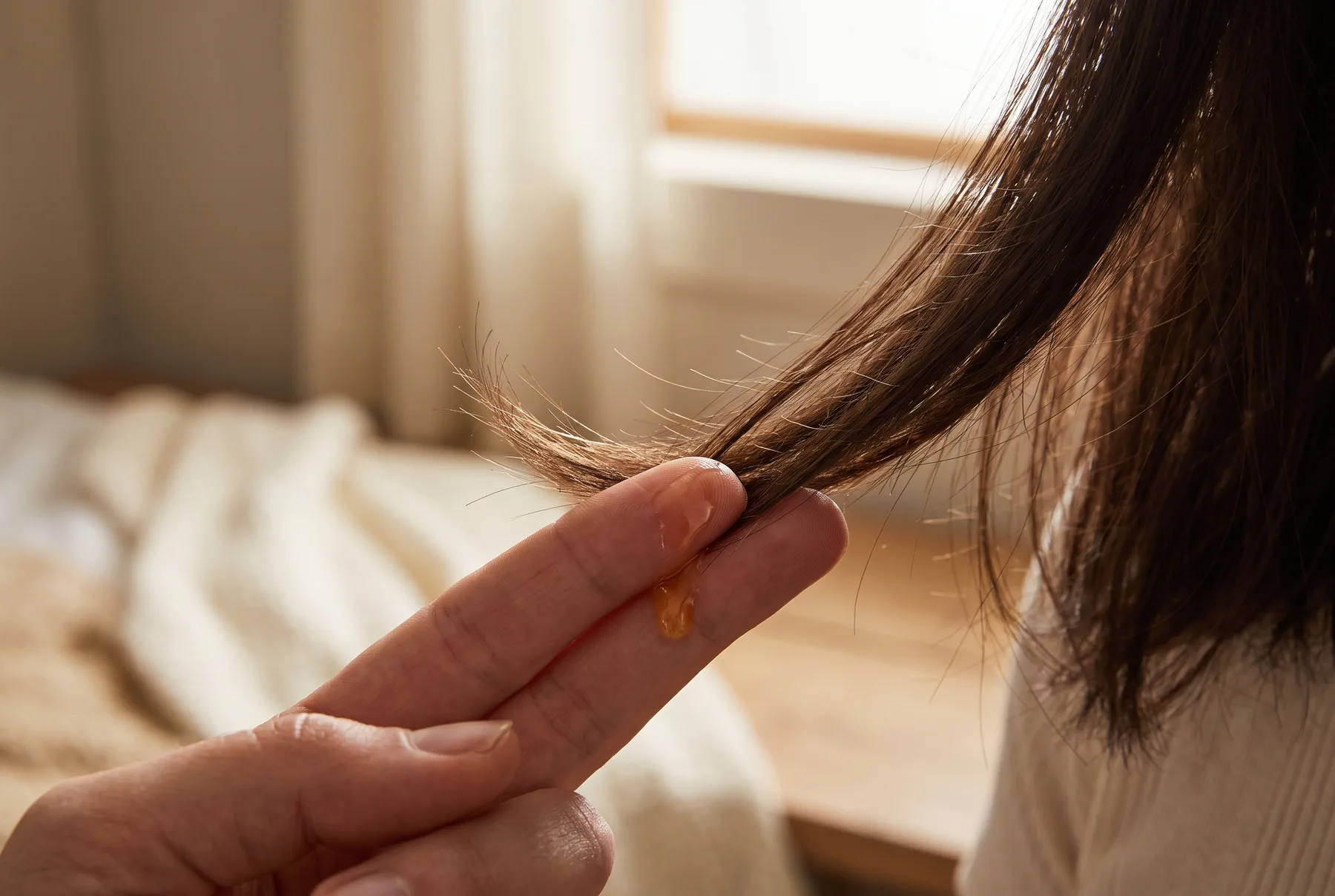
Use finishing oil when the curl pattern is acceptable but the dry lengths and ends need polish, softness or frizz control. Oil is not a hold product, so it will not rebuild a collapsed curl on its own.
Moroccan Argan Oil method
The approved dry-hair finishing method uses 1 to 2 drops on clean, dry hair.
- Begin with 1 drop, especially for fine, short or easily weighed-down hair.
- Rub it thoroughly between the palms.
- Lightly coat the lengths and ends.
- Keep this finishing application away from the scalp.
- Add the second drop only when length or density needs it.
Do not use the 8 to 10-drop overnight amount as a dry finisher. The overnight mask, shampoo boost, damp-hair leave-in and dry-hair finishing methods have different quantities and purposes.
Read How to Use Argan Oil Without Weighing Hair Down or explore Moroccan Argan Oil.
Bonding Rosemary Oil method
Bonding Rosemary Oil may be used sparingly on dry lengths and ends between wash days. Spread a small controlled amount between the palms, work toward the ends and stop before the hair loses movement.
Use this route when friction, dryness or humidity has brought frizz back. It is a styling touch-up, not an overnight scalp treatment. The exact amount must follow the current dispensing package because the approved content does not establish a universal pump count.
Explore Bonding Rosemary Oil for the complete wet, damp and dry-hair directions.
Should you combine water, cream and oil?
Sometimes, but not automatically.
Water can reshape the curl. A trace of cream can add softness or control. A finishing drop of oil can polish selected ends after the section is dry. Each added layer increases the chance of weight and residue.
Use one route first and let the hair dry. Add a second product only when the finished section still has a different need. Do not apply cream and oil to every refreshed curl simply because both products are available.
Refresh by curl pattern and density
Loose waves
Refresh selected bends with damp hands rather than saturating the whole head. Keep creams and oils mainly through the last third and ends so the roots retain movement.
Defined curls
Separate the curls that lost shape, dampen them and scrunch or finger-coil. Use a trace of cream only where the dried section still needs softness or frizz control.
Tight curls and coils
Work through accessible sections rather than wetting only the surface. Add water gradually and preserve the grouping already present. Use oil for dry ends or a verified leave-in refresh for rough areas, but do not assume the full head needs recoating.
High-density hair
Check underneath before deciding the total amount. More access points can solve uneven refreshing better than a large application across the outer layer.
Fine or easily weighed-down hair
Use water first, keep products away from the roots and judge the fully dried result. One finishing drop may be enough for the ends even when the hair is long or high density.
For a broader amount guide, see How Hair Density Changes Product Amount and Sectioning.
How to refresh curls after sleeping
Begin with the areas that touched the pillow or became compressed at the crown.
- Shake or lift the roots gently with clean fingertips.
- Separate only the flattened curl groups.
- Use damp hands or a fine water mist on those sections.
- Rescrunch or finger-shape.
- Add a trace of approved refresh cream to rough areas only.
- Let the hair set before fluffing the roots.
A satin or silk pillowcase, bonnet or other suitable night protection may reduce friction and compression for some people, but it will not eliminate every refresh. Choose a method that stays secure without pulling tightly on the hairline.
How to refresh dry ends without disturbing the pattern
Dry ends often need less handling than the rest of the hair.
- Warm a trace of Multi Complex Hair Cream or 1 drop of Moroccan Argan Oil between the palms.
- Press it onto selected ends instead of raking through every curl.
- Twist or finger-shape an end only when it has separated from its curl group.
- Stop when the ends regain softness and light reflection.
A finishing product can make split or weathered ends look smoother temporarily. It cannot permanently mend a split. Regular trims and gentler handling remain relevant when ends repeatedly catch or break.
Dry shampoo is a separate scalp decision
Dry shampoo absorbs some surface oil at the roots. It does not clean the scalp or replace shampoo and water.
If you use dry shampoo:
- choose a product intended for your hair colour and type;
- apply a small amount only where the roots are oily;
- follow its waiting and removal directions;
- wash with regular shampoo and water instead of repeating dry shampoo indefinitely.
Dry shampoo is not curl moisture, leave-in conditioner or treatment for an itchy scalp. If the scalp burns, feels tender or remains itchy, stop using the product and seek professional advice when symptoms persist.
When to wash instead of refresh
Choose a proper shampoo-and-water reset when:
- the scalp is oily, sweaty, itchy or uncomfortable;
- roots or lengths feel coated with several product layers;
- water makes the hair tacky or creates visible flakes;
- dry shampoo has accumulated;
- the curl pattern cannot reset without soaking most of the head;
- odour or residue remains;
- the hair is tangling more with every refresh.
Refreshing works best when the underlying scalp and hair are still reasonably clean. It cannot remove buildup.
Common refresh mistakes
Reapplying the wash-day amount
The hair already contains yesterday's product. Use a fraction of the original application and target only the changed sections.
Wetting the outer layer only
High-density hair can look refreshed on top while the interior remains flattened. Create access before adding product.
Adding oil before reshaping
Oil adds polish, not water-based reshaping or firm hold. Restore the pattern first, let it dry and then assess the ends.
Mixing rinse-out conditioner with water
Rinse-out conditioner is designed to be removed. Use a product intended to remain in the hair and follow its directions. Do not store a homemade diluted cream spray.
Touching curls while they dry
Repeated handling can separate curl groups before they set. Shape the section, then leave it alone until dry.
Refreshing through scalp discomfort
An irritated scalp does not need another cosmetic layer. Wash away residue when appropriate and speak with a dermatologist if pain, burning, persistent itching or significant flaking continues.
A two-minute refresh plan
- Check the scalp. If it needs cleansing, plan a wash.
- Choose only the flattened, frizzy or dry sections.
- Use water first when the problem is shape.
- Use a trace of approved cream when the problem is roughness or flyaways.
- Use 1 drop of Moroccan Argan Oil when clean, dry ends need polish.
- Let the hair dry and reassess before adding anything else.
Frequently asked questions
Can I refresh curls with only water?
Yes, when the existing styling layer responds to rewetting and the hair does not feel dry or coated. Target the curls that changed, reshape them and let them dry.
Can I refresh my whole head every day?
You can wet and reshape as needed, but repeatedly layering leave-in or oil across the full head may create buildup. Use product only where the dried result needs it and wash when the scalp or hair feels coated.
Can I use regular conditioner as a leave-in spray?
No. Rinse-out conditioner is designed to be rinsed away. Do not dilute it in a spray bottle and leave it on the hair. Choose a purpose-made leave-in and follow its label.
How much leave-in should I use for a refresh?
Use less than the damp-hair wash-day amount. For Multi Complex Hair Cream, spread a trace amount across the palms and touch only the frizz or rough ends. There is no honest universal pump count.
Can I use Curl Essence on dry second-day curls?
Its current approved method is for clean, conditioned, towel-dried hair. Do not assume a dry refresh method until the current label confirms one. Use water or the approved Multi Complex Hair Cream refresh route instead.
Is argan oil good for second-day curls?
It can add polish and softness to clean, dry lengths and ends. Use the approved 1 to 2-drop finishing method. It does not provide curl-specific hold.
Should I refresh before diffusing?
You may diffuse a damp refreshed section if the styling plan calls for it, but use an approved heat protectant according to its directions. For the full choice, read Air-Dry vs Diffuse Curly Hair.
Why do my curls flake after refreshing?
Possible causes include buildup, too much product or formulas that do not layer well together. Wash and reset, then test one leave-in or styler at a time rather than adding another coat.
How many days should I go between washes?
There is no universal number. Scalp oil, sweat, climate, buildup, curl pattern and comfort matter. Wash when the scalp and hair need cleansing rather than forcing a schedule.