

Choose air-drying when you want the simplest low-heat routine and have enough time for the hair and scalp to dry comfortably. Choose diffusing when you want faster drying, more root lift or controlled curl placement and can use gentle airflow, the lowest effective heat and a verified heat protectant.
Neither method is automatically better. The result depends on water level, product amount, density, climate, handling and technique.
Quick comparison
| Question | Air-dry | Diffuse |
|---|---|---|
| Tool heat | None | Optional, depending on setting |
| Drying time | Often longer | Usually faster |
| Root lift | Often lower without clips or positioning | Easier to encourage with technique |
| Handling | Minimal after styling | More movement during drying |
| Heat protectant | Not required for air alone | Use when heated airflow is used |
| Best fit | Simple routine, time available, lower-tool exposure | Time control, volume, scalp drying, intentional shape |
| Main risk | Prolonged wet time, touching or tying wet curls | Excess heat, high airflow, rubbing or reheating dry sections |
You can also combine them: partially air-dry, then diffuse to finish.
Start both methods with the same foundation
The drying choice begins after cleansing and conditioning.
- Shampoo according to scalp oil and buildup.
- Apply rinse-out conditioner and detangle gently.
- Rinse thoroughly.
- Towel-blot without rough rubbing.
- Apply leave-in conditioner evenly through damp sections.
- Smooth, rake or scrunch according to the pattern you want.
- Choose air-dry, diffuse or a hybrid method.
For Celine Claire Curl Essence, start with clean, conditioned, towel-dried hair and approximately a penny-sized amount. Add only where distribution remains incomplete.
Choose air-drying when simplicity matters
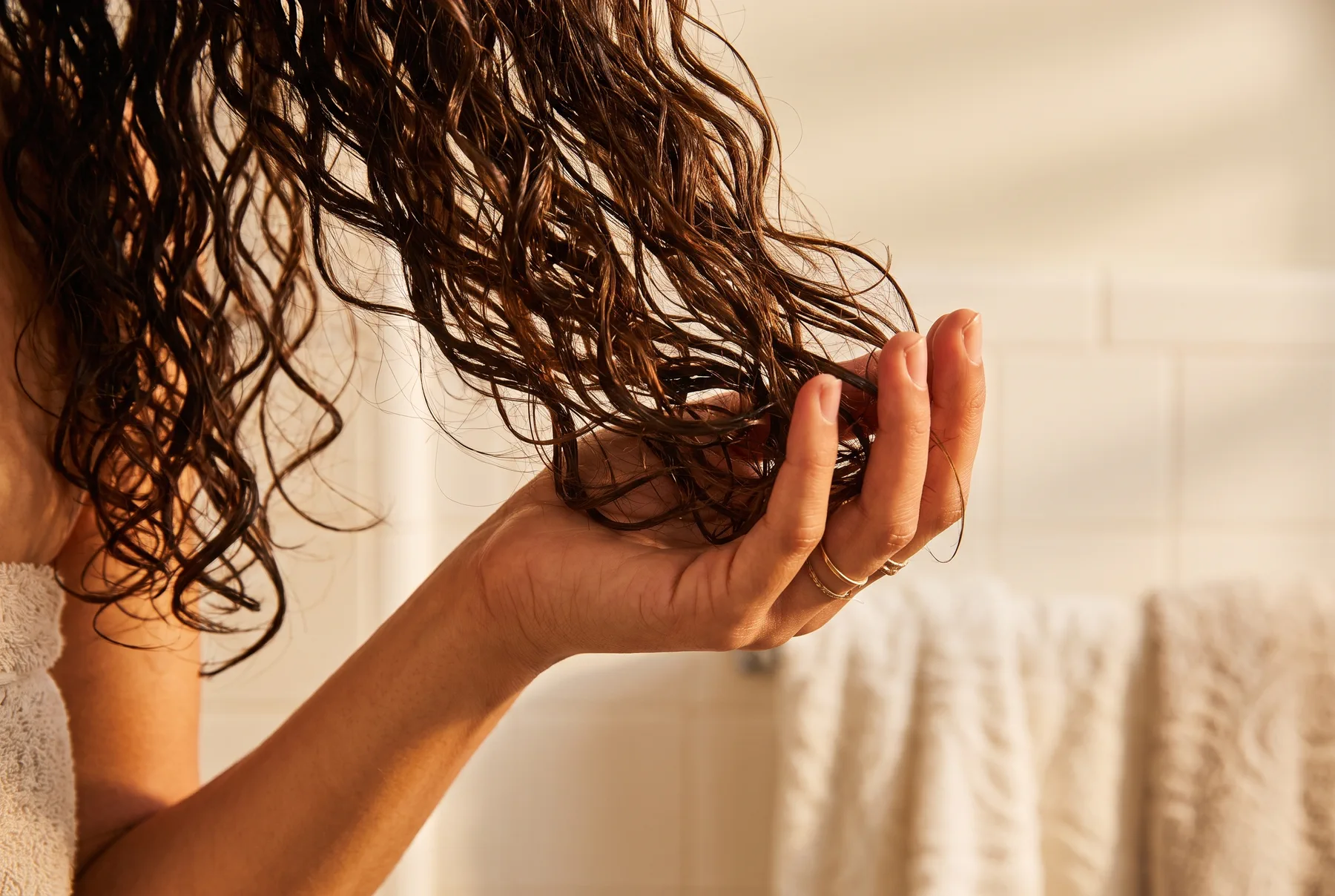
Air-drying removes the blow-dryer from the routine. It can suit days when you have enough time, want minimal tool use and are satisfied with the natural root position.
How to air-dry curls
- Apply leave-in to evenly damp, sectioned hair.
- Form the clumps using your chosen smoothing, raking or scrunching technique.
- Arrange the roots before drying begins.
- Remove water gently with a soft T-shirt or microfibre towel if the hair is still dripping.
- Leave the curls alone while they set.
- Make sure the scalp and dense interior sections dry fully before tying the hair or going to bed.
- Once fully dry, separate gently if more softness or volume is wanted.
Repeatedly touching, flipping or stretching damp curls can break apart the clumps. Air-drying is not truly low-manipulation if the hair is handled every few minutes.
Choose diffusing when time or volume matters
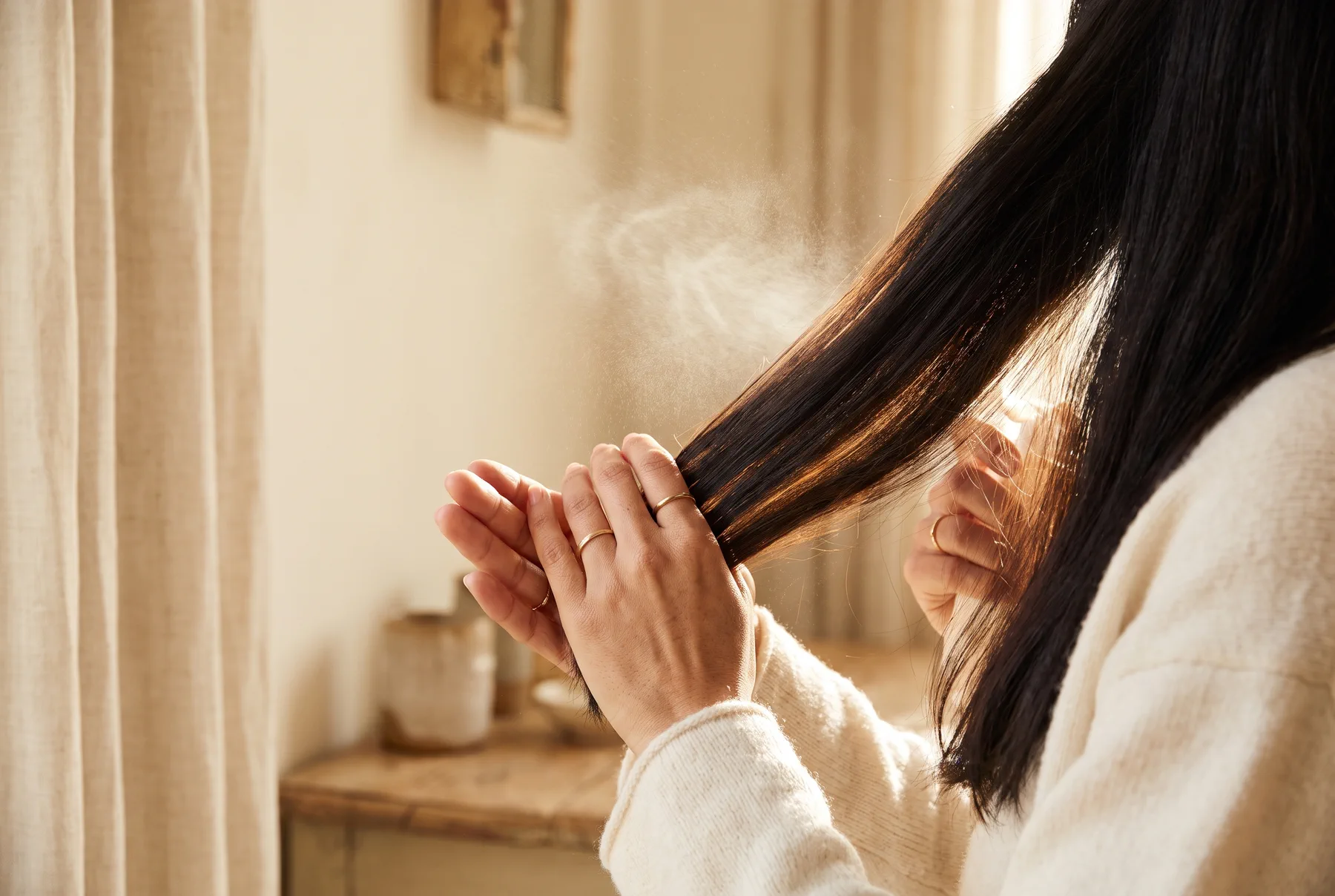
A diffuser spreads airflow over a wider area than a concentrated nozzle. It can shorten drying time and help control root lift or curl placement.
How to diffuse curls
- Apply leave-in and any compatible styler to damp hair.
- Apply verified heat protection when using heated airflow.
- Set the dryer to controlled airflow and the lowest effective heat.
- Begin near the roots or densest areas if scalp drying is the priority.
- Keep the diffuser moving rather than overheating one area.
- Cup sections gently if that supports the pattern, without pushing or rubbing.
- Stop heating a section once it is dry.
- Allow curls to cool before separating.
High airflow can scatter fine waves or create frizz. Excessive heat can make the surface feel rougher. Adjust one control at a time.
Try a hybrid method
Partially air-drying before diffusing can reduce dryer time while still giving control over the final root lift and shape.
Use a hybrid method when:
- full air-drying takes too long;
- the scalp stays damp after the lengths begin drying;
- you want less dryer exposure but more root lift;
- curls need a gentle final set before leaving home.
Apply heat protectant before the heated diffuser stage. Do not wait until the surface is dry and then saturate it with spray.
How the leave-in amount changes
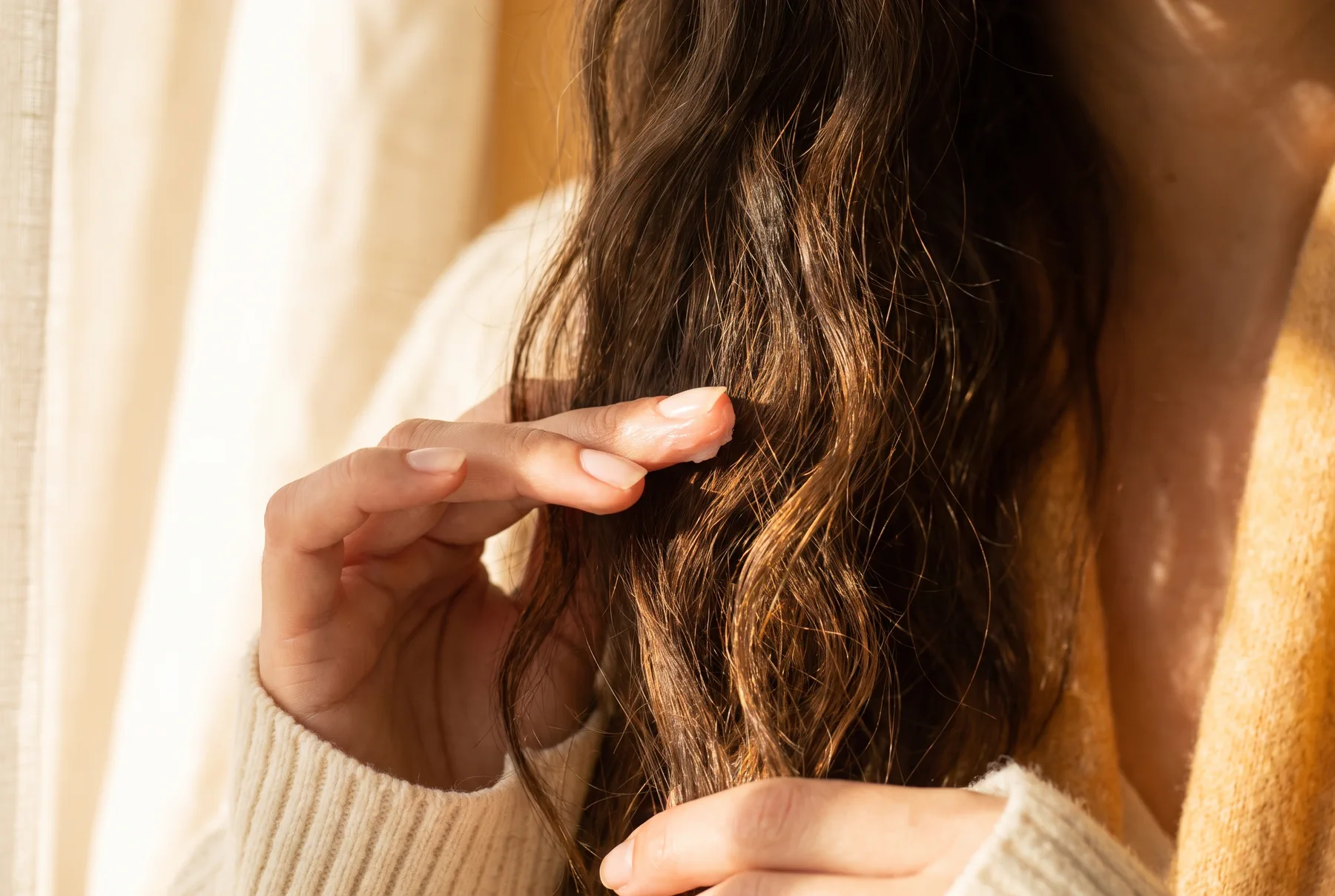
For air-drying
Use enough leave-in for slip and definition without creating a coating that extends drying time dramatically. If the hair remains wet far longer than usual, review product amount and overlapping layers.
For diffusing
Even distribution matters because airflow can reveal untreated inner sections. Work in enough sections to reach the interior. More product on the outer surface is not a substitute for sectioning.
For fine waves or curls
Start below the full penny-sized amount, keep roots light and use lower airflow. Fine patterns can lose lift from excess cream or scatter from aggressive air.
For dense curls or coils
Use additional sections, focus on even dampness and begin drying near the roots or interior when those areas retain water longest.
Root volume: air-dry versus diffuse
Air-drying often lets the weight of wet hair determine root position. To preserve lift, change the part while damp, use appropriate root clips or avoid loading the roots with cream.
Diffusing offers more control. Tilt or position the head comfortably and direct airflow around the roots without pressing hot equipment against the scalp. Extreme upside-down positions are not required, especially if they cause dizziness or tangling.
Definition and frizz
Air-drying can preserve smooth clumps when the hair is arranged once and left alone. It can also create flat roots or stretched sections when wet hair is heavy.
Diffusing can support spring and volume, but rough cupping, strong airflow or repeated repositioning may separate clumps.
Frizz is not proof that the drying method failed. Weather, porosity, haircut, buildup, product amount and the desired finish all matter. A soft, touchable result may include some natural halo frizz.
Scalp comfort and drying time
Dense curls can remain wet at the scalp long after the ends feel dry. If prolonged dampness is uncomfortable, use controlled diffusing at the roots rather than leaving the scalp wet for hours.
Do not sleep with wet hair tightly tied or compressed. Friction, prolonged dampness and tension can work against the routine. Dry fully or adjust wash timing.
Persistent scalp itching, burning, sores or unusual flaking needs appropriate assessment rather than more heat or product.
Colour-treated, lightened or fragile curls
Use the more conservative version of either method:
- towel-blot gently;
- use a compatible conditioner and leave-in;
- keep heated airflow low;
- reduce repeated handling;
- stop when dry;
- schedule heat-free drying days when practical;
- follow recent colour, perm, keratin or extension aftercare.
No drying method or product can reverse every existing change in a processed fibre.
Common mistakes
Diffusing soaking-wet hair for too long
Remove excess water gently first. Starting with dripping hair can extend dryer exposure.
Air-drying with too much product
If curls stay tacky or take much longer to dry, reduce overlapping leave-ins, creams and oils.
Holding the diffuser still on high heat
Keep it moving and lower the setting. More heat is not automatically faster or better.
Touching curls before they are dry
Let the pattern set. Separate only after the hair is fully dry and cool.
Adding finishing oil before the result is set
Reserve oil for fully dry ends unless its exact method says otherwise. Too much oil before drying can reduce lift or change product compatibility.
Frequently asked questions
Is diffusing better than air-drying curly hair?
Not universally. Diffusing is faster and can add root lift. Air-drying avoids tool heat. Choose by drying time, comfort, desired shape and technique.
Does diffusing damage curls?
Excess heat, high airflow and prolonged exposure can contribute to damage or roughness. Use heat protection, controlled settings and stop when dry.
Is air-drying damage-free?
It avoids dryer heat, but prolonged wet time, rough handling, tying wet hair and friction can still affect the result.
Should I use heat protectant before diffusing?
Use a compatible verified heat protectant when heated airflow is used.
Can I diffuse after Curl Essence?
Yes. Apply Curl Essence to clean, conditioned, towel-dried hair, add compatible heat protection and diffuse with controlled airflow.
Can I air-dry after Curl Essence?
Yes. Arrange the pattern and avoid repeatedly touching it while it dries.
Should I diffuse wet or damp hair?
Begin with evenly damp, towel-blotted hair rather than dripping hair. Exact water level depends on density, products and desired clumping.
Is low heat always enough?
Use the lowest setting that dries and styles effectively. Tool performance and hair condition vary, so no one setting suits everyone.
How do I get volume while air-drying?
Keep leave-in away from roots, arrange the part while damp and use appropriate root clips if they do not create tension.
How do I reduce frizz while diffusing?
Use even product distribution, controlled airflow, minimal touching and allow curls to cool before separating.
Can I combine air-drying and diffusing?
Yes. Partially air-dry, then diffuse to finish the roots or shape with less total dryer time.
Is Curl Essence a heat protectant?
Do not assume so. Use a separate verified heat protectant such as Heat Shield according to its directions.
Is Celine Claire made in Canada?
Celine Claire is a Canadian haircare brand. Product manufacturing origin requires current SKU-specific documentation.
Sources
- Lee Y et al. “Hair Shaft Damage from Heat and Drying Time of Hair Dryer.” Annals of Dermatology. 2011.
https://pmc.ncbi.nlm.nih.gov/articles/PMC3229938/ - American Academy of Dermatology, “Hair styling without damage”:
https://www.aad.org/public/diseases/hair-loss/hair-care/styling - Approved Curl Essence and Heat Shield product masters.
- Celine Claire Curl & Moisture Routine and Blog 029.