Home / Ingredients / Rosemary
Ingredient guide · RosemaryRosemary has moved from traditional botanical care into modern hair routines, but the formula around it matters just as much as the ingredient name. Learn what rosemary oil is, why it appears in haircare and how to interpret the research without confusing an ingredient story with a guaranteed product result.
Ingredient education · Product-specific directions · Canadian haircare brand
Rosemary oil is a botanical ingredient associated with aromatic, scalp and haircare traditions. In modern products it can appear as one part of a larger cosmetic formula, alongside ingredients chosen for slip, conditioning, shine, manageability or styling support.
The words rosemary oil do not tell you everything about a finished product. Concentration, ingredient form, supporting formula, intended area of application and directions all affect how that product should be used. A concentrated essential oil, a diluted scalp preparation and a finished leave-in hair oil are not interchangeable.
Read the exact product label and follow the directions for the formula in your hands. Do not copy a DIY rosemary routine onto a finished cosmetic product unless its directions permit that use.
Interest in rosemary comes from a combination of traditional botanical use, its distinctive sensory identity and emerging research involving the scalp. It is often discussed by customers seeking a more intentional routine for the scalp, fuller-looking hair or stronger-feeling lengths.
Those interests are related, but they are not identical. Scalp condition, hair density, breakage and the appearance of fullness can influence one another while requiring different types of care.
Rosemary has a familiar place in botanical self-care. Its aromatic profile makes a routine feel fresh and purposeful, but a sensory experience is not medical proof.
A small body of human research has examined scalp-applied rosemary oil. That evidence is worth explaining, but it remains ingredient-level context — not proof that every rosemary product produces the same result.
Hair may appear fuller when it is less weighed down, easier to style or experiencing less visible breakage. Cosmetic improvement in appearance is not the same claim as changing the biological growth cycle.
Some rosemary products are designed for the scalp. Others are leave-in oils for lengths and ends. The product directions — not a trend or ingredient name — determine where and how a formula belongs in the routine.
A 2015 randomized comparative trial followed 100 people with androgenetic alopecia for six months. Participants used either rosemary oil or 2% minoxidil. The study reported changes in hair count after six months and provides a reason for continued scientific interest in rosemary oil.
It does not prove that all rosemary oils work the same way. It does not test every concentration, formula, hair type or pattern of hair loss. Most importantly for this page, it did not study Celine Claire Bonding Rosemary Oil.
| The study helps us say | The study does not allow us to say |
|---|---|
| Rosemary oil has been studied in humans in a scalp-use context. | Every rosemary product regrows hair. |
| Six months was the study period, so it was not an overnight result. | A customer will see a guaranteed result by a fixed date. |
| The ingredient deserves further research. | Bonding Rosemary Oil is equivalent to the tested preparation. |
| Research can inform careful education. | A cosmetic product treats androgenetic alopecia or another medical condition. |
Research summary based on Panahi et al., 2015, PMID 25842469. This is ingredient education, not medical advice or product-specific clinical evidence.
Health note: Sudden, severe or unexplained hair loss deserves assessment by a qualified healthcare professional. A cosmetic website does not diagnose the cause.
This distinction matters. Ingredient-level context does not override the approved directions for a specific finished product.
| Ingredient-level discussion | Celine Claire Bonding Rosemary Oil |
|---|---|
| Often includes research or routines involving the scalp. | The approved current use is a small amount through wet, damp or dry hair, focused on lengths and ends. |
| May refer to different rosemary preparations and concentrations. | It is a finished leave-in bonding oil with its own complete formula. |
| Cannot define the safety or directions of every retail product. | Its current package and product page define how it should be used. |
| Does not guarantee a personal outcome. | Presented through its approved cosmetic benefits and existing brand story. |
Instructions to massage Bonding Rosemary Oil into the scalp, present it as an overnight scalp treatment, or recommend mixing it into a DIY preparation.
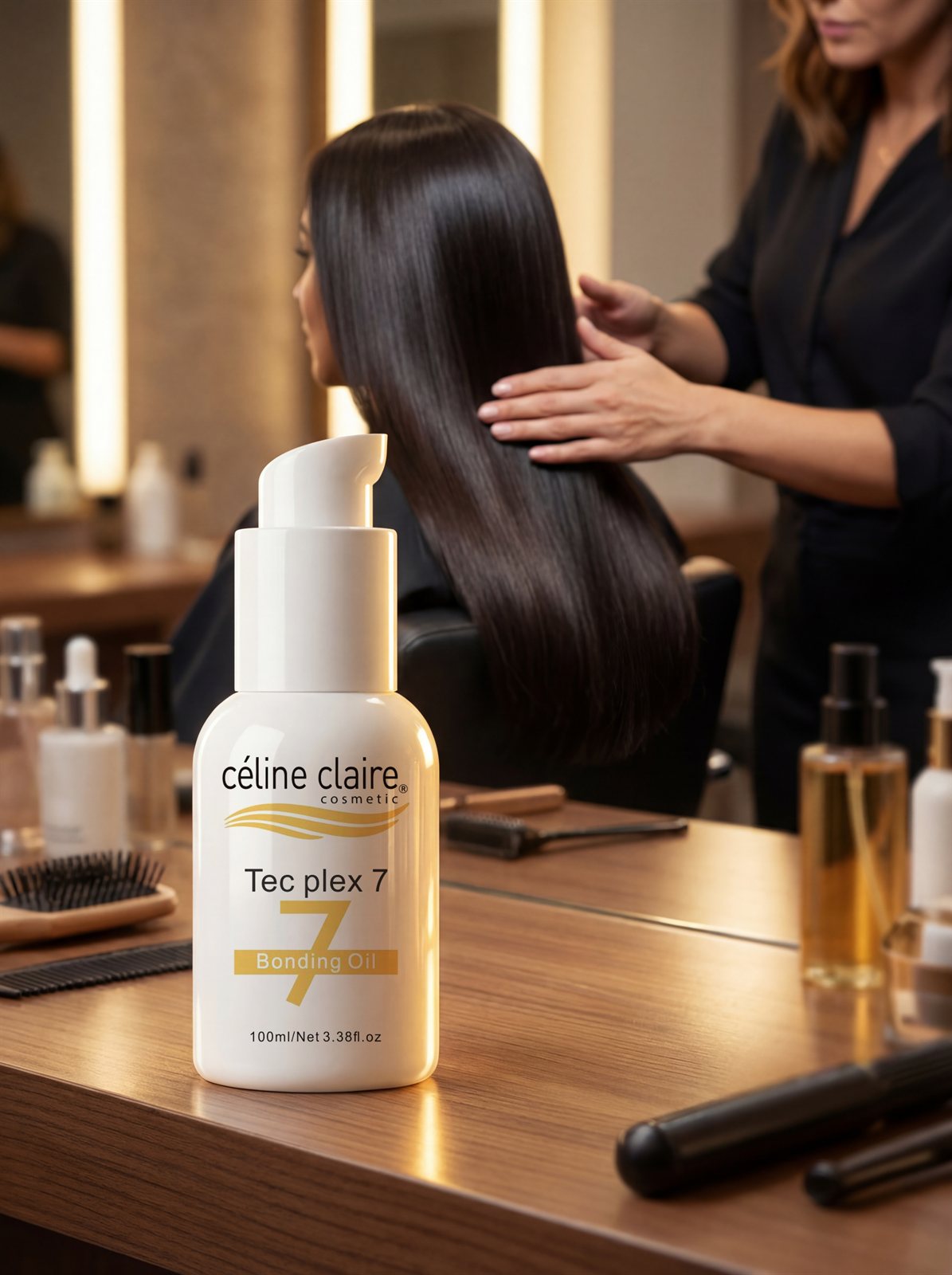
Bonding Rosemary Oil is Celine Claire's concentrated leave-in oil for hair exposed to heat, dryness, frizz and visible breakage. It supports smoother detangling, softer-feeling lengths, shine and a more polished finish while carrying the brand's rosemary story around healthy growth, fullness and volume.
The bottle also carries the Tec Plex 7 Bonding Oil identity. Both names describe the same product; Bonding Rosemary Oil is the primary visible website name.

Concentrated leave-in oil for lengths and ends. Softness, slip, shine and a more polished finish for heat-styled, dry-feeling or frizz-prone hair.
For hair that regularly meets blow-dryers or hot tools and needs a smoother finishing step.
For lengths that feel rough, look dull or need more softness.
For a more controlled, polished appearance without turning the page into an anti-humidity guarantee.
For added slip and more manageable detangling.
For a damage-conscious routine centred on the lengths and ends.
Suitable as a flexible finishing step when the amount is adjusted to the hair.
Neither oil is universally better. They exist for different reasons in the same range.
| Choose Bonding Rosemary Oil when… | Explore Moroccan Argan Oil when… |
|---|---|
| You want a concentrated leave-in step for lengths and ends. | You want the versatile argan ritual described on its own product page. |
| Heat exposure, detangling, frizz and visible breakage shape your routine. | Softness, nourishment and shine are the central priorities. |
| You want the Tec Plex 7 bonding-oil experience. | You want the traditional Moroccan Argan Oil product experience. |
A dedicated Argan ingredient page is being prepared. Its link will appear here once ready.
The full current INCI belongs on the exact product page and product packaging. Health Canada requires cosmetic ingredients to be labelled using the International Nomenclature of Cosmetic Ingredients system. For botanical ingredients, the labelled name identifies the botanical according to the applicable INCI convention.
The word rosemary in a product story is not a replacement for the full ingredient list. Before publishing a complete Bonding Rosemary Oil INCI online, we compare it character for character with a current sharp package image or signed formula sheet.
See the Bonding Rosemary Oil product page Ingredients tab and the current product packaging. If you have a known allergy or sensitivity, contact customer care before use.
Rosemary oil has been studied in a scalp-use context, including a six-month randomized comparative trial. That does not establish that every rosemary formula regrows hair or guarantee an individual result. Celine Claire Bonding Rosemary Oil is presented according to its own cosmetic positioning and directions, not as a treatment for hair-loss conditions.
No scalp application is added to this website. The current approved directions are to apply a small amount through wet, damp or dry hair, focusing on the lengths and ends.
It is a leave-in product, but it is not positioned as an overnight scalp treatment. Use a small amount through the lengths and ends according to the product directions.
Yes. The current directions allow use on wet, damp or dry hair. Start with a small amount and adjust for your texture and density.
Use it as needed within your routine rather than promising a required daily schedule. Fine hair may need less product or less frequent application than thick, dry or textured hair.
Fine hair can start with a minimal amount concentrated at the ends. The goal is a polished finish without unnecessary weight.
It can be worked through lengths and ends where softness, slip and frizz control are wanted. The correct amount depends on density, texture and the other products in the routine.
Bonding Rosemary Oil is positioned for hair exposed to heat and damage-conscious styling. A maximum temperature or quantified protection claim is not published until exact supporting documentation is available.
Layering advice is limited to combinations verified in the approved routines. We do not automatically instruct customers to combine it with every heat-protection or treatment product.
Celine Claire is a Canadian haircare brand. We do not state that this product is made, formulated or manufactured in Canada unless exact-product documentation confirms it.
Review the complete ingredient list on the current product package and the verified Ingredients tab on the exact product page. If you have a known allergy or sensitivity, review the label carefully and contact customer care before use when needed.
This page explains rosemary as an ingredient and the limits of ingredient research. The product page contains the current product details, directions, ingredients, price and purchase controls for Bonding Rosemary Oil.
Still deciding? Contact Customer Care.

Choose the finished product for the job it was designed to do. Bonding Rosemary Oil brings Celine Claire's rosemary story into a concentrated leave-in step for smoother, softer and more polished-looking lengths and ends.
Not sure where to start? Take the Hair Quiz →