
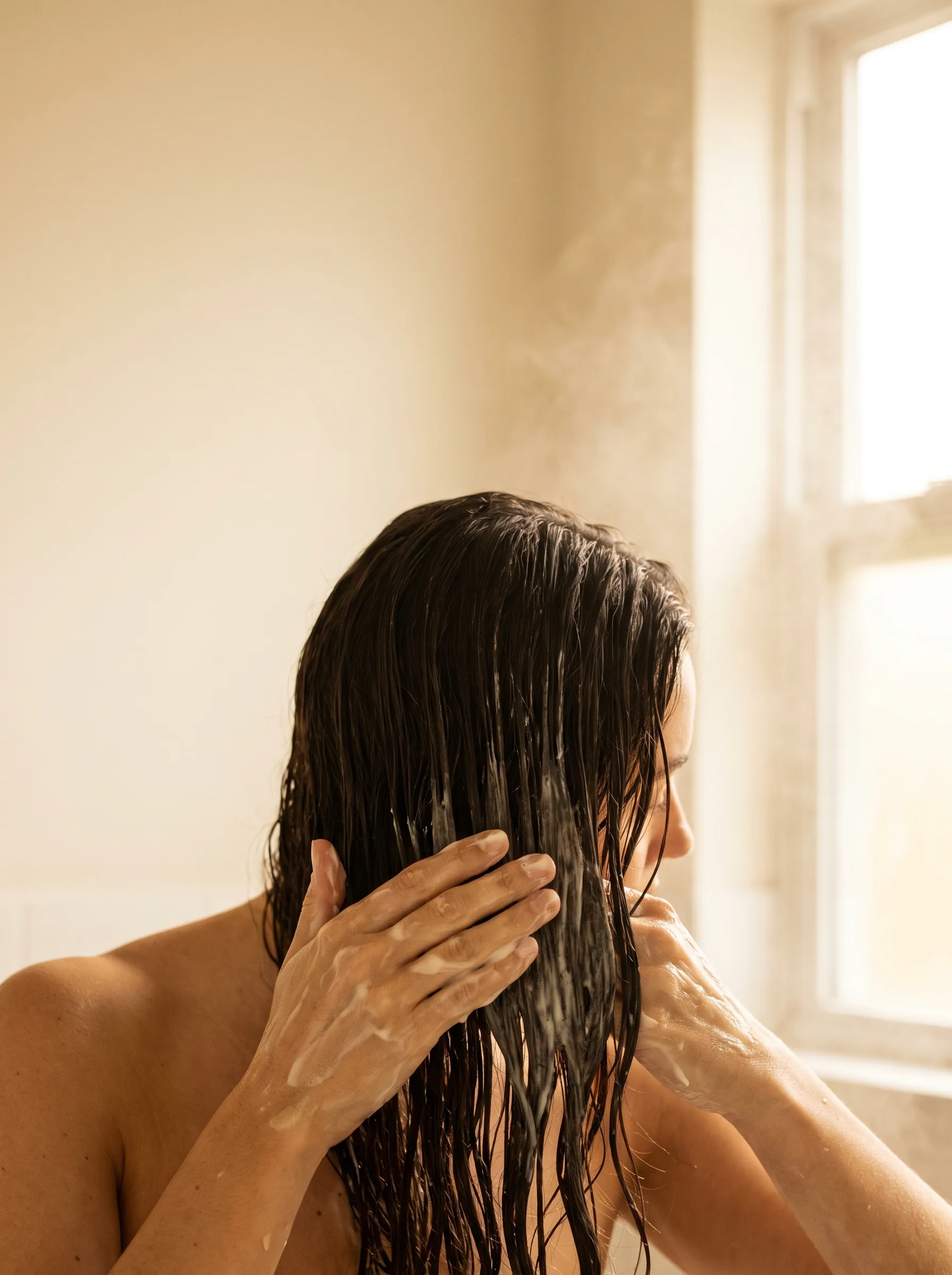
Hair density changes how easily a product reaches every part of your hair. Low-density hair often needs fewer, larger sections and a lighter starting amount. High-density hair usually needs more access points and smaller sections before it needs much more product.
That last distinction matters. If the top layer feels coated while the hair underneath remains dry or frizzy, adding another large handful is unlikely to solve the problem. Better sectioning and distribution should come first.
Hair density is not the same as strand thickness
Hair density describes how much hair is present across an area of the scalp. Strand thickness describes the width of an individual strand.
You can have:
- many fine strands, which means fine hair with high density;
- fewer coarse strands, which means coarse hair with lower density;
- any combination between those examples.
Curl pattern is another separate characteristic. Straight, wavy, curly and coily hair can each be low, medium or high density. Porosity, length, dryness and prior chemical or heat exposure add more variables.
This is why “use one pump for fine hair and three for thick hair” is not a reliable universal rule. A pump can release different amounts from different packages, and the word “thick” is often used for both coarse strands and high density.
A practical way to think about your density
You do not need a medical measurement to improve product application. Look at how easily you can reach the interior of your hair while washing, conditioning or styling.
Lower density
The scalp is easier to access and the lengths can often be coated evenly in a few larger working areas. The hair may become flat or separated if rich products overlap near the roots.
Medium density
The hair usually benefits from a deliberate front, side and back distribution plan, but it may not require many small sections. Start conservatively and check the interior before adding more.
Higher density
The outer layer can hide untouched hair underneath. More or smaller sections can improve coverage. Density does not automatically mean the strands can carry a heavy finish, especially when many of those strands are fine.
These descriptions are application cues, not diagnoses. A sudden, patchy or concerning change in density should be discussed with a physician or dermatologist.
The rule to remember: access before amount
Use this order whenever you apply a conditioner, mask, leave-in or styling product:
- Create access. Divide the hair only as much as needed to reach the interior.
- Distribute a small starting amount. Spread creams or oils across the palms before touching the hair.
- Work through the intended area. Follow the product directions for scalp, lengths, ends or selected sections.
- Reassess the section. Add a small amount only where the first application did not spread far enough.
- Judge the dried result. Wet hair can hide excess product. Movement, separation, softness and residue are clearer when the hair is dry.
There is no prize for using the fewest sections. There is also no need to divide low-density or short hair into tiny pieces when your hands already reach everything evenly.
A simple density and sectioning guide
| What you notice | Better first adjustment | What not to assume |
|---|---|---|
| Scalp and interior are easy to reach | Use fewer, larger sections and begin lightly | Low density does not always mean dry or fragile hair |
| Top looks coated but underneath feels untreated | Add sections and redistribute before adding more product | High density does not always need a heavy formula |
| Roots lose movement after styling | Keep rich products farther from the root and reduce overlap | Fine strands are not always low density |
| Product disappears before one section is covered | Add water when appropriate or a very small amount to that section | More product across the whole head is not automatically necessary |
| Ends feel dry but roots feel heavy | Separate root placement from length-and-end placement | One amount and placement do not have to suit every area |
How density changes shampoo application
Shampoo amount should follow scalp area, oil, sweat and product buildup, not simply how full the lengths look.
Apply shampoo mainly to the scalp. With high-density hair, create enough partings for the fingertips and cleanser to reach the scalp instead of piling shampoo onto the top. Massage gently, then let the lather move through the lengths while rinsing.
With lower-density or fine hair, begin with a modest amount and concentrate on the roots. Adding shampoo directly to already-dry ends can make the wash feel harsher without improving scalp cleansing.
Repeat only when the first cleanse did not remove the day's oil or buildup. A second shampoo is not mandatory for every density.
How density changes conditioner application

Conditioner needs contact with the hair that tangles, feels rough or needs slip. That is often the mid-lengths and ends, although dry or curly hair may need broader placement according to the product directions.
For lower-density or easily weighed-down hair:
- begin at the ends;
- move upward only where additional slip is needed;
- keep the root area lighter when volume matters;
- rinse completely.
For higher-density hair:
- divide the lengths so the interior is accessible;
- distribute conditioner through each working area rather than coating only the surface;
- detangle gently when the product and hair type allow it;
- add more only to a section that still lacks slip.
Choose the conditioner texture from the desired finish as well as density. The Argan Oil Hydrating Conditioner supports a moisture-focused routine, while the Moroccan Argan Oil Volume Conditioner is the lighter route for fine, flat or easily weighed-down hair.
How density changes hair-mask application
A mask is a more concentrated treatment step, so even coverage matters more than a thick visible layer.
After shampooing, remove excess water as directed. Separate higher-density or long hair into manageable sections and work the mask through the lengths. Give extra attention to rough or stressed ends without automatically coating the scalp.
Lower-density hair may need less total product and less frequent overlap with rich leave-ins or oils. Follow the mask's timing and rinse directions. Leaving it on longer or adding more than directed does not guarantee a better result.
The Argan Oil Hair Mask page provides its exact use directions. If you are deciding how often a mask belongs in your routine, read How Often Should You Use a Hair Mask?.
How density changes leave-in conditioner application
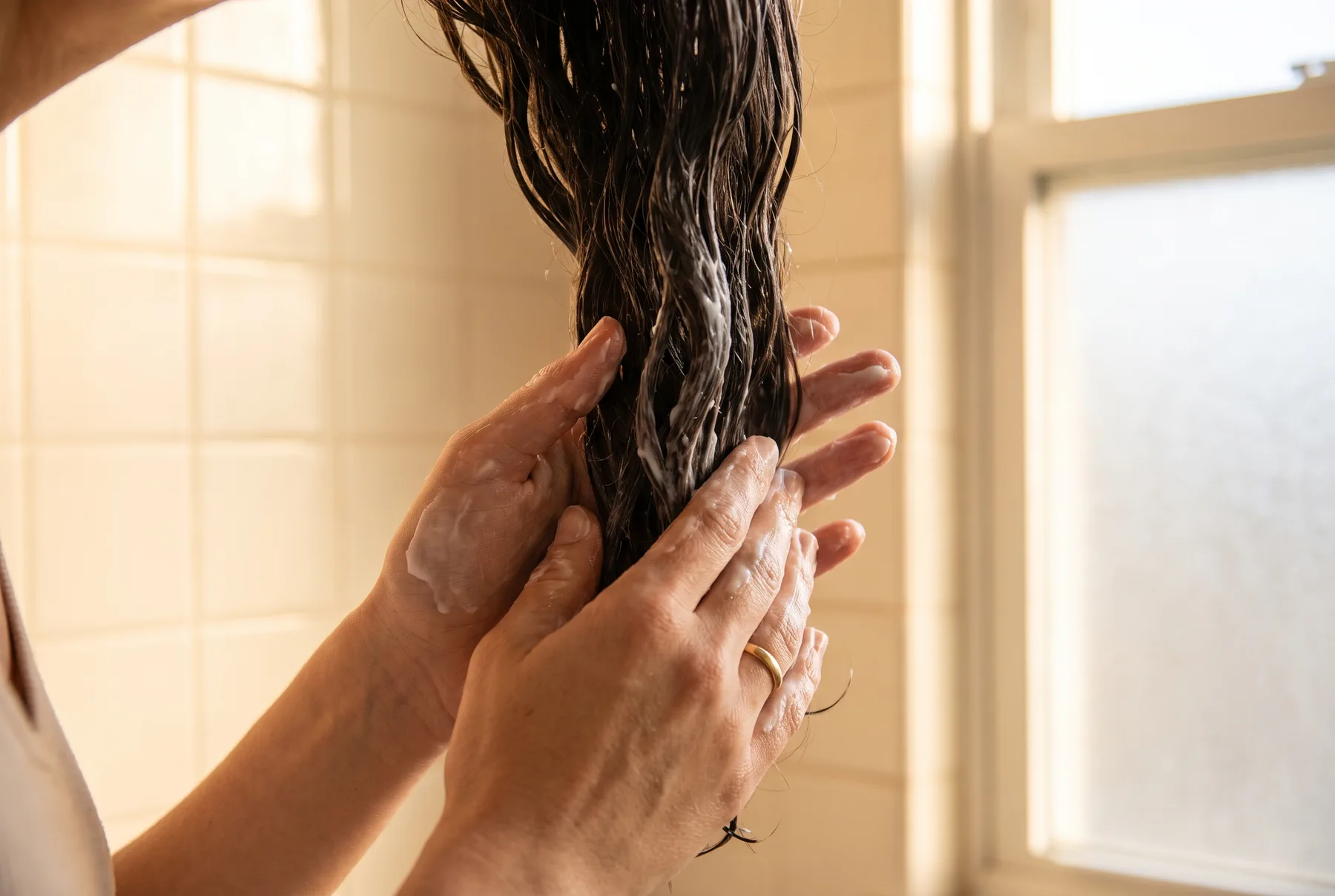
Leave-in products remain on the hair, so a controlled start is especially useful. Apply them to damp hair unless the exact product says otherwise. Dampness helps a small amount spread and reduces the chance of one greasy patch.
For fine strands or hair that becomes limp easily
Use the smallest amount that produces slip and softness. Keep the roots lighter, even when density is high. High-density fine hair may need additional sections, not a heavy amount in each section.
For dense, long, curly or very dry-feeling hair
Work in sections and add a small amount only where the first pass does not distribute. If the outside is glossy but the inside remains frizzy, change the sectioning before increasing the total.
Celine Claire Multi Complex Hair Cream has no honest universal pump count because density, length, pump output and hair condition vary. Celine Claire Curl Essence uses a penny-sized starting point under the current directions, with additional product only where density, porosity or incomplete distribution requires it.
For the complete curl-specific method, use the Curl Routine With Leave-In Conditioner guide.
How density changes oil application
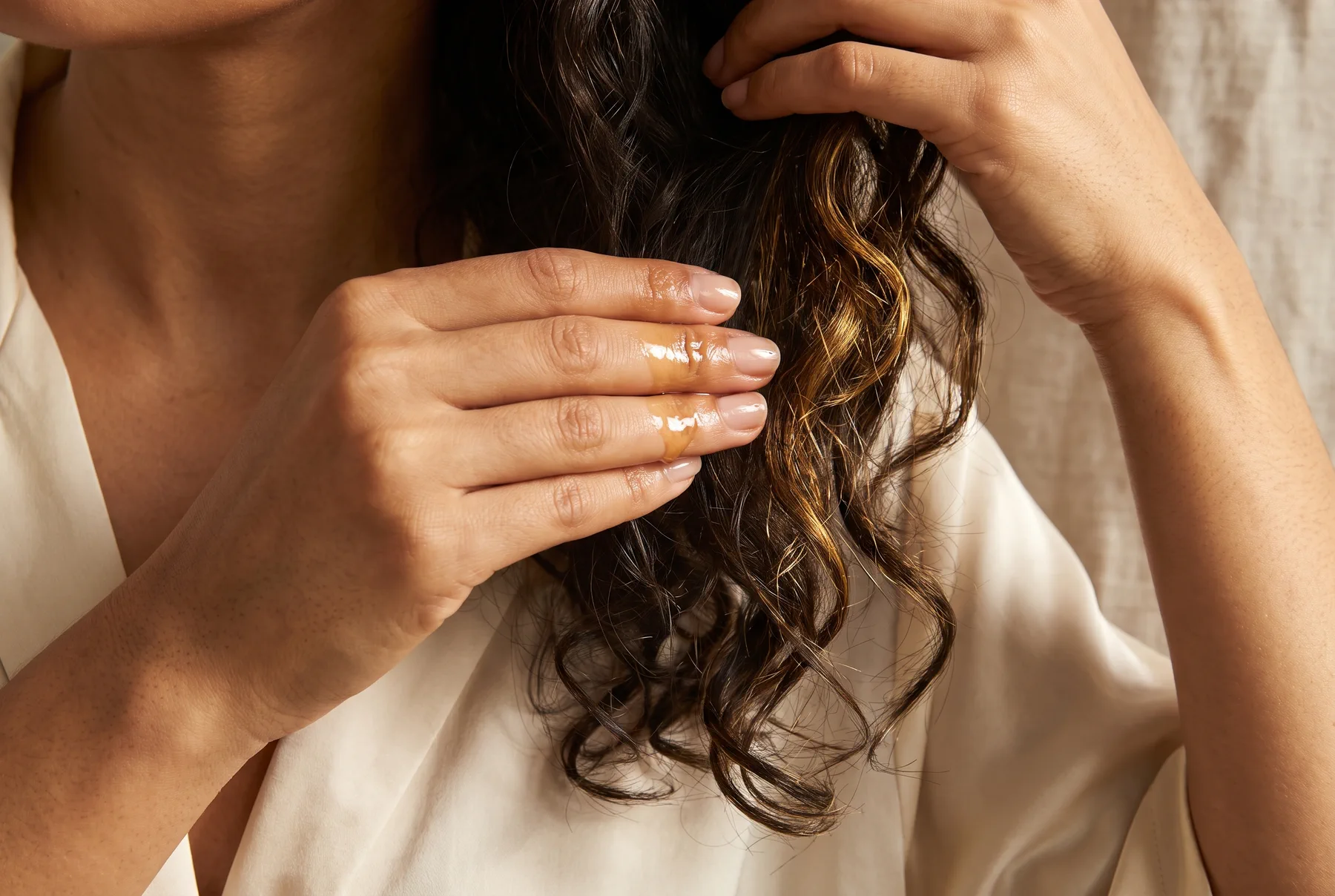
Oil is easy to over-apply because a small amount can spread across a large area. Use the exact method rather than one large quantity for every purpose.
For Celine Claire Moroccan Argan Oil, the current approved methods are:
- Dry finisher: 1 to 2 drops on clean, dry lengths and ends.
- Leave-in method: 2 to 3 drops on towel-dried hair after shampooing, once or twice weekly under the current directions.
- Shampoo boost: 1 to 2 drops mixed with the shampoo amount for that wash.
- Overnight hair and scalp mask: 8 to 10 drops, followed by a 10-minute massage, left overnight and shampooed out in the morning.
Do not swap the quantities between methods. Fine, short, low-density or easily weighed-down hair should begin at the lower end of the relevant range. With high-density hair, warm the oil across the palms and use sections before deciding whether the upper end is needed.
See How to Use Argan Oil Without Weighing Hair Down or visit Moroccan Argan Oil for the exact product page.
How density changes styling and drying
Density can change drying time because there is more hair and less airflow through the interior. Heavy product overlap can extend that time further.
For an air-dried finish, distribute product evenly and avoid repeatedly touching only the surface. For blow-drying or diffusing, use enough sections for controlled airflow and apply a separate heat protectant according to its directions.
If roots look flat, review root placement, conditioner overlap, total leave-in amount and drying direction. Density itself is not a styling failure, and a product cannot change natural follicle count.
How to tell whether the amount was right
Judge the complete dried result, not only how slippery wet hair feels.
The amount may be too high when
- hair looks greasy, separated or unusually flat;
- the roots feel coated;
- the lengths remain tacky or take much longer to dry;
- curls or waves lose movement;
- products flake after layering.
Next time, reduce the amount, keep rich products farther from the roots and avoid repeating a product on the same section.
Distribution may be the real problem when
- the top layer looks finished but underneath remains frizzy;
- one side feels soft while another tangles;
- the ends of some sections feel dry even though the total amount was generous;
- shampoo reaches the crown but the scalp at the back still feels coated.
Next time, add access points, spread the product across both hands and work through one area at a time.
The amount may be too low when
- the product cannot spread through one prepared section;
- detangling remains difficult where the product is intended to add slip;
- the dried lengths still feel rough even after even application;
- the finish improves only in the areas that received direct contact.
When appropriate, add water first. Then add a very small amount to the unfinished section rather than restarting across the whole head.
Three variables to check before adding more
1. Water level
Water can help conditioners and leave-ins distribute. Hair that is dripping wet may dilute some products too far, while hair that is almost dry may make a cream catch in one place. Follow the product directions and note which dampness level produces an even finish.
2. Layering
Shampoo, conditioner, mask, leave-in, oil and styling products do different jobs. Using every product at its maximum amount can create overlap. Follow the hair-product layering order and keep only the steps your hair needs that day.
3. Placement
Roots, mid-lengths and ends often need different care. Oil-prone roots can coexist with dry ends. Separate the areas instead of forcing one amount onto the whole head.
Build your starting method
Ask three questions:
- How long is the hair? Longer hair creates more surface area.
- How easy is it to reach the interior? Greater density usually calls for more deliberate sectioning.
- Does the dried hair become weighed down easily? Fine strands, rich layers and root overlap can make a large amount visible quickly.
Then choose a cautious starting amount from the exact product directions, create enough sections for access and add only where needed. Record what worked. A repeatable personal method is more useful than copying a creator's pump count.
Frequently asked questions
Does high-density hair always need more product?
No. It usually needs better access to the interior. Depending on strand thickness, length, porosity and formula, the final total may increase, but sectioning should come before a large increase.
Is fine hair the same as low-density hair?
No. Fine describes individual strand diameter. Low density describes how much hair is present across an area. Fine hair can be high density.
How many sections should I use?
Use enough sections for your hands and product to reach the interior evenly. Short or lower-density hair may need only a few broad working areas. Long or high-density hair may need more. A universal number would be misleading.
Why does the top of my hair feel greasy while the underneath feels dry?
The product may be concentrated on the surface. Use a smaller amount per section, create better access to the interior and keep rich products away from the roots unless the directions say otherwise.
Should I use more product on curly hair?
Not automatically. Curl pattern, density, strand diameter, porosity, length, water level and desired finish all matter. Work in damp sections and increase only where distribution is incomplete.
Can low-density hair use a hair mask or oil?
Yes. Use the product's exact directions, begin conservatively, focus on the areas that need it and judge the dried result. Avoid stacking several rich steps by default.
Can a product increase my natural hair density?
A cosmetic product can improve cleansing, softness, shine, manageability or the appearance of fuller movement. It cannot create new follicles or diagnose a change in density.
What if my density has changed suddenly?
Sudden, patchy or persistent changes may have causes that a cosmetic routine cannot identify. Speak with a physician or dermatologist.