

Bond repair and protein treatment are not the same category. Bond-focused products are positioned around structural connections within the hair fibre, while protein-positioned products use keratin, amino acids or protein-derived ingredients as part of a conditioning, strengthening or smoothing formula.
Neither name tells you everything. A weekly bond treatment, a rinse-out protein mask and a professional keratin smoothing service can all carry “repair” language while requiring completely different methods.
The difference at a glance
| Question | Bond-focused care | Protein-positioned care |
|---|---|---|
| Main product story | Support bonds and compromised structure | Use protein-derived ingredients within conditioning, strengthening or smoothing care |
| Common context | Bleaching, colouring and chemical-service history | Damaged-looking, porous or processed hair; maintenance or smoothing depends on product |
| Typical format | Salon system, weekly home treatment or bond-positioned finisher | Mask, conditioner, maintenance pair or professional smoothing service |
| Is it always home care? | No | No |
| Is every formula the same? | No | No |
| Does the category name provide directions? | No | No |
What “bond repair” means in haircare
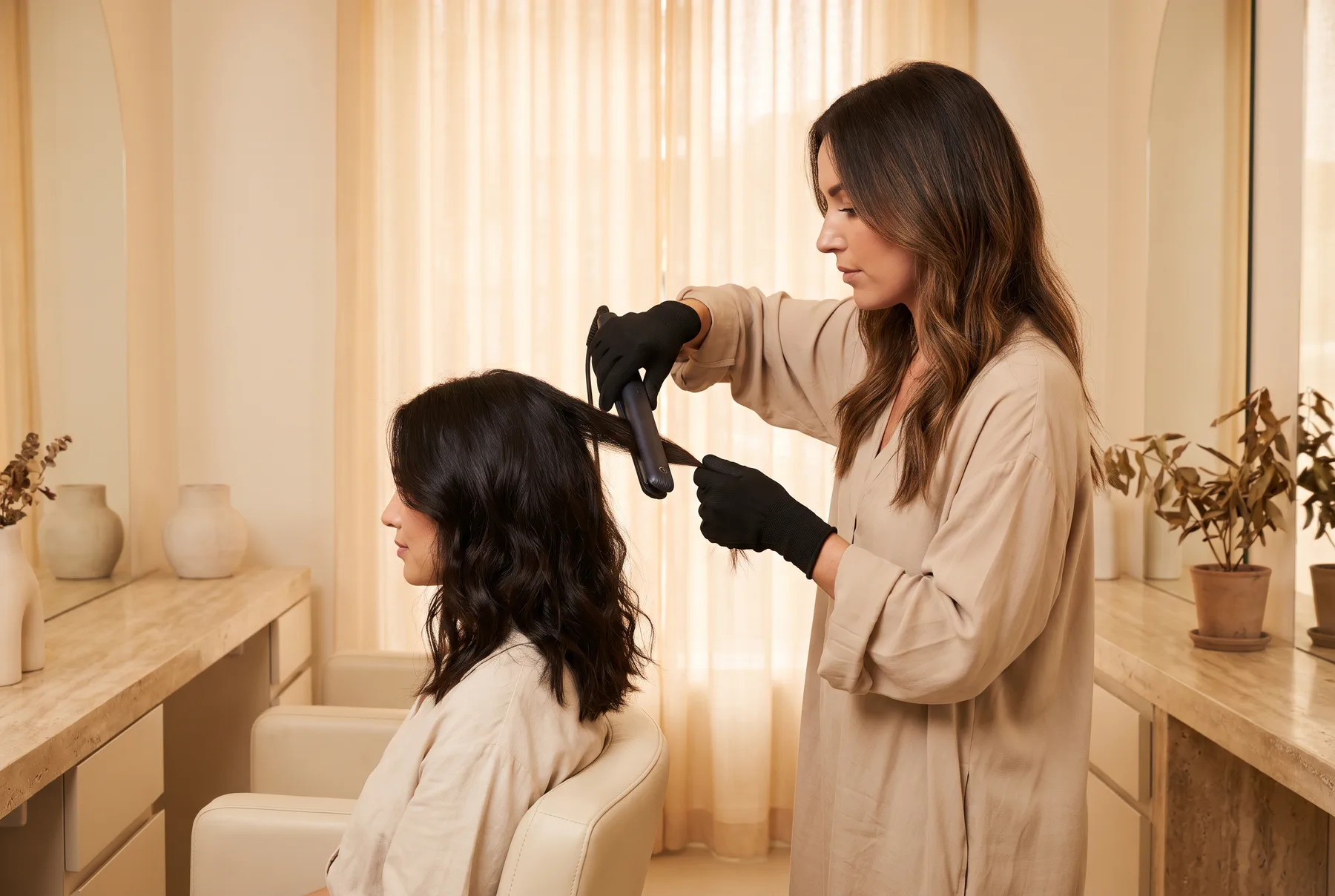
Hair gets much of its strength and shape from keratin structures and the connections that help hold them together. Bleaching and other chemical processes can affect disulfide bonds and make the fibre more porous or fragile. Heat and repeated handling can add other forms of wear.
Bond-focused products are designed around that structural-damage conversation. Some are used inside a professional chemical service. Others are weekly home-maintenance treatments or finishing products with a bond-care position.
The phrase does not reveal the formula. Two bond products may use different ingredients, target different interactions and require different application methods. Treat the exact label and protocol as the authority.
What “protein treatment” means
Protein treatment is a broad label. It can describe a rinse-out mask containing keratin, a conditioner with hydrolyzed proteins, post-service maintenance products or an advanced professional smoothing treatment.
Protein-derived ingredients can support the feel, manageability and surface of weathered hair. Their behaviour depends on the material, molecular size, concentration, surrounding formula and condition of the fibre.
That does not mean cosmetic protein permanently replaces the hair's original keratin. Hair above the scalp is a non-living fibre. A product may improve appearance, friction, combability or temporary strength without biologically healing it.
Bond repair, protein mask and keratin smoothing are three different decisions
Bond-focused care
Consider this category when chemical processing, bleaching or an established bond-care salon service is central to the hair history. Then choose between a professional system and its correct home-maintenance step.
Protein-positioned mask or conditioner
Consider this path when the goal is wash-day conditioning for dry, rough or processed-looking lengths and the exact formula fits the hair. A home mask should still be used according to its timing and rinse directions.
Professional keratin smoothing
This is a service decision, not a stronger version of a protein mask. The goal may include reduced visible frizz, curl or excess-looking volume and a smoother, straighter-looking finish. It requires professional assessment, a complete protocol, safety documents, ventilation and controlled heat.
How to choose the right category
Start with what happened to the hair
Ask:
- Has the hair been bleached, coloured, permed, relaxed or chemically straightened?
- Was a bond-care system used during the salon service?
- Is the main issue breakage during handling, roughness, tangling, dryness or an unwanted styling result?
- Does the customer want to maintain texture or deliberately pursue a smoother, straighter-looking finish?
- Which products are already in the routine?
Recent history is more useful than a single strand test.
Separate dryness from structural damage
Hair that feels rough may need better cleansing balance, rinse-out conditioner, a mask, leave-in care, gentler detangling or less heat. Roughness alone does not prove that the hair needs protein or bond care.
Begin with the simplest mismatch. If the hair lacks slip after shampoo, review conditioner. If it becomes stiff after several strengthening products, stop stacking them and reassess. If severe breakage follows a chemical service, speak with the stylist who performed it before adding another advanced treatment.
Decide whether the goal is maintenance or transformation
Home care maintains appearance and manageability between washes or appointments. A professional smoothing service intentionally changes the visible finish through a controlled process. A blog cannot turn one into the other.
Celine Claire's bond-care paths

TecPlex No.3 Bond Perfector: weekly home maintenance
TecPlex No.3 Bond Perfector is the 100 ml personal-use step in the TecPlex system. It is a creamy, rinse-out pre-shampoo treatment, not an oil and not a daily conditioner.
The current approved method is:
- Apply to unwashed, towel-dried hair.
- Distribute a generous, even amount.
- Leave for at least 10 minutes, following any longer timing on the current bottle.
- Rinse.
- Shampoo and condition.
- Use once weekly under the current label direction.
Explore TecPlex No.3 Bond Perfector
TecPlex No.1 and No.2: professional salon system
TecPlex Professional Bond Repair System contains No.1 Bond Reconstructor and No.2 Bond Stabilizer for trained professionals using an approved, compatible chemical-service protocol.
No.1 is the in-service step. No.2 follows in the approved professional sequence. The retail article must not publish a mixing chart, compatibility promise or processing method. Those details belong in the current technical manual and safety documentation.
Explore the TecPlex Professional System
Bonding Rosemary Oil / TecPlex No.7: leave-in finishing care
Bonding Rosemary Oil, identified on the bottle as Tec Plex 7 Bonding Oil, is a 90 ml leave-in oil with bond-care, smoothing and heat-protection positioning. Apply a small amount through wet, damp or dry lengths and ends according to its directions.
No.7 is not a substitute for the weekly No.3 treatment or the professional No.1 and No.2 service. It belongs around styling and finishing.
Celine Claire's protein and keratin paths

Argan Oil Hair Mask: home rinse-out care
Argan Oil Hair Mask is the clearest home-use protein-positioned mask in the current catalogue. Its product story includes keratin alongside argan oil, Vitamin E and coconut oil.
Apply it to freshly washed, towel-blotted hair, concentrate on dry or damaged-looking mid-lengths and ends, leave for 2 to 3 minutes, rinse, then follow the current product direction to use conditioner.
Keratin & Botox Shampoo and Conditioner: post-service maintenance
This pair is regular cleansing and rinse-out conditioning care for compatible post-service routines. The products do not repeat the salon treatment. Follow the stylist's first-wash timing and the exact product directions.
Explore Keratin & Botox Shampoo
Explore Keratin & Botox Conditioner
Nano Keratin Protein: professional smoothing treatment
Nano Keratin Protein is a 1000 ml Professional Use Only smoothing treatment designed for reduced visible frizz, curl and excess-looking volume with a smoother, straighter-looking finish.
It is not a weekly mask and should not be applied from instructions in a blog. The exact Celine Claire protocol, current ingredient list, Safety Data Sheet, ventilation requirements, suitability assessment and controlled heat instructions must be approved before service.
Can bond repair and protein treatment be used together?
Possibly, but not automatically and not because two labels both mention damage.
Before combining them, check:
- Whether either product belongs to a professional protocol.
- Whether the same wash day already contains a protein-positioned mask, keratin conditioner or strengthening leave-in.
- Whether the hair becomes stiff, coated, tangled or difficult to style after the current routine.
- Whether the products' directions and service aftercare permit the combination.
- Whether one product already solves the problem without another layer.
Change one variable at a time. A crowded repair routine can make it impossible to learn which step is helping.
What if hair feels worse after treatment?
Stop adding products and review the exact method. Common causes include too much product, incomplete rinsing, several rich layers, unsuitable heat, rough detangling or using a professional formula without its protocol.
If the scalp burns, swells, develops sores or remains irritated, stop using the product and seek medical advice. Sudden shedding, bald areas and hair breaking close to the scalp should not be treated by escalating cosmetic repair products.
Common comparison mistakes
Calling every keratin product a protein treatment
Keratin & Botox Conditioner, Argan Oil Hair Mask and Nano Keratin Protein have different roles, methods and safety levels.
Calling TecPlex No.3 a bonding oil
The old URL contains that wording, but the actual product is a cream pre-shampoo treatment. Preserve the URL for SEO while correcting the visible product identity.
Treating No.7 as the weekly treatment
No.7 is leave-in oil for styling and finishing. No.3 is the weekly rinse-out treatment.
Copying a competitor's bond science
A competing patent or ingredient does not prove how TecPlex works. Explain TecPlex from its current label, technical material and approved claims.
Using a professional smoothing product at home
Nano Keratin Protein is marked Professional Use Only. Do not improvise its procedure.
Promising permanent repair
Cosmetic results change with washing, styling, weather, new chemical services and ongoing handling. Avoid permanent-repair guarantees.
Frequently asked questions
Is bond repair the same as a protein treatment?
No. Bond repair is positioned around structural bond care. Protein treatment uses protein-derived ingredients within conditioning, strengthening or smoothing formulas. Exact mechanisms vary by product.
Is keratin a protein?
Yes. Hair fibres are largely made of keratin proteins, but a cosmetic containing keratin does not permanently replace the fibre's original structure.
Which is better for bleached hair?
There is no universal winner. Review the degree of lightening, breakage, porosity, current conditioner, salon service and existing products. Bond care may fit a bleach-related history, while suitable conditioning or protein-positioned care may support manageability. Avoid stacking everything at once.
How can I tell if my hair needs bond repair?
Recent bleaching or chemical-service history and an existing bond-care protocol are more meaningful than one symptom. Roughness or dryness alone can have other causes.
How can I tell if my hair needs protein?
No home stretch test diagnoses a protein need. Review processing history, the exact formula, current routine and dried result. The full protein guide explains the decision in more detail.
Can too much protein make hair feel stiff?
A routine with several protein-positioned or strongly coating products may leave some hair feeling stiff, rough or difficult to style. Reduce overlap and evaluate one product at a time rather than diagnosing “protein overload” from feel alone.
Is TecPlex No.3 a protein mask?
No. It is the weekly pre-shampoo home bond-care treatment in the TecPlex system.
Is TecPlex No.3 an oil?
No. It is a 100 ml cream treatment. The old canonical URL is retained for search equity, but the visible product name should be TecPlex No.3 Bond Perfector.
Is Bonding Rosemary Oil the same as TecPlex No.3?
No. Bonding Rosemary Oil is the leave-in No.7 finishing and heat-protection step. No.3 is a weekly rinse-out pre-shampoo treatment.
Is Nano Keratin Protein a protein mask?
No. It is a Professional Use Only smoothing treatment and requires its exact protocol and safety documentation.
Does bond repair replace conditioner?
Not automatically. TecPlex No.3 is followed by shampoo and conditioner under its current method. Other products follow their own instructions.
Can I use a protein mask and TecPlex No.3 on the same day?
Do not make that the default. Confirm compatibility and consider using one treatment at a time so the hair's response can be assessed clearly.
Does a bond treatment permanently repair split ends?
Do not promise permanent fusion. Products may improve appearance and manageability, while severely split ends usually require trimming.
Are bond treatments only for coloured hair?
No, but chemical history often makes the category more relevant. Choose by the exact product, hair condition and routine rather than colour status alone.
Is Celine Claire made in Canada?
Celine Claire is a Canadian haircare brand. Manufacturing origin should only be stated when documented for the exact product.
Sources
- França-Stefoni et al., “On Hair Care Physicochemistry: From Structure and Degradation to Novel Biobased Conditioning Agents”:
https://pmc.ncbi.nlm.nih.gov/articles/PMC9921463/ - Gavazzoni Dias, “Hair Cosmetics: An Overview”:
https://pmc.ncbi.nlm.nih.gov/articles/PMC4387693/ - “Effects of excessive bleaching on hair: comparative analysis of external morphology and internal microstructure”:
https://pmc.ncbi.nlm.nih.gov/articles/PMC11652465/ - U.S. FDA, “Formaldehyde in Hair Smoothing Products: What You Should Know”:
https://www.fda.gov/consumers/consumer-updates/formaldehyde-hair-smoothing-products-what-you-should-know - Approved Celine Claire masters for Blog 005 and Products 005, 007, 012, 013, 017, 021 and 022.