

The main advantages are a smoother-looking finish, less visible frizz, more shine and potentially easier styling. The disadvantages include cost, time, temporary results, possible texture or volume change, heat stress, maintenance and ingredient exposure. Review the exact INCI, Safety Data Sheet, protocol and provider training before choosing a treatment.
A professional keratin treatment is usually chosen to make hair look smoother, reduce visible frizz and create a sleeker finish. Many services use a liquid formula followed by blow-drying and flat-ironing. The exact ingredients, temperature, texture change and aftercare vary widely.
That variation is the central issue. One service may soften frizz without dramatically straightening the hair. Another may reduce curl and volume. Some heat-assisted smoothing formulas can contain or release formaldehyde-related vapour, so the product name alone is not enough for a safety decision.
What is a keratin hair treatment?
Keratin treatment is a broad name for professional smoothing services. A formula is applied to the hair and commonly finished with heat. The intended cosmetic result is smoother-looking, shinier and more manageable hair, often with less visible frizz, curl or excess volume.
The word keratin does not tell you:
- the complete formula;
- whether the service can release formaldehyde-related vapour;
- how straight the result will look;
- the heat and passes used;
- which hair conditions are suitable;
- when hair may be washed or coloured;
- how long the finish will last.
Those answers belong to the exact product and protocol.
Benefits of a keratin treatment
Less visible frizz
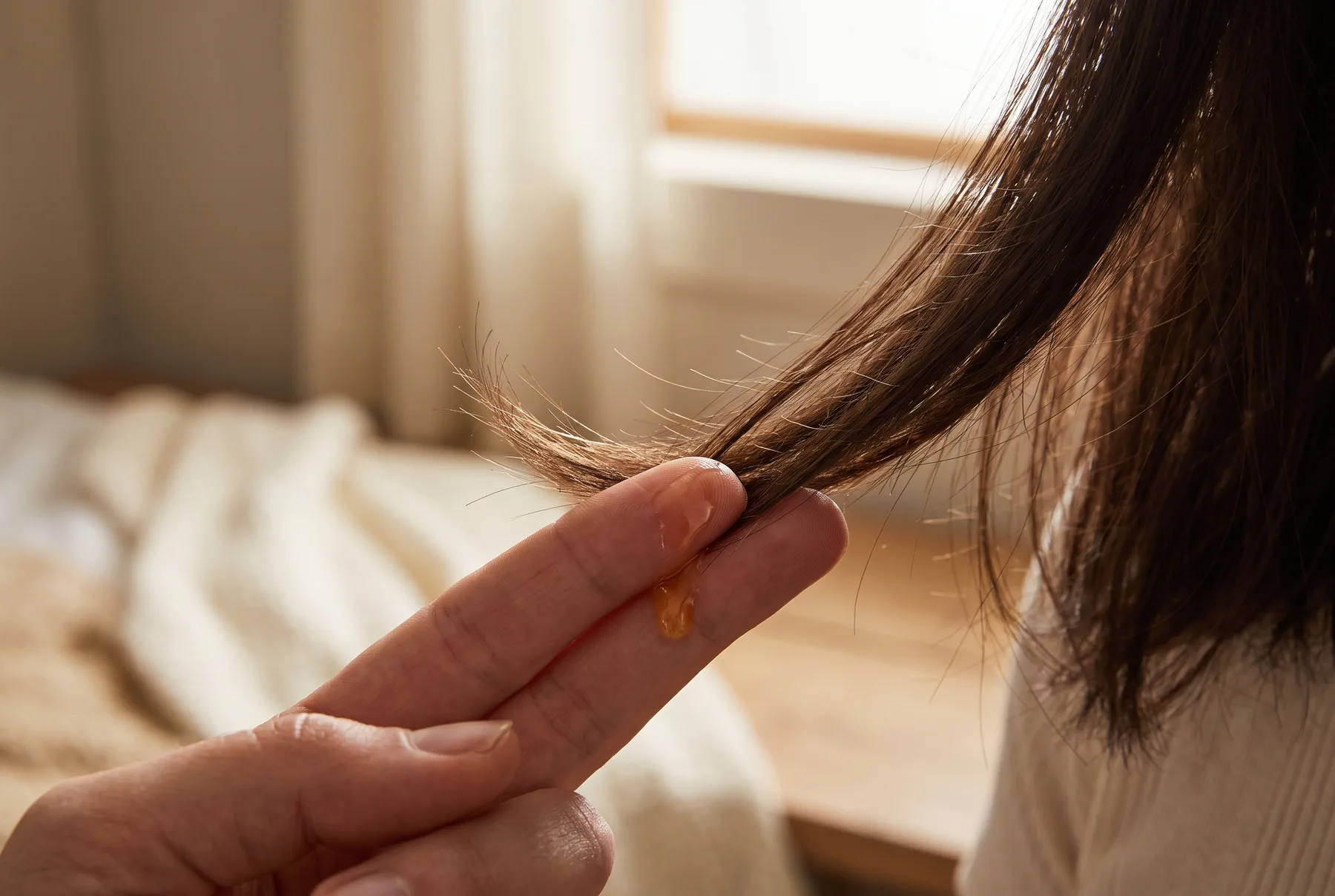
A smoothing service can create a more uniform surface and reduce the halo of frizz. The effect may be especially noticeable in humidity, but it is not a promise that hair will remain identical in every climate.
A smoother, shinier finish
When the surface looks more even, it can reflect light more consistently. Hair may appear glossier and feel more polished after the complete service.
Easier styling
Some clients find that blow-drying and straight styling take less effort after treatment. The amount of time saved depends on density, texture, desired finish, technique and how much curl or volume remains.
Reduced-looking curl or volume when desired
Some treatments are designed to loosen visible curl and reduce excess-looking volume. That can be a benefit when it matches the client's goal and a disadvantage when natural texture or fullness is important to them.
Temporary rather than permanent positioning
Many smoothing services fade with washing and time rather than creating a permanent straightening commitment. However, heat or chemical stress can still affect the fibre, and the exact return to the starting texture should not be guaranteed.
Benefits at a glance
| Possible advantage | Realistic interpretation | What to verify |
|---|---|---|
| Frizz control | Less visible surface roughness | Results on similar texture and condition |
| Shine | A more reflective finish | Consistent, unedited photography |
| Manageability | Easier detangling or styling for some people | Starting density, texture and desired finish |
| Curl or volume reduction | A sleeker, straighter-looking result | Degree of change and whether it is desired |
| Temporary finish | Less commitment than some permanent straighteners | Documented duration and repeat guidance |
Results vary. The table is not a guarantee.
Disadvantages and safety concerns
The formula may be difficult to evaluate
Salon menus sometimes name a service without identifying the product. Ask for the complete ingredient list, manufacturer directions and Safety Data Sheet before the appointment.
Formaldehyde-related exposure is a real question
Not every smoothing product contains formaldehyde. However, some products can contain or release formaldehyde-related vapour when heated. Ask specifically about formaldehyde, formalin, methylene glycol and ingredients that may release formaldehyde during blow-drying or flat-ironing.
A formaldehyde-free label should be supported by the current formula and safety documentation. Odour is not a reliable test.
Heat can increase damage in fragile hair
The process often uses high, repeated heat. Hair that is heavily bleached, breaking, gummy, highly porous or recently chemically treated may not tolerate the same protocol as resilient untreated hair.
The result may change texture and volume
Less curl or fullness can be a welcome outcome or an unwanted surprise. Ask how much movement is expected to remain and request verified results on a similar texture.
It takes time and money
The service may include consultation, preparation, application, processing, blow-drying, flat-ironing and aftercare. Cost depends on the product, hair length, density, provider and location.
The finish is not permanent
Washing, humidity, swimming, styling, new growth and aftercare can change the result. Do not rely on a universal duration claim.
Maintenance can be restrictive
The exact treatment may specify when to wash, colour, swim or use certain products. A service is less convenient when its aftercare conflicts with your schedule or routine.
Irritation can occur
Eye, nose, throat, breathing, skin or scalp symptoms are not normal proof that the treatment is effective. Tell the provider immediately, stop exposure and follow the product's safety instructions. Seek medical care for significant or persistent symptoms.
Who might consider a keratin smoothing service?
It may be worth discussing if you want:
- less visible frizz;
- a smoother, sleeker finish;
- reduced curl or volume;
- more shine;
- easier straight styling;
- a professional service with temporary cosmetic results.
An experienced provider should still assess the hair, scalp, previous services and goal.
Who should pause before treatment?
Pause and get product-specific guidance if:
- the hair is snapping, gummy, heavily lightened or very fragile;
- the scalp is inflamed, sore, broken or experiencing unexplained loss;
- you recently used bleach, colour, relaxer, perm, keratin or another smoothing system;
- you want to preserve maximum curl, coil or volume;
- the provider cannot supply the INCI, directions or SDS;
- you have reacted to a smoothing service before;
- you have asthma, allergies or chemical sensitivities;
- pregnancy or breastfeeding creates a formula-suitability question;
- ventilation or professional training appears inadequate.
The category name cannot resolve these issues.
Suitability by hair texture and condition
Straight or wavy hair
The service may focus on frizz and polish rather than dramatic straightening. Fine hair may lose more apparent volume than expected.
Curly hair
A treatment may loosen curl and reduce styling time. Ask how the curl pattern may change and whether the desired result is smoothing, stretching or straightening.
Coily hair
Do not assume one protocol fits every coil pattern. Sectioning, product amount, heat and desired texture retention require experienced assessment. Request proof on comparable hair without treating a generated image as a result.
Colour-treated or lightened hair
Previous chemical services can increase fragility and affect colour. The product protocol should specify compatibility, timing and heat adjustments. Generic online schedules are not sufficient.
Fragile or breaking hair
Smoothing can make hair look polished while the fibre remains vulnerable. When hair is snapping or unusually elastic, pause the service and seek professional assessment rather than hiding the condition under more heat.
Keratin treatment, Hair Botox, protein care or a mask?
| Option | Primary job | Process level | Key distinction |
|---|---|---|---|
| Keratin smoothing treatment | Frizz control and smoother or straighter-looking finish | Usually professional and heat-assisted | Formula and exposure controls matter |
| Hair Botox | Broad smoothing/conditioning category | Varies; Celine Claire uses a multi-step heat process | Not an injection and not one standardized formula |
| Protein treatment | Temporary cosmetic support for selected weakened fibre | Product-specific | Not automatically a straightening service |
| Hair mask | Rich conditioning, softness and slip | Rinse-out wash-day care | No advanced heat protocol |
Compare Hair Botox benefits and disadvantages or read the protein-treatment guide after its approved rebuild.
Keratin treatment vs Hair Botox
Keratin treatment is generally selected when a customer wants stronger smoothing, less visible frizz and a reduction in curl or excess-looking volume. Hair Botox is generally marketed around conditioning, softness, shine and manageability.
The line is not fixed. Some Hair Botox treatments use heat and create a sleek result. Some keratin treatments preserve more movement than their category name suggests. Compare the exact product rather than assuming one is gentle and the other is strong.
| Compare | Keratin treatment | Hair Botox |
|---|---|---|
| Common goal | Smoother or straighter-looking finish with curl, frizz or volume reduction | Conditioned, polished finish with softness, shine and manageability |
| Formula standard | No universal formula | No universal formula |
| Heat | Often part of the service | May be part of the service; Celine Claire's process is heat-assisted |
| Texture change | Can be more deliberate | Varies from conditioning-led to visibly sleek |
| Safety review | Ingredient list, warnings, SDS when applicable, ventilation and exact protocol | The same evidence is required |
| Celine Claire product | Nano Keratin Protein, Professional Use Only | Hair Botox, advanced treatment with professional application recommended |
Choose according to the desired finish, hair condition, previous services and complete documentation. Do not combine the two Celine Claire systems or copy timing, heat or aftercare between them.
Compare Hair Botox benefits and disadvantages
Questions to ask before booking
- What is the exact product name?
- May I see the complete ingredient list and Safety Data Sheet?
- Can the product contain or release formaldehyde-related vapour when heated?
- What evidence supports any
formaldehyde-free,no-fumeorodour-freeclaim? - Is the treatment Professional Use Only?
- What training has the provider completed?
- How is the workspace ventilated?
- How will heat and passes be adjusted to my hair condition?
- What degree of curl and volume reduction should I expect?
- How does recent colour, bleach, relaxer, perm or smoothing treatment affect suitability?
- What washing, colour, swimming and aftercare rules apply to this exact product?
- What should happen if irritation begins?
- How is a result documented, and how long is it supported to last?
Specific answers are a better trust signal than a list of adjectives.
What happens during the service?
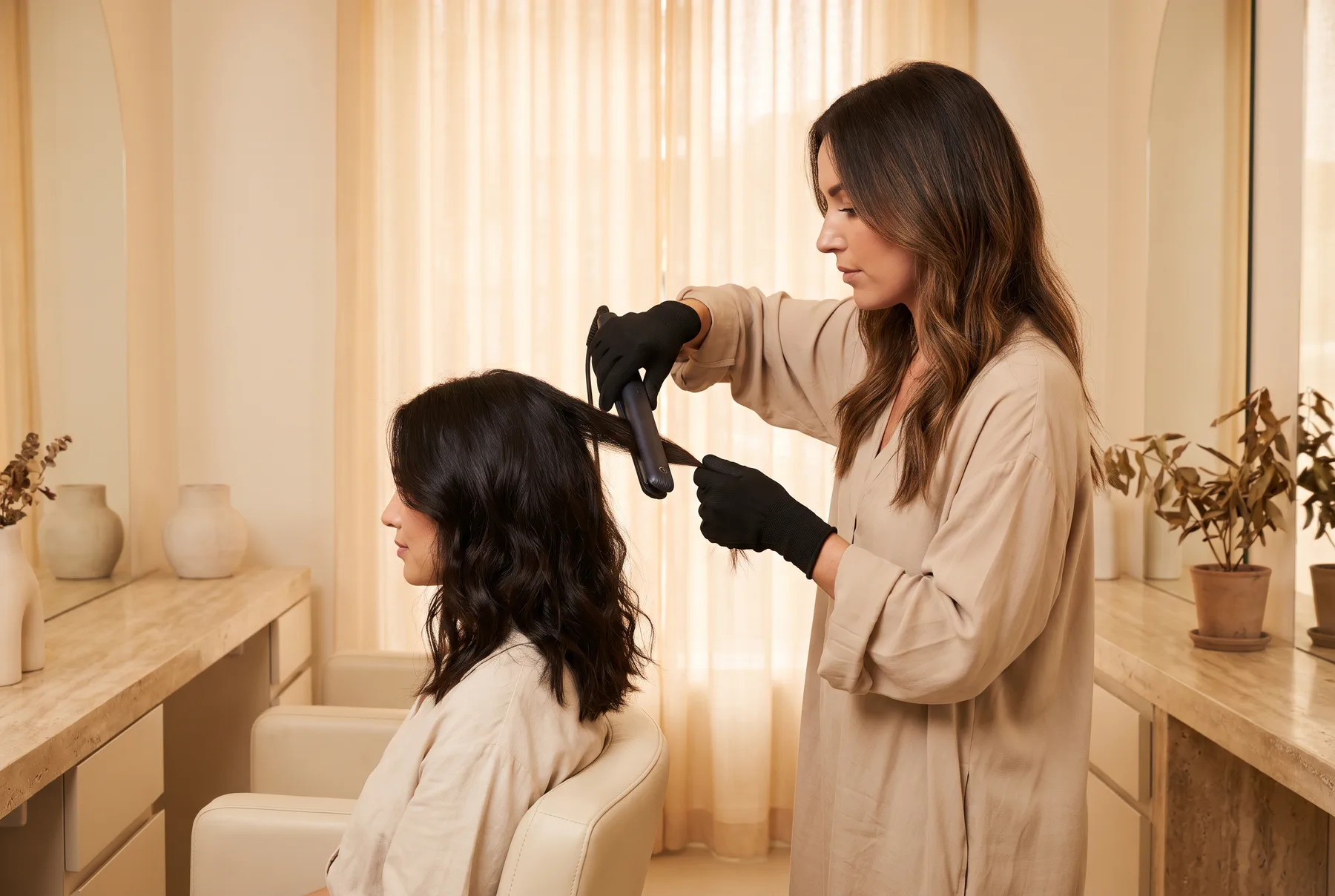
The exact protocol varies, but a professional process may include:
- consultation and hair-history review;
- preparation cleansing;
- drying to the specified level;
- sectioned product application;
- product-specific processing;
- blow-drying;
- controlled flat-ironing;
- treatment-specific rinse or no-rinse stage;
- approved aftercare.
Do not use this overview as an executable protocol. Product quantity, scalp clearance, timing, temperature, passes, ventilation, protective equipment and rinse method must come from the exact current directions.
Celine Claire Nano Keratin Protein
Celine Claire Nano Keratin Protein is the professional smoothing and straighter-finish option in the current product catalogue. It is a 1000 ml Professional Use Only treatment designed to reduce visible frizz, curl and excess-looking volume while supporting a smoother, softer and more manageable finish.
The bottle and product page establish the professional identity. The complete current INCI, Safety Data Sheet, contraindications, ventilation instructions, temperature, pass count, colour compatibility, rinse method and aftercare must be confirmed with your stylist.
Claims such as 100% formaldehyde-free, no fumes, odour-free, all hair types and a fixed duration remain under evidence review. Do not use them as badges or sales promises until the documents support the exact wording.
Review Nano Keratin Protein or explore the Repair & Smoothing Routine.
Aftercare: follow the treatment, not a generic rule
There is no responsible universal aftercare schedule for every keratin treatment. Confirm:
- when the hair may be washed;
- the compatible cleanser and conditioner;
- whether the hair can be clipped, tied or tucked during an initial period;
- swimming and exercise guidance;
- heat-styling limits;
- colour or bleach timing;
- maintenance products;
- expected duration;
- repeat-treatment criteria.
Keratin & Botox Shampoo and Conditioner have their own product pages. Their names do not automatically prove compatibility with every professional smoothing formula. Use them only when the exact protocol supports the pairing.
How to evaluate before-and-after proof
Check whether the result identifies:
- exact product and protocol;
- starting texture and condition;
- previous colour or chemical services;
- provider and service date;
- immediate result versus after-wash result;
- aftercare and number of washes;
- consistent angle, lighting, wetness and styling.
An immediate flat-ironed image shows the combined service and styling finish. It does not prove duration, safety or permanent repair.
Frequently asked questions
Does a keratin treatment permanently straighten hair?
Most smoothing treatments should not be described as permanent straighteners. The visible effect changes with washing, time and new growth. The exact formula may still alter curl or volume more than expected.
How long does a keratin treatment last?
There is no universal answer. Product, protocol, texture, wash frequency, swimming, humidity, styling and aftercare affect the finish. Use the duration supported by the exact product.
How often can I get a keratin treatment?
Follow the treatment-specific protocol and professional assessment. Do not use a generic 3-6 month schedule, especially when hair is fragile or chemically treated.
Is keratin treatment suitable for curly or coily hair?
It can be used on some curly and coily hair when the formula, protocol and desired texture change are appropriate. The result may reduce curl and volume. A single process should not be assumed suitable for every texture or condition.
Can I colour my hair after keratin treatment?
Colour timing is product-specific. Ask the treatment manufacturer and colour professional to reconcile both protocols. Do not rely on a universal two-week rule.
How long should I wait before washing?
Follow the exact treatment directions. Some products allow same-day rinsing; others specify a delay. A universal 72-hour instruction is not reliable.
Must I use sulfate-free shampoo afterward?
Use the aftercare named by the treatment protocol. A sulfate-free label alone does not establish compatibility, and not every treatment has identical requirements.
Can I swim after a keratin treatment?
Check the exact aftercare instructions. Chlorinated or salt water may affect the cosmetic finish, but the waiting period and protection method vary.
Is a keratin treatment safe during pregnancy or breastfeeding?
Suitability cannot be decided from the category name. Review the exact formula, ventilation and safety documents with an appropriate healthcare professional and trained provider.
Can keratin treatment cause hair loss?
Keratin smoothing is not a treatment for hair loss. Excessive heat, tension, irritation or chemical overlap may contribute to breakage or shedding. Sudden, patchy or persistent loss needs medical assessment.
Is a formaldehyde-free treatment risk-free?
No. The claim needs evidence, and every formula has its own hazards and directions. Ask whether the product can release formaldehyde-related vapour under heat and review the SDS.
What should I do if my eyes, throat or chest feel irritated?
Tell the provider immediately and stop exposure. Move to fresh air as appropriate, follow the safety instructions and seek medical help for significant or persistent symptoms.
Is Nano Keratin Protein a regular protein mask?
No. It is a professional smoothing treatment with a heat-assisted protocol, not a rinse-out wash-day mask.
Is Nano Keratin Protein made in Canada?
Celine Claire is a Canadian haircare brand. The website does not claim that Nano Keratin Protein is made in Canada.
Is keratin treatment better than Hair Botox?
Neither is universally better. Keratin treatment may fit a customer seeking clearer smoothing or curl reduction. Hair Botox may fit a customer prioritizing conditioning, softness and polish. The exact formula and process decide more than the category name.
Does Hair Botox straighten hair as much as keratin treatment?
Not predictably. Results vary by product, starting texture, hair condition and heat process. Define the desired texture change and review comparable verified results before treatment.
Can I get keratin treatment after Hair Botox?
Do not follow a generic waiting period. Ask the product manufacturers and a qualified professional to review both exact protocols, the treatment dates and the current condition of the hair.
Sources
- Health Canada: Safety of cosmetic ingredients supports the Canadian formaldehyde limit and heated-vapour context for hair-straightening products.
- Health Canada: Cosmetic advertising, labelling and ingredients supports accurate claims, directions and ingredient disclosure.
- FDA: Formaldehyde in hair-smoothing products supports formula, SDS, professional application, ventilation and reaction questions.
- OSHA: Formaldehyde in hair products supports worker exposure controls and scrutiny of unsupported
formaldehyde-freelabels. - American Academy of Dermatology: Hair-loss management tips supports avoiding additional heat and chemical straightening on fragile hair.