

Hair rebonding is a professional chemical straightening service that changes bonds within the treated hair, reshapes it with controlled heat and stabilizes the straighter form with a neutralizing stage. The treated length remains permanently altered, while new growth keeps its natural texture.
That distinction matters. Rebonding is a larger commitment than a keratin smoothing treatment or blowout that gradually fades. It may reduce repeated straight styling, but it also introduces chemical, heat, breakage and maintenance risks that no conditioner can erase.
- How rebonding works
- What results are permanent
- Benefits and limitations
- Rebonding versus keratin smoothing
- Side effects and compatibility risks
- Who should pause
- Consultation questions
- Aftercare and new growth
- Celine Claire smoothing alternatives and maintenance products
What is hair rebonding?
Hair shape is influenced in part by bonds within the hair fibre. A rebonding system chemically changes those bonds, the professional aligns the hair into a straighter form, and a neutralizing step stabilizes the treated shape.
The process changes hair fibre, not DNA. Hair growing from the scalp is unaffected by treatment applied to existing lengths. As the hair grows, natural-texture roots appear above the straightened section.
Rebonding is sometimes discussed alongside Japanese thermal reconditioning or chemical relaxing because all can create permanently straighter treated hair. The names and chemistry are not interchangeable. Ask which exact system the salon uses and what its manufacturer says about compatibility, steps and result.
What usually happens during rebonding?
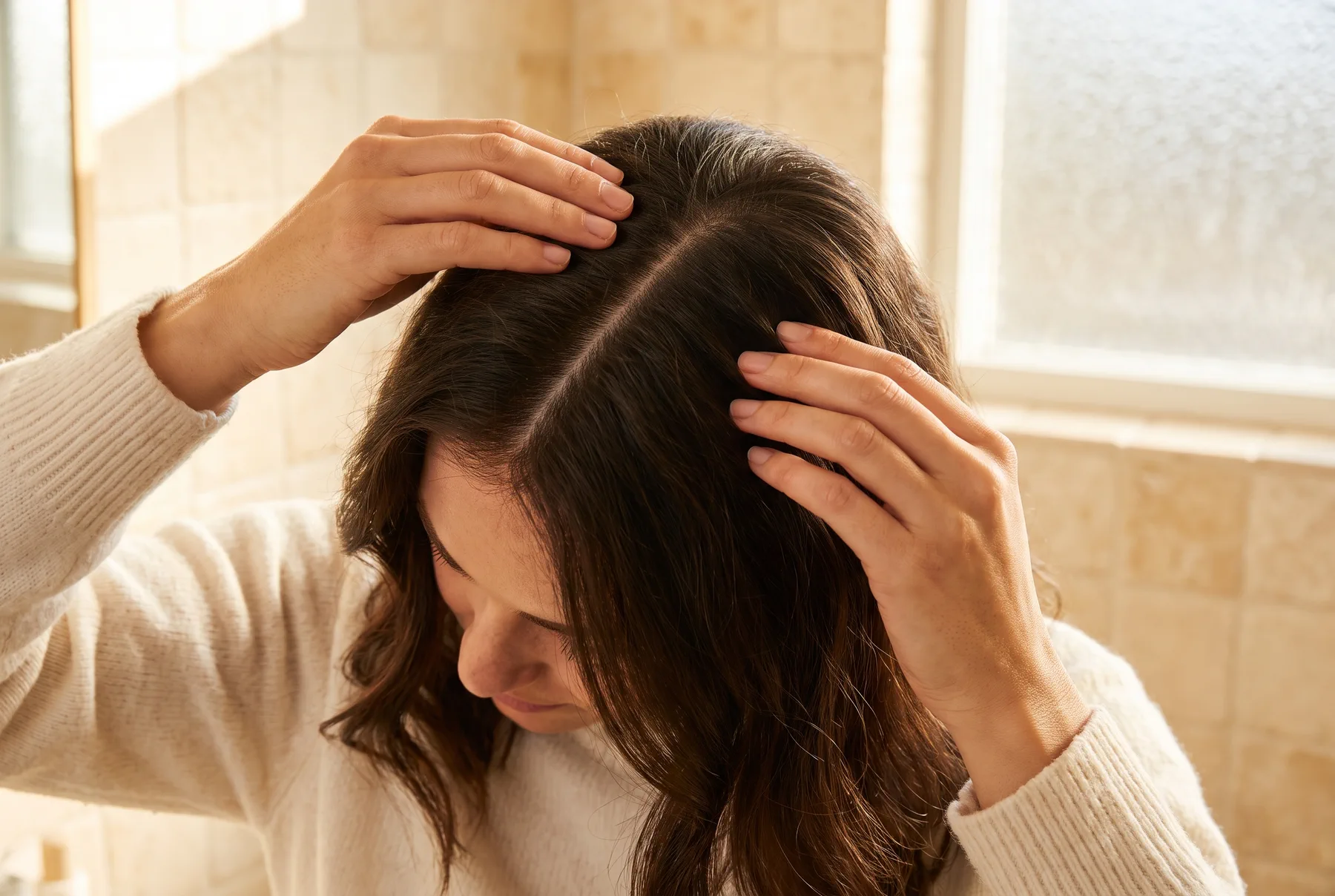
Every system has its own protocol. The outline below explains the service logic, not instructions for home application.
1. Consultation and history
The professional examines the hair and records colour, bleach, relaxer, perm, smoothing and rebonding history. Desired straightness, volume retention and future colour plans should be discussed before chemicals are opened.
2. Compatibility assessment
The stylist determines whether the exact system can be used on the current hair. A manufacturer-directed strand or compatibility test may be required. If the history is unknown or the strand responds poorly, the service should be postponed.
3. Chemical restructuring
A reducing or straightening product is applied according to the system's sectioning, placement and timing rules. It changes bonds so the hair can be reshaped. Applying more product or waiting longer does not create a safer or better result.
4. Rinsing and preparation for heat
The product is removed or handled exactly as directed before blow-drying and ironing. The required moisture level and preparation vary by system.
5. Controlled straight shaping
Small sections are aligned with professional heat according to hair condition and the manufacturer's protocol. Excessive temperature, tension or repeated passes can add damage.
6. Neutralization
The matching neutralizer helps stabilize the hair in its new configuration. A neutralizer from another system is not a safe substitute.
7. Finish and aftercare plan
The professional completes the service, explains the first-wash timing and documents maintenance, future colour compatibility and new-growth planning.
Do not copy a processing time, iron temperature or wash delay from another brand. Those details can materially change the outcome.
Is hair rebonding permanent?
It is permanent on the portion successfully treated. Shampoo does not restore that length to its original curl pattern. The natural pattern returns through new growth, not because the treatment “wears off” in the same way as temporary smoothing.
The appearance can still change. Straightened hair weathers, colour fades, ends become older and breakage can occur. “Permanent” describes the structural shape change, not a guarantee that the hair remains glossy, strong or identical over time.
Benefits of hair rebonding
A lasting straight finish
For someone who consistently wants straight hair, rebonding can create a durable result through the treated lengths. It reduces the need to recreate the entire pattern change after each wash.
Less repeated direct heat
A successful service may reduce routine flat-iron use. This benefit is lost if high heat is still applied every day or new growth is repeatedly pressed without control.
Reduced visible curl and volume
Rebonding can create a substantial pattern and volume change. That is useful only when it matches the intended look. Someone who values fullness or frequently returns to curls may find the same change limiting.
A smoother-looking silhouette
Aligned hair can appear sleeker and reflect light more evenly. Shine is an appearance outcome, not evidence that the chemical process repaired the fibre.
A more predictable straight wash-day result
The treated section generally remains straighter after washing, which may shorten styling time. Roots and lengths will behave differently as new growth appears.
Side effects and tradeoffs

Breakage
Chemical restructuring and heat can reduce strength, especially when hair is already bleached, fragile or repeatedly processed. Overlap onto previously straightened hair creates a high-risk zone.
Scalp irritation or chemical burns
Straightening products can irritate or burn skin when applied incorrectly, left too long or used on an already damaged scalp. Tell the professional immediately if pain or burning develops.
Loss of elasticity and styling flexibility
Treated hair may feel less flexible and may not hold curls or volume as it did before. Trying to force frequent texture changes afterward can add heat and mechanical stress.
Uneven processing
Mixed porosity, old colour bands and overlapping chemical histories can produce uneven straightness or fragile sections. The final result may differ across roots, mid-lengths and ends.
A visible new-growth line
Natural roots grow beside permanently straight lengths. The transition point can tangle or break if handled roughly. New-growth services require precise isolation from previously treated hair.
Cost and time commitment
Appointment length and cost depend on location, density, length, history and system. Maintenance also involves aftercare and future professional assessments. Ask the salon for an exact quote and plan.
Possible reactions and exposure
Product formulas vary. Ask for the ingredient list, warnings and Safety Data Sheet. Heated smoothing products are a separate category, but some salons use overlapping marketing terms. If a product will be heated, ask specifically about formaldehyde, formalin, methylene glycol, vapour hazards and ventilation.
Hair rebonding versus keratin treatment
| Question | Hair rebonding | Keratin or Brazilian smoothing |
|---|---|---|
| Main goal | Permanently straighter treated hair | Reduced visible frizz, curl or styling effort |
| Treated-length change | Permanent structural reshape | Generally fades over time |
| New growth | Natural pattern | Natural pattern |
| Texture retention | Usually less natural pattern remains in treated hair | Some movement or curl may remain, depending on formula |
| Main risk focus | Chemical compatibility, overlap, neutralization and heat | Formula ingredients, heated-use exposure, technique and heat |
| Best question | Am I ready to grow out a permanent straight section? | How much smoothing is realistic, and what does this formula release when heated? |
Read the keratin treatment guide for a full assessment. Review the permanent straightening comparison when deciding among relaxer, thermal reconditioning and rebonding.
Who should pause before rebonding?
Rebonding may be inappropriate or require substantial modification when there is:
- heavy or overlapping bleach;
- severe breakage or weak, gummy wet hair;
- an unknown chemical history;
- previous incompatible straightening or perming;
- a painful, scratched, inflamed or wounded scalp;
- sudden or patchy hair loss;
- an upcoming colour or chemical service that has not been coordinated;
- no access to the exact product identity, protocol or trained professional.
Hair type alone does not decide suitability. Thick hair can be chemically fragile, while fine hair can have no previous damage. Condition and compatibility matter more than a broad texture label.
Questions to ask before booking
- What exact rebonding system and chemistry will be used?
- Is it approved for my colour, bleach and service history?
- What testing does the manufacturer require?
- How will previously treated lengths be protected from overlap?
- What straightness and volume change is realistic for me?
- Which ingredients and warnings should I review?
- Is the Safety Data Sheet available?
- What ventilation and protective equipment are required?
- What happens if my strand test is weak or uneven?
- Which first-wash and aftercare instructions belong to this exact system?
- When can future colour or other chemical services be considered?
- How will new growth be managed without treating old lengths again?
A clear answer should identify the system and protocol, not simply promise that the stylist has done rebonding before.
Hair rebonding aftercare

Follow the exact first-wash timing
Some systems require a waiting period or restrictions on water, clips, ponytails and bends. Others differ. The old article's universal 48–72-hour rule is not reliable for every product.
Use compatible cleansing
Choose shampoo according to the rebonding manufacturer's aftercare and scalp needs. A sulfate-free label does not automatically establish compatibility or gentleness.
Condition the lengths
Use rinse-out conditioner where the hair needs slip and softness. A mask can improve feel and manageability, but it cannot reverse chemical breakage or restore virgin structure.
Detangle with care
Work in sections from ends upward with adequate slip. The area where new growth meets rebonded hair deserves particular care.
Limit added heat
Use the lowest effective tool temperature and fewer passes. Apply an appropriate heat protectant, and let any spray dry before direct-contact ironing.
Protect hair around swimming and sun
Ask the stylist when swimming is permitted. Once approved, practical steps can include wetting hair before entering the pool, using a swim cap when suitable and rinsing promptly afterward. Sun protection should avoid tight, high-tension styles.
Return for assessment, not automatic overlap
Do not apply rebonding product throughout old lengths because roots have grown. The professional should identify new growth and protect previously treated sections.
Where Celine Claire products fit
Celine Claire does not currently have a verified hair-rebonding chemical system in the approved catalogue. Do not market another product as rebonding.
Nano Keratin Protein
Nano Keratin Protein is a 1000 ml Professional Use Only smoothing treatment designed to reduce visible frizz, curl and excess-looking volume while supporting a smoother, straighter-looking finish. It is not rebonding and must not promise permanent straightening.
Its public launch still requires the exact current professional protocol, complete ingredient list, Safety Data Sheet, contraindications, ventilation directions and heat guidance.
Hair Botox
Hair Botox is advanced heat-assisted smoothing care. It is not a rebonding product, injectable treatment or permanent straightener. Its own package, formula and protocol verification gate remains in force.
Keratin & Botox wash pair
Keratin & Botox Shampoo and Keratin & Botox Conditioner support compatible everyday smoothing and conditioning routines. They do not chemically rebond hair or strengthen broken internal bonds.
Scheduled mask care
Argan Oil Hair Mask provides richer rinse-out conditioning for dry or damaged-looking hair. Use its exact two-to-three-minute directions. Do not claim it repairs chemical overprocessing.
Heat styling preparation
Heat Shield Hair Spray is used before blow-drying, straightening or curling to support heat protection, softness, frizz control and shine. It cannot make unlimited heat harmless.
Explore the Repair & Smoothing Routine or use the Hair Quiz for Celine Claire product discovery, not diagnosis or rebonding suitability.
Frequently asked questions
Is hair rebonding permanent?
Yes, on the treated portion. New growth keeps its natural pattern, so the overall result changes as roots grow and straightened lengths age.
Does hair rebonding wear off?
The chemically changed length does not simply wash back to its original texture. It can lose shine, weather, break or be cut away, while natural texture returns through new growth.
Is rebonding the same as relaxing?
Both permanently straighten treated hair by changing internal bonds, but the chemical systems, stages and intended finish can differ. Do not interchange their products or directions.
Is rebonding the same as keratin treatment?
No. Rebonding permanently restructures the treated length. Keratin smoothing generally reduces frizz or curl temporarily and fades with time.
Does rebonding damage hair?
It carries damage risk because it combines chemical restructuring and heat. Starting condition, compatibility, technique, overlap and aftercare affect the outcome. No professional can promise zero damage.
Can bleached hair be rebonded?
Bleached hair may be too fragile or incompatible with the selected system. A trained professional must review the exact bleach history, condition and manufacturer restrictions. A generic yes-or-no answer is unsafe.
Can colour-treated hair be rebonded?
Possibly, depending on the colour system, rebonding chemistry and hair condition. The services must be professionally coordinated. Do not rely on a universal waiting period.
Can I rebond my hair at home?
This guide does not recommend home rebonding. Chemical placement, timing, neutralization, heat and overlap control require an exact professional protocol.
How long does a rebonding appointment take?
It varies with length, density, history, system and test results. Ask the salon for an estimate after consultation rather than relying on a universal three-to-eight-hour range.
How long should I wait before washing?
Follow the exact manufacturer's and stylist's instructions. Do not assume every rebonding system requires 48–72 hours.
Do I need sulfate-free shampoo?
Not as a universal rule. Use a cleanser compatible with the exact service, scalp and hair condition. Review the full formula and professional aftercare rather than one marketing label.
Can rebonded hair be curled?
The treated hair has been permanently reshaped straight and may be more fragile. Heat curling may create a temporary style but adds stress and may not hold as before. Discuss styling flexibility before committing.
Can rebonding make hair frizz-free in humidity?
No treatment should promise weather-proof hair. Rebonding changes the treated curl pattern, but hair condition, new growth, humidity and styling still affect the finish.
What happens when roots grow?
Natural texture appears at the scalp while older lengths remain straight. The transition may need careful detangling and professional new-growth planning.
Can rebonding cause hair loss?
It can contribute to hair breakage, and scalp injury may be associated with shedding or more serious complications. Sudden, patchy or persistent hair loss requires assessment by a dermatologist rather than another chemical service.
What should I do if my scalp burns?
Tell the professional immediately. The product should be handled according to its emergency and rinse directions. Seek medical attention for significant burns, swelling, eye involvement, breathing symptoms or persistent pain.
Is Celine Claire Nano Keratin Protein a rebonding product?
No. It is Professional Use Only smoothing care designed for reduced visible frizz, curl and excess-looking volume with a straighter-looking finish. Permanent rebonding must not be claimed.
When should I see a dermatologist?
Seek medical assessment for scalp burns, sores, persistent inflammation, infection signs, sudden shedding or patchy hair loss.
Sources
- American Academy of Dermatology,
Black hair: Tips for everyday carehttps://www.aad.org/public/everyday-care/hair-scalp-care/hair/care-african-american - American Academy of Dermatology,
Hair loss: Tips for managinghttps://www.aad.org/public/diseases/hair-loss/treatment/tips - U.S. FDA,
Hair Dyes and Relaxershttps://www.fda.gov/media/91766/download - U.S. FDA,
Hair Smoothing Products That Release Formaldehyde When Heatedhttps://www.fda.gov/cosmetics/cosmetic-products/hair-smoothing-products-release-formaldehyde-when-heated - Review article,
Effects of chemical straighteners on the hair shaft and scalphttps://pmc.ncbi.nlm.nih.gov/articles/PMC9073307/ - Existing Celine Claire article and WordPress REST metadata.
- Approved Celine Claire product and routine masters.