

Scalp exfoliation removes some material from the skin's surface through a physical action, an exfoliating ingredient or a formula that combines both. It may be useful when ordinary shampooing is not fully clearing removable product residue, excess oil or loose surface flakes. It is not a requirement for healthy hair, and it should not be used to scrub away unexplained irritation.
The safest starting point is simple: wash the scalp properly, rinse thoroughly and see how it responds. If buildup remains and the skin is comfortable, choose one purpose-made exfoliation method and follow its label. If the scalp is painful, inflamed, broken or persistently itchy, skip the scrub and seek professional guidance.
- What scalp exfoliation can and cannot do
- Physical and chemical exfoliation compared
- A quick suitability check
- How to exfoliate without aggressive scrubbing
- Frequency and signs of over-exfoliation
- How exfoliation differs from dandruff or dry-scalp care
- Where Celine Claire products fit
- When to stop and consult a professional
What is scalp exfoliation?
Exfoliation is the removal of dead cells from the outer surface of skin. A scalp product may also help loosen or wash away some oil, dry-shampoo residue and styling-product buildup. Hair makes application less direct than facial or body skincare, so sectioning and careful rinsing matter.
There are two broad methods. Physical exfoliation uses friction from a scrub, flexible scalp tool or similar action. Chemical exfoliation uses ingredients that loosen surface-cell buildup without relying on the same amount of rubbing. Some shampoos and pre-wash treatments combine cleansing, exfoliating ingredients and light physical massage.
Neither route is automatically right for everyone. A calm, oily scalp with substantial styling residue has a different starting point from a dry scalp that burns after washing. The symptom matters more than the trend.
What are the realistic benefits?
Removing some surface residue
Hair oils, dry shampoo, waxes, gels and leave-in products can collect near the roots. Correct shampooing is the first removal step. If a compatible cleanser and proper rinsing leave persistent removable residue, a scalp-specific exfoliant may provide an occasional deeper-cleaning step.
Loosening loose surface flakes
Some exfoliating formulas can help lift loose material so it rinses away. That does not reveal why the scalp is flaking. Dry skin, dandruff, product irritation, eczema, psoriasis and infection can overlap in appearance, and each can require a different response.
Creating a cleaner-feeling starting point
A person who uses substantial styling product may prefer the feel of the scalp after a periodic exfoliating wash. “Cleaner-feeling” is a cosmetic result. It is not evidence that follicles have been opened, detoxified or made to breathe.
Helping a prescribed treatment reach scale-covered skin
In some diagnosed scalp conditions, a clinician may use or recommend a scale-loosening ingredient as part of a treatment plan. This is medical descaling, not a reason to copy the method at home with a cosmetic scrub. Product choice, strength and timing belong with the professional plan.
What scalp exfoliation cannot promise
Scalp exfoliation does not have a sound basis for promising hair regrowth, thicker hair, permanent oil balance or dandruff prevention. It also does not guarantee that a cosmetic serum or oil will “penetrate the follicle” or work better.
Hair growth and shedding can be affected by many factors beyond surface buildup. Dandruff is also not simply dirt that can be scrubbed away. If hair loss, persistent scaling or inflammation is the concern, choose the relevant guide or speak with a qualified professional rather than increasing exfoliation.
Physical versus chemical scalp exfoliation
| Method | How it works | May suit | Main caution |
|---|---|---|---|
| Physical scrub | Particles plus light fingertip movement loosen surface material | A calm scalp when the product is designed for scalp use | Pressure, sharp particles and repeated rubbing can irritate or break skin |
| Flexible scalp tool | Soft tips help distribute shampoo and provide light mechanical action | People who struggle to reach the scalp with fingertips | Hard bristles, nails, tangling and prolonged scrubbing add friction |
| Exfoliating shampoo | Cleansing base contains an exfoliating or scale-loosening ingredient | A simpler wash-step approach | Follow label contact time; do not assume daily use |
| Chemical pre-wash | An acid or related ingredient acts before cleansing | Someone using a purpose-made, clearly labelled scalp formula | Strength, contact time and ingredient combinations affect irritation risk |
| Professional descaling | A clinician selects a method for diagnosed scale or plaques | A person under professional care | Do not substitute a cosmetic scrub for prescribed treatment |
A scalp product should identify where it goes, how long it stays on, how often it can be used and how it should be rinsed. If the label is written for the face or body rather than the scalp, choose another product.
Should you exfoliate your scalp?
Consider it only when
- the scalp is intact and generally comfortable;
- ordinary shampooing and complete rinsing have been tried first;
- removable styling or dry-shampoo residue keeps collecting at the roots;
- the chosen formula is specifically designed for the scalp;
- you can follow its frequency and contact-time directions;
- no professional has told you to avoid it.
Pause and investigate instead when
- the scalp burns, stings, feels raw or hurts to touch;
- flakes are thick, adherent, rapidly returning or spreading beyond the hairline;
- there are sores, scabs, cracks, bleeding, pus or discharge;
- a rash appeared after a new colour, relaxer, treatment or hair product;
- there is sudden or patchy hair loss;
- the symptoms are persistent or worsening;
- you have a diagnosed scalp condition and exfoliation is not part of the care plan.
Itch by itself is not a cue to scrub. More friction can turn an uncertain problem into a damaged skin barrier.
How to exfoliate the scalp carefully
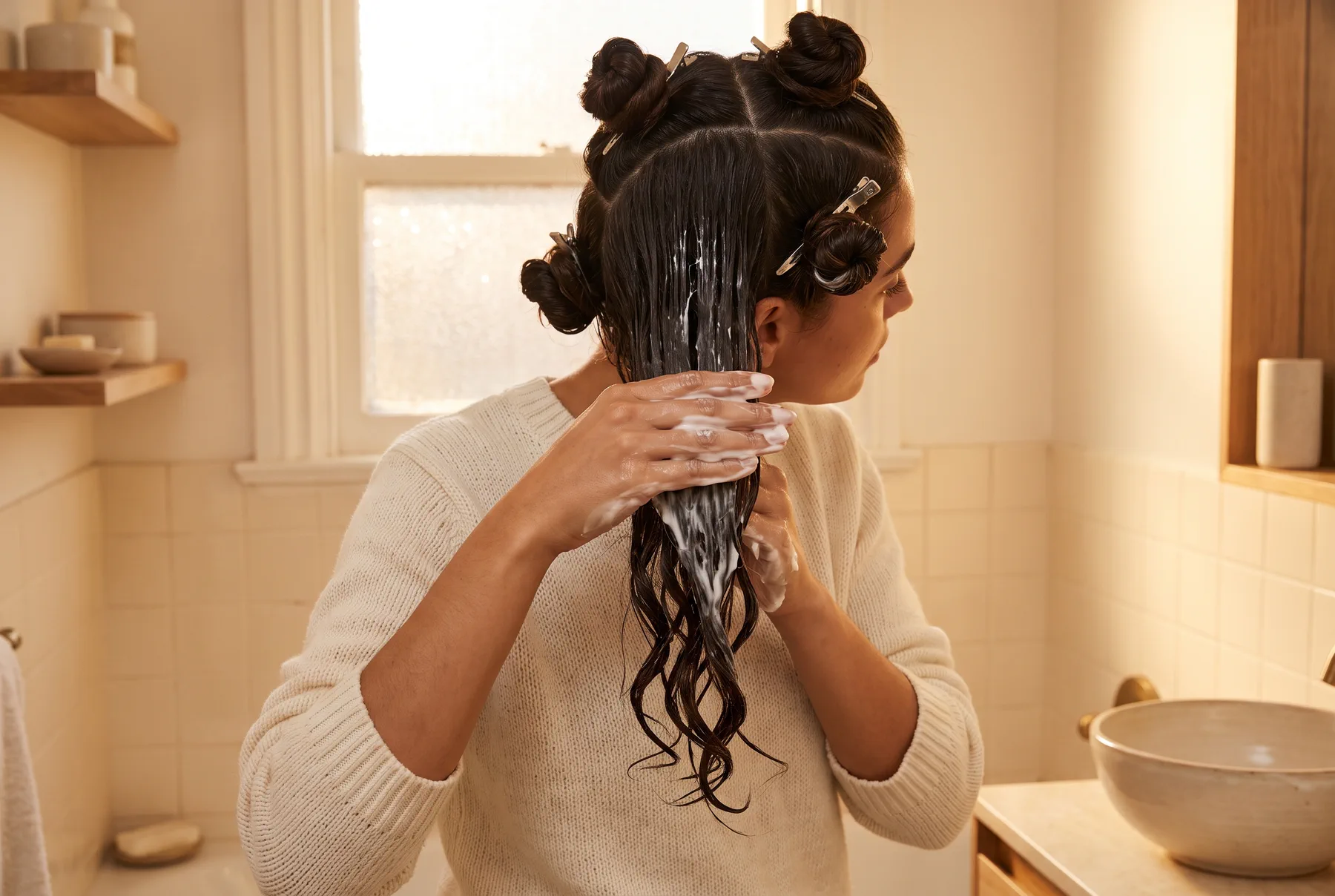
The product label controls the exact order. Some exfoliants are pre-shampoo treatments; others are shampoos. Do not move a formula to a different stage because another brand uses different directions.
1. Read the complete label
Check placement, amount, contact time, rinse instructions, frequency, warnings and incompatible products. Review the ingredient list if you have known sensitivities or allergies.
2. Start with a calm scalp
Do not apply an exfoliant to open cuts, picked areas, sunburn, fresh irritation or a scalp that is reacting to another product. Avoid introducing several new scalp products in the same wash.
3. Section the hair
Create several partings so the formula reaches the scalp rather than coating only the hair. Use enough sections for your density. Thick or coily hair may need more partings, not more pressure.
4. Apply the labelled amount
More product does not create a more complete result. Keep it away from the eyes and face unless the label says otherwise.
5. Use fingertips, not fingernails
If massage is part of the directions, keep it light and brief. Do not scratch flakes loose. A scalp tool should have flexible tips and move without catching or wrapping the hair.
6. Respect the contact time
Do not leave an acid, exfoliating shampoo or pre-wash treatment on overnight unless that exact product says to do so. Tingling is not proof that a formula is working. Burning is a reason to rinse and stop.
7. Rinse completely
Use lukewarm water and enough time to remove residue. Incomplete rinsing can itself contribute to irritation and itch.
8. Keep the rest of the wash simple
Apply conditioner according to your hair's needs, usually through the lengths and ends unless its label gives scalp directions. Avoid stacking another scalp active, strong scrub or essential-oil mixture in the same session.
9. Observe the next several days
The scalp should not become increasingly red, tight, tender, itchy or flaky. Stop if the condition worsens. A photo and brief note about products used can help a healthcare professional assess a persistent reaction, but a photo cannot diagnose it by itself.
How often should you exfoliate your scalp?
There is no universal weekly schedule. The correct frequency depends on the formula, scalp condition, styling routine and response. Follow the product's minimum recommended frequency rather than assuming more is better.
If this is a new step, use only one exfoliation method and leave enough time to observe the result before repeating it. Do not exfoliate more often just because roots feel oily or flakes return. Those signs can point to a cleansing mismatch, dandruff, irritation or another condition that scrubbing will not solve.
Signs of over-exfoliation
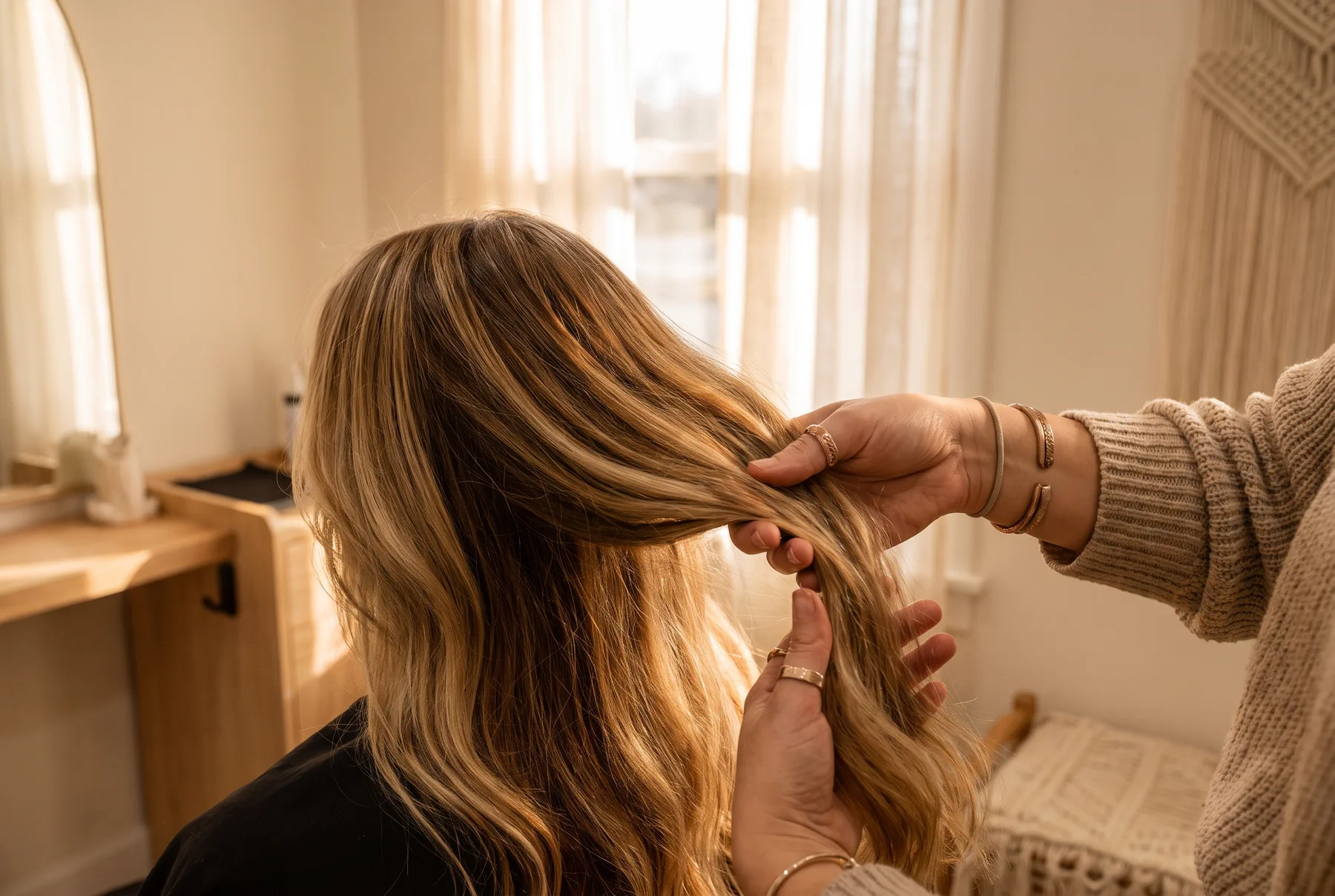
Stop the product if you notice:
- burning or stinging;
- increasing redness or tenderness;
- tight, raw or unusually shiny-feeling skin;
- new cracks, scabs or bleeding;
- worsening itch or flakes;
- sensitivity when shampoo or water touches the scalp;
- a rash along the hairline, ears, forehead or neck.
Rinse away the product and simplify the routine. If symptoms are severe, spreading or not settling, consult a physician or dermatologist.
Scalp exfoliation, dry scalp and dandruff are not the same thing
Dry scalp involves skin that has lost moisture and may improve with gentler cleansing and fewer irritants. Dandruff often needs a dandruff shampoo with an appropriate active ingredient. A reaction to hair colour or another product requires stopping the suspected trigger and may need medical assessment. Psoriasis, eczema and infection require their own evaluation and treatment.
Exfoliation may remove some loose surface material, but it does not identify or cure the underlying cause. Read the dry-scalp guide for a routine reset. Read the dandruff guide when recurring dandruff is the main concern.
Where Celine Claire products fit

Celine Claire does not currently have a verified standalone scalp exfoliant in the approved catalogue. Do not rename another product or invent an exfoliating benefit to fill that space.
Hair Enhancement Shampoo is a cosmetic cleanser used on the scalp, roots and hair. It can support regular cleansing, but it is not a medicated dandruff shampoo or exfoliating treatment.
Moroccan Argan Oil has four established methods. One is an overnight hair-and-scalp moisture ritual using 8 to 10 drops, an approximately 10-minute massage, an overnight wrap and shampooing in the morning. That method is not exfoliation. Do not automatically combine it with an acid, scrub or irritated-scalp routine.
Bonding Rosemary Oil is leave-in bonding and styling care for wet, damp or dry hair and ends. It is not a scalp scrub, pre-wash exfoliant or dandruff treatment.
For product discovery rather than diagnosis, visit the Scalp Care guide or take the Hair Quiz. If the scalp is painful, inflamed or persistently changing, professional assessment comes before product selection.
Frequently asked questions
Is scalp exfoliation necessary?
No. Consistent shampooing and thorough rinsing may be enough. Exfoliation is an optional step for a defined concern such as persistent removable styling residue on an otherwise comfortable scalp.
Can scalp exfoliation make hair grow?
Do not rely on exfoliation as a hair-growth treatment. It can remove some surface material, but it does not address the many possible causes of thinning or shedding. Sudden, patchy or persistent hair loss should be professionally assessed.
Does exfoliating unclog hair follicles?
“Unclogging follicles” is too broad for a cosmetic promise. A cleanser or exfoliant may remove some oil and residue from the skin's surface. It cannot prove that a follicle was blocked or restore a follicle affected by a medical condition.
Can scalp exfoliation treat dandruff?
It should not replace a dandruff treatment plan. Some dandruff shampoos contain salicylic acid to help loosen scale, while other active ingredients address different aspects of dandruff. Choose a labelled dandruff shampoo and follow its directions rather than adding an abrasive scrub automatically.
Can I exfoliate a dry or sensitive scalp?
Be cautious. A dry, burning or reactive scalp may worsen with friction or active ingredients. Start with the gentler routine in the dry-scalp guide, and ask a dermatologist when symptoms persist or the cause is unclear.
Is a chemical exfoliant gentler than a physical scrub?
Not always. A chemical formula can sting or burn, while a rough scrub can damage skin through friction. Suitability depends on the entire product, its concentration, contact time, application pressure and the condition of the scalp.
Can I use a facial exfoliant on my scalp?
Choose a product specifically labelled for scalp use. Hair changes how a product is distributed and rinsed, and a facial formula may not provide suitable scalp directions.
Can I make a sugar, salt or coffee scalp scrub?
This guide does not recommend DIY abrasive scrubs. Particle size, sharp edges and pressure are difficult to control, and residue can be difficult to rinse from dense hair.
Should I exfoliate before or after shampooing?
Follow the chosen product. A pre-wash exfoliant belongs before shampoo, while an exfoliating shampoo is the cleansing step. There is no single order that applies to every formula.
Can I use a scalp brush?
A flexible scalp tool may help distribute shampoo when used lightly, but it should not scratch, catch hair or be used over broken or inflamed skin. Fingertips are enough for many people.
How often should I exfoliate?
Use the product label and your response as the limits. There is no universal once- or twice-weekly rule. Stop rather than increasing frequency when the scalp becomes more sensitive or flaky.
Can I exfoliate after colouring or chemical treatment?
Do not apply an exfoliant to a scalp that feels irritated after a service. Follow the colour or treatment professional's aftercare directions and seek advice if burning, sores or a spreading reaction develops.
Can I exfoliate if I have psoriasis, eczema or seborrheic dermatitis?
Ask the clinician managing the condition. Some treatment plans use specific scale-loosening ingredients, but a cosmetic scrub is not a substitute for those directions.
Can scalp exfoliation make hair greasy?
An incompletely rinsed or overly rich formula may leave residue. Exfoliation also does not permanently regulate oil production. If greasiness returns quickly, review cleansing, styling products and scalp symptoms instead of scrubbing more often.
Can I apply Moroccan Argan Oil after exfoliating?
Do not stack the steps automatically. Moroccan Argan Oil's overnight hair-and-scalp method is a separate moisture-focused ritual. Follow its exact directions on a calm scalp and avoid combining it with a new exfoliant in the same session unless qualified guidance supports the combination.
Is Bonding Rosemary Oil a scalp exfoliant?
No. It is a leave-in bonding and styling oil for wet, damp or dry hair and ends. Follow its product-page directions and do not repurpose it as a scrub or scalp treatment.
When should I see a dermatologist?
Seek professional assessment for persistent or worsening symptoms, pain, spreading redness, thick scale, open sores, bleeding, discharge, signs of infection, or sudden and patchy hair loss.
Sources
- American Academy of Dermatology,
How to safely exfoliate at homehttps://www.aad.org/public/everyday-care/skin-care-secrets/routine/safely-exfoliate-at-home - American Academy of Dermatology,
How to treat dandruffhttps://www.aad.org/public/everyday-care/hair-scalp-care/scalp/treat-dandruff - American Academy of Dermatology,
Is your dry scalp something more serious?https://www.aad.org/public/everyday-care/hair-scalp-care/scalp/dry-scalp-conditions - American Academy of Dermatology,
10 reasons your scalp itches and how to get reliefhttps://www.aad.org/public/everyday-care/itchy-skin/itch-relief/relieve-scalp-itch - American Academy of Dermatology,
Dry shampoo: Dermatologists' tips for getting your best resultshttps://www.aad.org/public/everyday-care/hair-scalp-care/hair/dry-shampoo-best-results - DermNet,
Shampooshttps://dermnetnz.org/topics/shampoo - DermNet,
Salicylic acidhttps://dermnetnz.org/topics/salicylic-acid - Guy's and St Thomas' NHS Foundation Trust,
Treating scalp psoriasishttps://www.guysandstthomas.nhs.uk/health-information/treating-scalp-psoriasis - Existing Celine Claire article and WordPress REST record for migration history.
- Approved Celine Claire product masters for exact product roles and application methods.