

Dry scalp and dandruff are not interchangeable. A gentle routine may help mild dryness, while recurring oily flakes may need a labelled dandruff treatment. Redness, swelling, thick scale, rash, patchy hair loss, crusting or pain requires professional assessment.
A dry scalp may feel tight, itchy or uncomfortable and may release small flakes. Cold weather, low humidity, hot water, frequent cleansing, incomplete rinsing or a reaction to a product can contribute. Dandruff and several skin conditions can look similar, so treatment should begin with the pattern rather than the assumption that every flake means dryness.
For mild symptoms without marked redness, pain or sores, simplify the routine. Use a gentle non-medicated cleanser, lukewarm water and a thorough rinse. Pause new or irritating products. If symptoms persist, spread or become inflamed, seek a physician or dermatologist instead of adding oils and scrubs.
What is a dry scalp?
Dry scalp describes skin that has lost more water than it can comfortably retain. It may feel tight and itchy and may produce fine flakes. This is a description, not a complete diagnosis.
Scalp skin can also flake because of dandruff, seborrheic dermatitis, eczema, psoriasis, contact dermatitis, infection or another condition. A person can have dryness and a separate scalp problem at the same time.
Dry scalp versus dandruff
| What you notice | What it may suggest | Next step |
|---|---|---|
| Tight, dry feeling with fine flakes after weather or routine changes | Mild dryness or irritation may be involved | Simplify cleansing and pause possible irritants |
| Recurring flakes with itch and oiliness | Dandruff is one possibility | Use the dedicated dandruff guide and a properly labelled treatment |
| Burning or rash after dye, shampoo, spray or gel | Irritant or allergic contact dermatitis may be involved | Stop the suspected product and seek advice if significant or persistent |
| Thick, well-defined or silvery scale | Psoriasis is one possibility | Arrange professional assessment |
| Scaly patch with broken hairs or hair loss | Fungal infection or another condition may be involved | Seek prompt medical assessment |
| Soreness, pus, crusting, swelling or scar-like skin | Infection or inflammatory/scarring condition may be involved | Do not self-treat with cosmetic oils or scrubs |
This table is not a diagnostic test.
Read the dandruff-treatment guide if the pattern is recurring, itchy and flaky rather than simply dry-feeling.
Common reasons a scalp may feel dry
Cold air and low humidity
Dry winter air and heated indoor environments can increase water loss from skin. A hat can reduce weather exposure, while a clean humidifier may improve room comfort. Neither replaces treatment for an underlying condition.
Hot water
Very hot showers can make already-dry skin feel tighter. Use comfortably lukewarm water and avoid directing intense heat at the scalp for long periods.
Frequent or aggressive cleansing
A strong cleanser, repeated washing or vigorous scrubbing may leave some scalps uncomfortable. That does not mean everyone should wash less. Oil, sweat, buildup, texture, styling and scalp condition all affect frequency.
Incomplete rinsing
Shampoo or conditioner left against the scalp can cause itch and flaking. Section dense hair and rinse carefully around the crown, nape and behind the ears.
Product irritation or allergy
Hair dye, fragrance, preservatives, shampoo, conditioner, styling products and botanical ingredients can irritate or trigger allergic contact dermatitis. A rash may extend beyond the scalp to the hairline, ears, eyelids or neck.
Buildup and dry shampoo overuse
Dry shampoo absorbs oil but does not replace washing with shampoo and water. Repeated buildup can make itch or flaking harder to understand.
Chemical services and heat
Colour, bleach, relaxers, perms and smoothing services may expose the scalp to irritating products or heat. Burning during a service should not be dismissed as ordinary dryness.
An underlying skin condition
Dandruff, seborrheic dermatitis, eczema, psoriasis and infection require different treatment. Persistent symptoms deserve assessment.
A simple dry-scalp reset
Step 1: Stop adding new variables
Pause recently introduced scalp oils, scrubs, dry shampoo, fragranced leave-ons and styling products near the scalp. Do not stop prescribed treatment without the prescriber.
Step 2: Choose one gentle cleanser
Use a non-medicated shampoo that cleans without leaving the scalp feeling markedly tighter. Gentle depends on the complete formula and individual response, not one marketing word such as natural, clean or sulfate-free.
Step 3: Use lukewarm water
Wet the scalp thoroughly. Apply shampoo mainly at the roots and massage with fingertips rather than nails.
Step 4: Rinse longer than you think you need
Lift and section dense hair so water reaches the scalp. Residue near the crown, nape and ears can continue to irritate.
Step 5: Condition the hair lengths
Use conditioner through the lengths when it improves slip and detangling. Keep it away from the scalp if the product is not intended for scalp use or seems to increase buildup.
Step 6: Reduce friction and heat
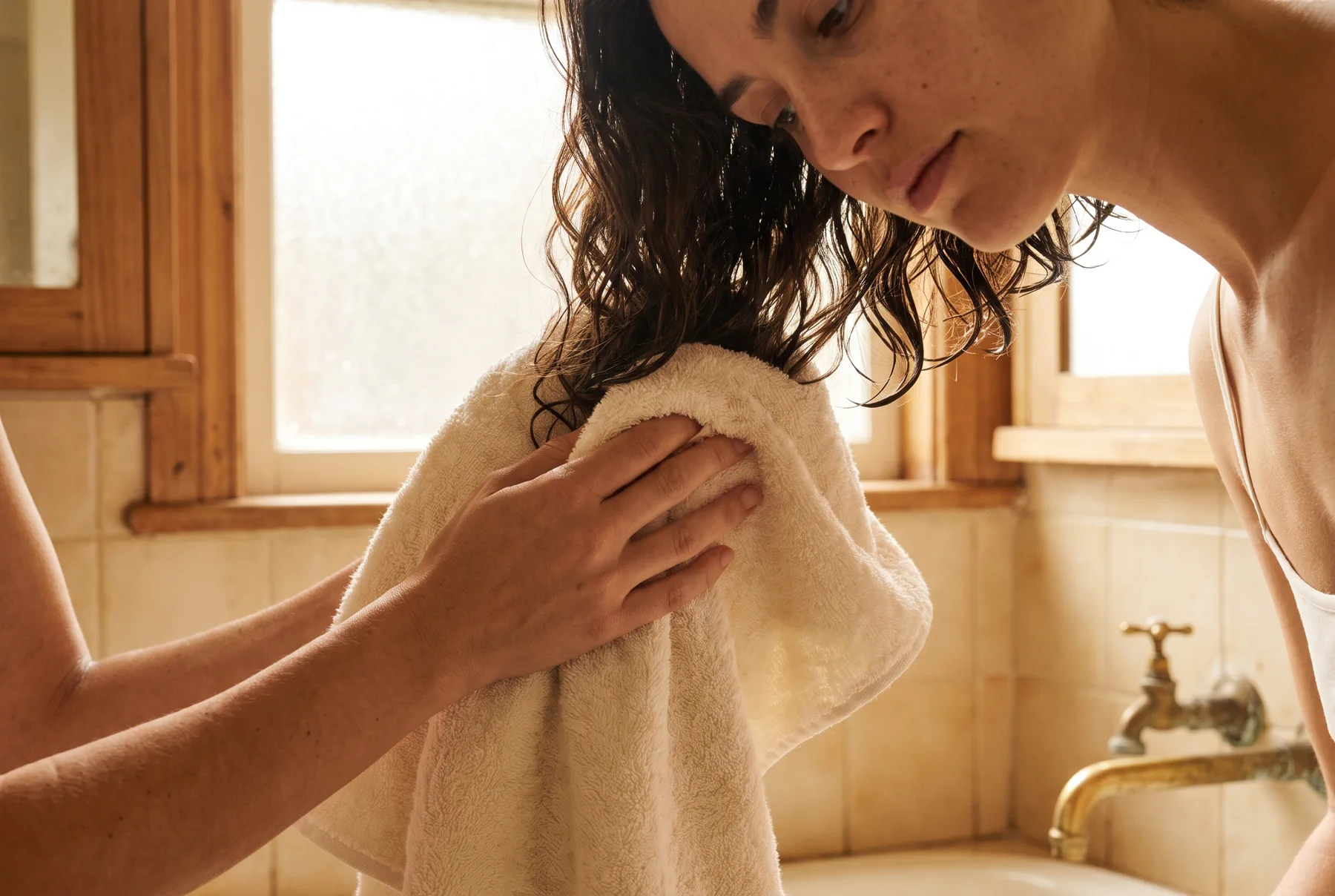
Blot rather than rub with a towel. Detangle gently and keep blow-dryer heat comfortable. Avoid tight styles that add pain or pulling.
Step 7: Record the response
Note wash dates, products, weather, chemical services and symptoms for two to four weeks or the shorter period advised by a clinician. Photographs in consistent lighting can help show whether redness or scale is changing.
Stop the reset and seek care sooner if symptoms are severe or worsening.
Adjust the routine for hair texture and density

Fine or straight hair
Oil and buildup may become noticeable quickly. Cleanse according to the scalp while using lightweight conditioner mainly on the ends. A dry feeling does not automatically mean heavy oil belongs at the roots.
Wavy hair
Balance scalp cleansing with conditioning through the lengths. Keep styling mousse, gel or spray from accumulating at the roots when it appears to worsen discomfort.
Curly or coily hair
Longer intervals between washes may suit the lengths, but the scalp still needs effective cleansing. Work in sections and keep medicated or non-medicated products focused on their intended area. Condition well through the hair fibre.
Thick or high-density hair
Sectioning matters more than adding product. Make sure cleanser and rinse water reach the scalp rather than remaining on the outer hair layer.
Colour-treated or chemically treated hair
Use the aftercare instructions for the service and watch for burning, rash or swelling. A reaction after colour or smoothing requires a different response from ordinary dry skin.
What to avoid on an unexplained dry or itchy scalp
Undiluted essential oils
Tea tree, peppermint, rosemary and other essential oils can irritate or sensitize skin. Do not create an unmeasured scalp formula.
Vinegar, lemon juice and baking soda
Homemade acids and alkalis have inconsistent concentrations and may worsen an impaired skin barrier.
Aggressive scalp scrubs
Physical grains, hard brushes and nails can create small injuries. Scale that seems stuck may be part of a condition requiring diagnosis.
Heavy oils over inflammation
Coconut, argan and other oils may soften the hair fibre, but they are not universal dry-scalp treatments. Avoid masking redness, sores or infection beneath rich oil.
Several products at once
If shampoo, oil, scrub, serum and supplement all change together, the trigger and solution become harder to identify.
Where Celine Claire products fit
Celine Claire does not currently have a verified product called Hydrating Scalp Treatment. Do not look for or purchase that name based on the old article.
Hair Enhancement Shampoo is a 300 ml cosmetic cleanser for dry, brittle, breakage-prone or thinning-looking hair. It supports cleansing, moisture, shine, manageability and reduced breakage. It is not a treatment for eczema, psoriasis, contact dermatitis, infection, dandruff or another scalp condition. Review the current INCI and stop use if irritation occurs.
Moroccan Argan Oil and Bonding Rosemary Oil have current directions for the lengths and ends. Do not apply them to an irritated or unexplained flaky scalp as a treatment.
Explore Scalp Care for non-diagnostic product discovery or read the Hair Enhancement Shampoo guide.
When to see a physician or dermatologist
Arrange professional assessment when:
- dryness or itch persists despite a simple gentle routine;
- the scalp is very red, swollen, painful, burning or intensely itchy;
- there are sores, pus, crusting, bleeding or a spreading rash;
- thick plaques or silvery scale appear;
- the rash extends to the ears, eyelids, face, neck or body;
- hair breaks off in patches or bare areas appear;
- skin looks shiny or scar-like where hair is thinning;
- symptoms started after dye, bleach, smoothing or another chemical service;
- a child has significant scalp scale or hair loss;
- a cosmetic product causes a significant reaction;
- symptoms interfere with sleep or daily life.
Seek urgent medical help for breathing difficulty, facial swelling or another severe allergic reaction.
Frequently asked questions
What is the fastest way to treat dry scalp?
There is no universal instant treatment. For mild symptoms, simplify the routine, use a gentle non-medicated cleanser, rinse thoroughly and pause suspected irritants. Persistent or inflamed symptoms need assessment.
How do I know whether I have dry scalp or dandruff?
Dry scalp often feels tight and may follow weather or routine changes. Dandruff commonly causes recurring flakes and itch and can occur with an oily scalp. The signs overlap, so seek help when the pattern is unclear or persistent.
Should I wash my hair less often?
Not automatically. Wash frequency depends on oil, sweat, buildup, texture, styling and scalp condition. Very frequent cleansing may bother some scalps, while infrequent effective cleansing can worsen buildup for others.
What type of shampoo should I use?
For suspected mild dryness, choose a gentle non-medicated cleanser and judge the full formula by how the scalp responds. Dandruff requires a separate labelled treatment approach.
Must dry-scalp shampoo be sulfate-free?
No single surfactant rule fits everyone. Sulfate-free does not guarantee that a formula will be non-irritating or suitable. Review all ingredients and individual response.
Can I put coconut oil on my scalp?
This guide does not recommend coconut oil as a universal dry-scalp treatment. It can irritate, create buildup or obscure another condition for some people. Do not apply it over redness, sores or infection.
Can I use argan or rosemary oil on dry scalp?
Celine Claire Moroccan Argan Oil and Bonding Rosemary Oil currently belong on the lengths and ends. They are not presented as treatments for an unexplained dry or itchy scalp.
Should I exfoliate flakes?
Do not scrape or aggressively scrub. If gentle cleansing does not remove scale, or it is thick, painful or recurring, seek professional advice.
Does drinking more water cure dry scalp?
Normal hydration supports general health, but a fixed water target does not diagnose or treat every dry scalp. The cause and local routine still matter.
Can diet improve dry scalp?
Eat according to your general health needs. Do not use supplements or a special diet as dry-scalp treatment without a documented need and professional advice.
Can a humidifier help?
A clean humidifier may improve comfort when indoor air is very dry. It does not treat dandruff, eczema, psoriasis, contact dermatitis or infection.
Can dry scalp cause hair loss?
Mild dry skin is not a universal cause of hair loss. Scratching, inflammation or an underlying condition may contribute to breakage or shedding. Patchy, sudden or persistent loss needs assessment.
Is conditioner necessary after every wash?
Conditioner can improve slip and reduce detangling force, but the amount and placement depend on the hair. Use it through the lengths when helpful and follow its directions.
Can stress cause dry scalp?
Stress may affect some skin conditions and routines, but it should not be assumed to explain persistent flakes or inflammation. Stress management does not replace diagnosis or treatment.
Can I use dandruff shampoo for dry scalp?
Only when dandruff is the likely issue or a pharmacist/clinician recommends it. Some medicated shampoos may make a dry-feeling scalp or lengths less comfortable when used unnecessarily.
Can I use Hair Enhancement Shampoo for dry scalp?
It is a cosmetic cleanser, not a dry-scalp medicine. Review the current ingredient list and individual response. Stop use and seek advice if it causes burning, rash or worsening symptoms.
Is Celine Claire made in Canada?
Celine Claire is a Canadian haircare brand. The website does not make a blanket claim that its products are made in Canada.
Sources
- American Academy of Dermatology: Is your dry scalp something more serious? supports differentiating dry scalp, dandruff, psoriasis, fungal infection and other conditions.
- American Academy of Dermatology: Reasons the scalp itches supports product-reaction, incomplete-rinsing, infection, psoriasis, eczema and referral language.
- American Academy of Dermatology: Healthy hair tips supports scalp-focused cleansing, conditioning the lengths and texture-aware wash routines.
- NHS: Dandruff supports alternative-condition signs and professional-care thresholds.