

Protein-derived conditioning ingredients can temporarily support the feel, surface and manageability of damaged-looking hair. They do not permanently rebuild a non-living fibre. Choose a product according to its exact role, begin conservatively with home care and never improvise a professional smoothing protocol.
What is a protein hair treatment?
A protein hair treatment is a cosmetic product or service that uses protein-derived ingredients, amino acids or keratin-focused technology as part of its conditioning, strengthening or smoothing story. The phrase alone does not tell you whether the product is a 2–3-minute mask or an advanced salon service.
Hair is largely composed of keratin, but the visible hair fibre is not living tissue. A review of hair-care physicochemistry explains that hair cannot biologically regenerate. Conditioning products may coat or temporarily fill parts of a weathered surface and change properties such as friction, softness and combing.
Temporary does not mean pointless. It means results depend on the exact formula and are affected by washing, styling, chemical history and wear.
How do protein-derived ingredients work in haircare?
Hydrolyzed proteins are broken into smaller components for use in cosmetic formulations. Their molecular size, charge and the rest of the formula influence where they deposit and how the hair feels.
A review in Dermatology Practical & Conceptual describes hydrolyzed amino acids as producing temporary changes in strength and hydrophobicity while also supporting surface coating. It also notes that conditioning agents reduce friction and combing forces. These are physical and cosmetic effects, not biological healing.
They may support a smoother surface feel
Conditioning ingredients can reduce friction between fibres. Lower friction may make detangling easier and help hair feel smoother.
They may support temporary strength and manageability
Some protein-derived ingredients are used to change how weathered hair responds during handling. The result depends on the formula and the hair’s starting condition. A protein name on the front label does not guarantee a specific measurable improvement.
They do not permanently fuse split ends
A conditioner may temporarily make a frayed area feel smoother or look more aligned. Trimming remains the reliable way to remove a split end.
Protein treatment, moisture care, bond care or smoothing service?
These categories often appear beside one another in shops, but they solve different jobs.
| Category | Primary job | Typical use level | Celine Claire example |
|---|---|---|---|
| Moisture-focused conditioner | softness, slip and detangling | regular home wash day | Argan Oil Hydrating Conditioner |
| Protein-positioned rinse-out mask | rich conditioning with a keratin product story | home or salon wash day | Argan Oil Hair Mask |
| Post-service keratin maintenance | cleansing and conditioning between salon services | regular home wash day | Keratin & Botox Shampoo and Conditioner |
| Bond care | bond-focused support under its own product claims | home or professional, depending on product | TecPlex No.3 or TecPlex Professional System |
| Hair Botox | separate advanced smoothing/conditioning treatment | protocol-controlled | Celine Claire Hair Botox |
| Nano keratin smoothing | reduced visible frizz, curl and excess-looking volume | Professional Use Only | Nano Keratin Protein |
Do not choose from the product name alone. “Keratin & Botox Conditioner” is a daily rinse-out maintenance product, not the Hair Botox treatment. TecPlex No.3 is bond care, not automatically a protein mask. Nano Keratin Protein is not a weekly conditioner.
Protein vs moisture: what does the hair actually need?
The internet often reduces this decision to a stretch test: gummy hair supposedly needs protein, while rough hair supposedly needs moisture. That is too simple. Wet hair behaviour can change with chemical processing, damage, product buildup, water, detangling method and the formula already on the hair. A single strand pulled between the fingers is not a laboratory diagnosis.
Start with the recent history
- Was it recently bleached, coloured, relaxed, permed or professionally smoothed?
- Has heat use increased?
- Did stiffness begin after adding a new protein-positioned product?
- Does the hair feel rough before styling, or does it stretch and break mainly when wet?
- Are there scalp symptoms, sudden shedding or bald areas that cosmetic care cannot explain?
Change one variable
If hair feels dry and rough, begin by checking cleansing, rinse-out conditioner, mask amount and heat habits. If a protein-positioned product appears relevant, use one exact product as directed and assess the dry result before adding another.
Do not turn “protein overload” into a diagnosis
Customers use “protein overload” to describe hair that feels stiff, straw-like, rough or more breakable after repeated protein-containing care. Those symptoms can also have other causes. Stop the suspected product, simplify the routine and seek professional advice if breakage continues.
Who may — and who should pause — before choosing protein care
Consider it when
- Chemically processed lengths. Colouring, lightening, relaxing and perming can change the hair shaft. The American Academy of Dermatology notes colouring and perming can make hair dry and brittle. Aftercare should match the exact service.
- Frequently heat-styled hair. Protein-positioned care does not replace dedicated heat protection or controlled tool settings.
- Hair maintained after a keratin or Hair Botox service. Wait the exact first-wash period given by the professional, then use compatible maintenance products.
- Dry or brittle-looking hair that needs a richer rinse-out mask. Begin with the exact method; reduce frequency if fine hair loses movement.
Pause and get more information when
- the hair already feels stiff or coated after protein-containing care;
- the current product’s label or full ingredients cannot be verified;
- the hair was recently lightened, relaxed, permed or chemically straightened;
- the proposed treatment uses significant heat but lacks a complete protocol;
- the scalp has wounds, persistent irritation, pain or unexplained scaling;
- there is sudden shedding, a widening part or bald patches;
- a “professional” product is being sold without the Safety Data Sheet or application instructions.
A cosmetic blog cannot determine whether hair loss, scalp disease or a treatment incompatibility is present. Consult a trained professional for anything beyond routine cosmetic care.
Celine Claire protein and keratin routes
Route 1: Argan Oil Hair Mask for a home wash day
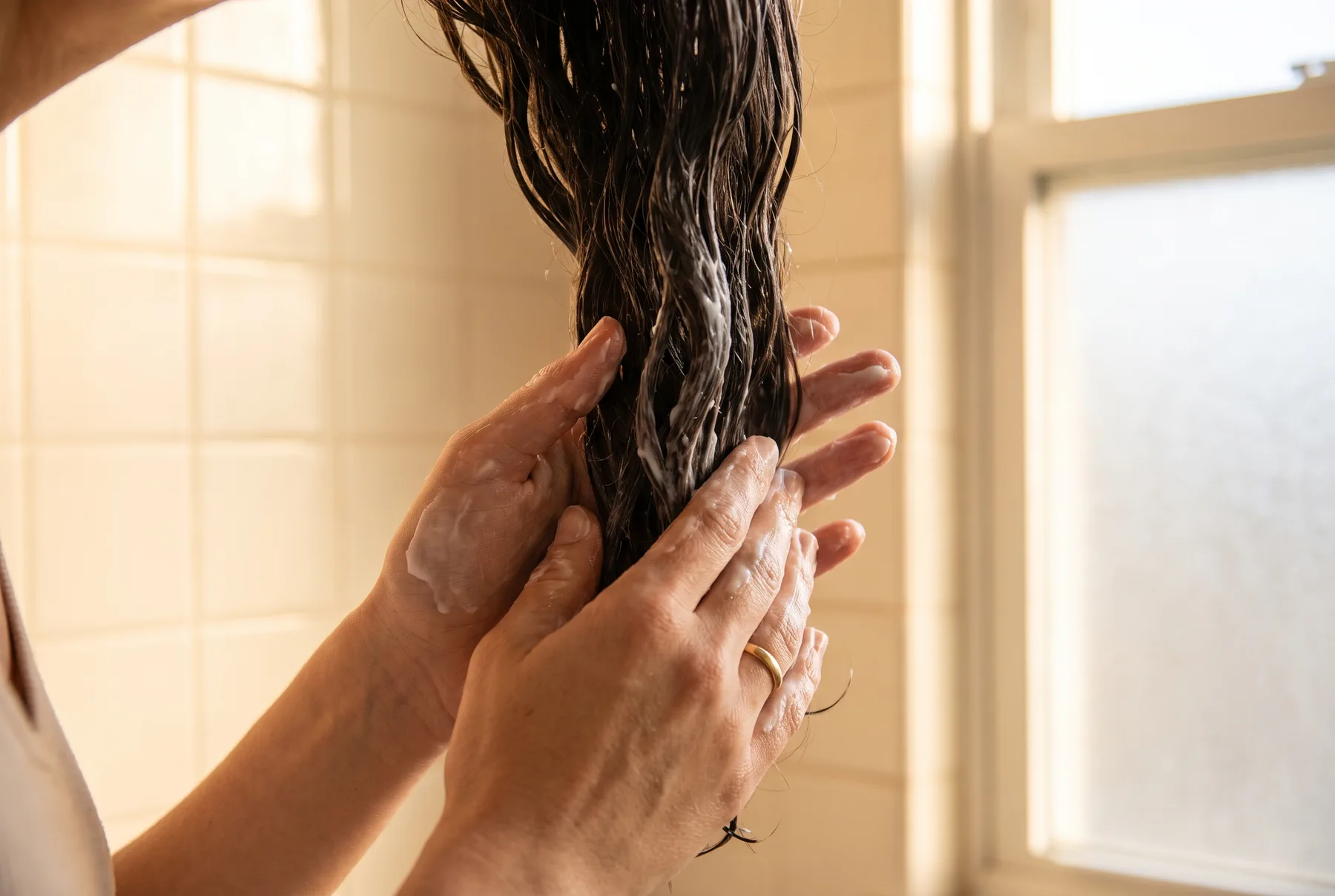
Argan Oil Hair Mask is the clearest home-use protein-positioned mask in the current catalogue. The product story identifies keratin alongside argan oil, Vitamin E and coconut oil.
- Shampoo and rinse thoroughly.
- Towel-dry so the hair is damp rather than dripping.
- Apply the mask through the hair, focusing on dry or damaged-looking mid-lengths and ends.
- Leave for 2–3 minutes.
- Rinse thoroughly.
- Follow with a Celine Claire Conditioner.
Choose this route when: you want a rich rinse-out treatment without a professional smoothing process.
Route 2: Keratin & Botox Shampoo and Conditioner for maintenance
Keratin & Botox Shampoo and Keratin & Botox Conditioner are daily-use-positioned rinse-out products for care after salon keratin or Hair Botox services. They can also support softness, manageability and frizz control in an appropriate routine.
Wait the exact time specified by the professional before the first post-service wash. Shampoo the scalp and rinse, then apply the matching conditioner through the lengths and rinse according to its verified directions. The maintenance pair bundle covers both.
These products help maintain the look and feel of treated hair. They are not the Hair Botox service and cannot guarantee how long a salon result lasts.
Choose this route when: you already received a compatible salon service and need routine maintenance.
Route 3: TecPlex for bond-focused care
TecPlex No.3 Bond Perfector belongs to the bond-care category. Its job and directions come from its own product master. Do not call it a protein mask merely because both categories appear in damaged-hair conversations.
The TecPlex Professional Bond Repair System is a separate professional product. Never merge its process with No.3 or improvise a salon protocol from the personal-use page.
Choose this route when: the exact bond-care product and its approved method match the goal.
Route 4: Nano Keratin Protein as a professional smoothing treatment
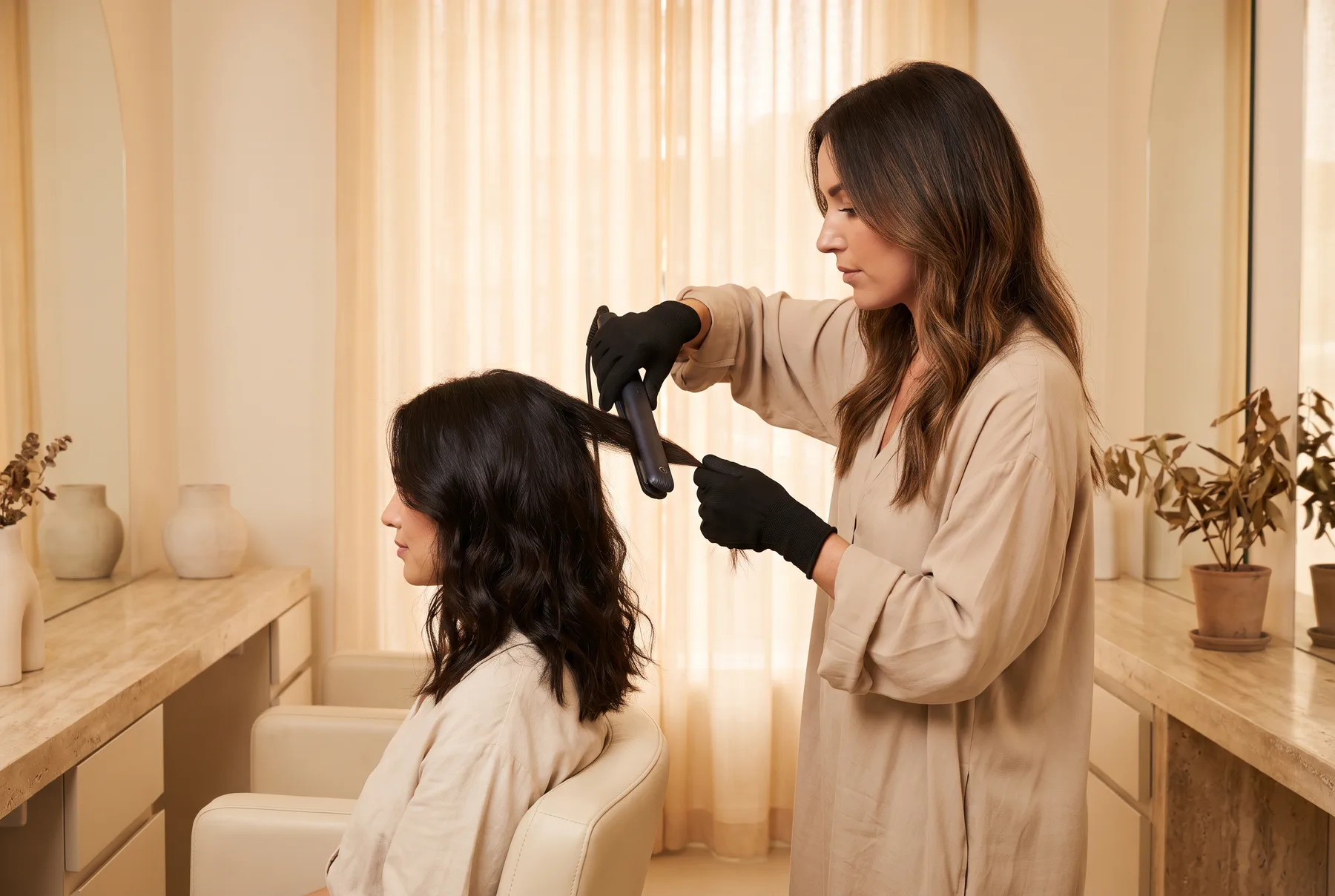
Nano Keratin Protein is a 1000 ml professional smoothing treatment designed to reduce visible frizz, curl and excess-looking volume while supporting a softer, smoother and straighter-looking finish.
The bottle says Professional Use Only. The service requires the exact Celine Claire protocol, current INCI, Safety Data Sheet, ventilation requirements, client assessment and controlled heat instructions. Public information is not complete enough to publish safe temperature, timing, dose, section size, pass count, rinse order or first-wash guidance.
Do not apply it like a hair mask. Do not attempt it at home from a blog summary.
Choose this route when: a trained professional has assessed the hair and has the complete current documents.
Route 5: Hair Botox as a separate advanced treatment
Celine Claire Hair Botox has its own protocol and product identity. It is not interchangeable with Nano Keratin Protein, an Argan mask or the daily Keratin & Botox Conditioner. Do not borrow timing, heat or aftercare from another smoothing system.
Protein treatment vs deep conditioning
Deep conditioning describes a richer conditioning step. Protein treatment describes a formula or service positioned around protein-derived ingredients or keratin technology. A product can belong to both categories, but the terms are not synonyms.
| Decision | Choose a moisture-focused route | Consider a protein-positioned route |
|---|---|---|
| Main complaint | dryness, tangles, dullness or rough feel | chemically processed or styling-worn hair and a suitable exact product |
| Starting point | rinse-out conditioner or moisture-focused mask | one protein-positioned conditioner or mask used exactly as directed |
| Main risk | too much weight or buildup | stiffness, roughness, incompatibility or incorrect professional handling |
| How to adjust | change amount, placement or frequency | stop stacking protein products and reassess the category |
Both categories can exist in one routine when exact products support it. There is no universal rule to alternate them on a schedule or follow every protein product with a separate deep conditioner. For a detailed comparison, read What Is Deep Conditioning?
Professional smoothing and formaldehyde claims
Safety language needs documents, especially when a treatment is heated.
Health Canada explains that hair-straightening products used with blow-drying or flat-ironing may release formaldehyde vapours and restricts formaldehyde concentration for products used with forced convection or heating. The Occupational Safety and Health Administration also warns that some smoothing products labelled “formaldehyde free” have still exposed workers to formaldehyde during use.
How often should you use protein hair treatment?
There is no responsible universal schedule.
A home rinse-out mask
Follow the exact directions and the hair’s response. Celine Claire Argan Oil Hair Mask currently says use as needed. Fine or easily weighed-down hair may need a smaller amount or less frequent use.
Daily maintenance products
“Daily-use” describes the intended formula position, not an order to wash every day. Follow scalp oil, activity, texture, product buildup and the aftercare given for the salon service.
Professional smoothing treatments
Frequency belongs to the approved protocol and professional assessment. Hair condition, chemical history, previous service and aftercare affect whether and when a repeat service is appropriate.
How to assess the result
Judge the dry result rather than chasing a dramatic wet-hair sensation. Record the exact product and method, amount and placement, whether another protein-positioned product was used that wash day, softness and movement after drying, detangling effort, stiffness/coating/increased tangling, and recent colour/heat/chemical-service history. Change one variable next time.
Home-use rinse-out mask with a keratin, argan oil, Vitamin E and coconut oil story. Applied to freshly washed, towel-dried hair for 2–3 minutes, rinsed thoroughly and followed with a Celine Claire Conditioner. Nano Keratin Protein and Hair Botox belong to trained professionals only.
Nine common protein-treatment mistakes
- Treating every dry strand as protein-deficient. Dryness may respond better to cleansing and conditioning adjustments. Protein is a product category, not a universal diagnosis.
- Trusting a single wet-stretch test. One strand cannot account for processing history, buildup, water, formula or detangling force.
- Layering multiple keratin products automatically. A keratin shampoo, conditioner, protein mask and professional smoothing treatment do not need to appear in the same session.
- Confusing bond care with protein care. TecPlex has bond-focused positioning and its own methods — keep the category language accurate.
- Using Nano Keratin Protein at home. The bottle says Professional Use Only. A blog cannot replace its protocol, Safety Data Sheet or trained handling.
- Guessing heat settings or pass counts. These are safety-critical instructions. Never copy them from a competitor or another Celine Claire treatment.
- Treating “formaldehyde-free” as proof of zero inhalation risk. The exact formula and emissions under the real heated method require documentation.
- Expecting permanent repair. Cosmetic effects change with washing and wear. Split or broken fibres do not become untouched hair.
- Ignoring scalp symptoms or shedding. Sudden loss, bald areas, pain, sores or persistent irritation need appropriate professional assessment, not a stronger protein product.
Frequently asked questions
What is a protein hair treatment?
A protein hair treatment is a cosmetic product or service that uses protein-derived ingredients, amino acids or keratin-focused technology in its conditioning, strengthening or smoothing story. The phrase can describe very different products, so check whether it is a home mask, maintenance conditioner, bond product or professional service.
Does protein treatment permanently repair damaged hair?
No. Protein-derived conditioning ingredients may temporarily coat, condition or change the physical behaviour of weathered hair. The visible fibre cannot biologically regenerate, and split or broken ends are not permanently restored by a cosmetic treatment.
How do I know if my hair needs protein or moisture?
Review recent colour, lightening, heat, chemical services and current products. Dry or rough hair may need a moisture-focused adjustment, while a suitable protein-positioned product may support some processed or styling-worn hair. A wet-stretch test alone cannot make the decision.
What does protein overload feel like?
Customers use this term for stiffness, straw-like roughness, tangling or breakage after repeated protein-containing care. Those signs are not unique to protein. Stop the suspected product, simplify the routine and seek professional assessment if the problem continues.
Can protein treatments cause breakage?
Hair may feel stiffer or become harder to detangle after an unsuitable formula, too much product or repeated overlapping treatments. Breakage also has many other causes. Follow exact directions, avoid stacking similar products and reassess if handling becomes more difficult.
How often should I use a protein treatment?
Use the frequency for the exact product. Argan Oil Hair Mask is used as needed, daily maintenance products follow wash frequency, and professional smoothing services require individual assessment. The same 4–6-week schedule does not apply to every category.
Is Argan Oil Hair Mask a protein treatment?
Yes. Its current product story positions it as a protein mask and names keratin with argan oil, Vitamin E and coconut oil. Apply it to freshly washed, towel-dried hair for 2–3 minutes, rinse thoroughly and follow with conditioner.
Is Keratin & Botox Conditioner the same as Hair Botox?
No. Keratin & Botox Conditioner is a routine rinse-out maintenance conditioner. Hair Botox is a separate advanced treatment with its own protocol. Their names do not make their methods interchangeable.
Is bond repair the same as protein treatment?
No. Bond-care products and protein-positioned conditioners may both appear in damaged-hair routines, but they use different product stories and methods. Follow the exact TecPlex page rather than relabelling it as protein care.
Can I use protein treatment on colour-treated hair?
Some products are positioned for colour-treated hair, but suitability depends on the formula, current colour service, hair condition and professional aftercare. Recently bleached or fragile hair deserves extra caution before a heated or advanced treatment.
Can curly or coily hair use protein-containing products?
Texture alone does not decide suitability. Curly and coily hair can use an appropriate product, but amount, sectioning, moisture needs and prior chemical services matter. Begin conservatively and avoid assuming every curl needs a smoothing treatment.
Can fine hair use a protein mask?
Fine hair may use an appropriate mask, but it can become weighed down more easily. Begin with less product, focus on the lengths and assess movement after drying before changing frequency.
Can I use Nano Keratin Protein at home?
No. The current bottle says Professional Use Only. It requires the exact Celine Claire protocol, client assessment, ventilation, Safety Data Sheet and controlled heat instructions. Do not improvise the process from a blog or another brand.
Is Celine Claire Nano Keratin Protein formaldehyde-free?
Current brand and marketplace materials use formaldehyde-free language, but the claim must be verified against the current INCI, Safety Data Sheet, manufacturer declaration and real use conditions before publication. Do not treat an old graphic as proof.
How long do protein-treatment results last?
There is no category-wide duration. A rinse-out product changes with washing, while a professional smoothing result depends on formula, technique, starting hair, aftercare and wash frequency. Follow the exact product evidence instead of promising 4–6 weeks universally.
When should I see a professional?
Consult a trained stylist before advanced smoothing, especially after lightening, relaxing, perming or another keratin service. Seek healthcare assessment for scalp pain, sores, persistent irritation, sudden shedding or bald areas.
Sources
- Fernandes C et al., “On Hair Care Physicochemistry: From Structure and Degradation to Novel Biobased Conditioning Agents,” 2023. pmc.ncbi.nlm.nih.gov/PMC9921463
- Gavazzoni Dias MFR et al., “Hair Cosmetics for the Hair Loss Patient,” 2021. pmc.ncbi.nlm.nih.gov/PMC8719955
- D’Souza P, Rathi SK, “Shampoo and Conditioners: What a Dermatologist Should Know?” 2015. pmc.ncbi.nlm.nih.gov/PMC4458934
- American Academy of Dermatology, “Coloring and perming tips for healthier-looking hair.” aad.org
- Health Canada, “Safety of Cosmetic Ingredients,” formaldehyde section. canada.ca
- Occupational Safety and Health Administration, “Hair Salons: Formaldehyde in Your Products.” osha.gov