

Pattern changes the motion. Strand width changes the starting amount. Density changes the sectioning. Current condition changes the placement.
A useful rosemary oil routine should account for more than whether hair is straight, wavy, curly or coily. Strand width, density, length, current condition and the products already in the hair can change how much oil feels right.
For Celine Claire Bonding Rosemary Oil, the core method stays the same: begin with a small amount, spread it between both hands, apply through wet, damp or dry lengths and ends, then leave it in and style. Fine or low-density hair usually needs a lighter starting amount. Dense hair benefits from sectioning. Curly and coily patterns often need deliberate distribution rather than more oil poured over the surface.
Start with four hair characteristics, not one label
Hair typing can be useful shorthand, but one label cannot predict the complete routine. A person may have fine, high-density curls. Another may have coarse, low-density waves. Both are textured, yet the same amount and placement may produce very different finishes.
1. Pattern
Pattern describes the visible path of the fibre: straight, wavy, curly or coily. It affects how easily hands move through the hair, whether sectioning helps and how an application motion may preserve the finished shape.
2. Strand width
Strand width describes whether an individual fibre feels fine, medium or coarse. Fine strands often show excess finishing oil quickly. Coarser strands may accept a little more, but should still begin with a controlled amount.
3. Density
Density describes how much hair is present across the head, not how thick one strand feels. High-density hair may need more sections so product reaches the inner lengths. Low-density hair may need less total product even when the individual strands are coarse.
4. Current condition and styling context
Freshly washed damp hair, third-day dry ends, recently coloured lengths and a finished curl set are different starting points. Existing creams, sprays and serums matter too. Assess what is already present before adding oil.
Research on human hair classification supports this broader view. A 2022 critical review found that broad geo-racial categories do not account well for worldwide variation and recommended reporting characteristics such as curl type and cross-sectional diameter or area. For a practical routine, visible pattern, strand width and density are more respectful and useful than ethnicity-based assumptions.
The baseline Bonding Rosemary Oil method
Celine Claire Bonding Rosemary Oil, also identified on its package as Tec Plex 7 Bonding Oil, is a leave-in bonding, styling and finishing oil.
- Dispense a small, controlled amount into one palm.
- Rub both hands together until the product is spread across palms and fingers.
- Begin at the ends.
- Move upward through the mid-lengths only where needed.
- Distribute according to pattern and density.
- Add more only after checking the finish.
- Leave it in and style as desired.
Its current positioning includes care for damaged and compromised hair, thermal damage, heat protection, detangling, frizz and flyaways, softness, shine, colour vibrancy and manageability. The product also retains Celine Claire's rosemary healthy-growth, fullness, volume and hair-regrowth story. Results vary, and the product should not be presented as a guaranteed treatment for hair loss.
For the full general method, visit How to Use Bonding Rosemary Oil.
Rosemary oil for straight hair
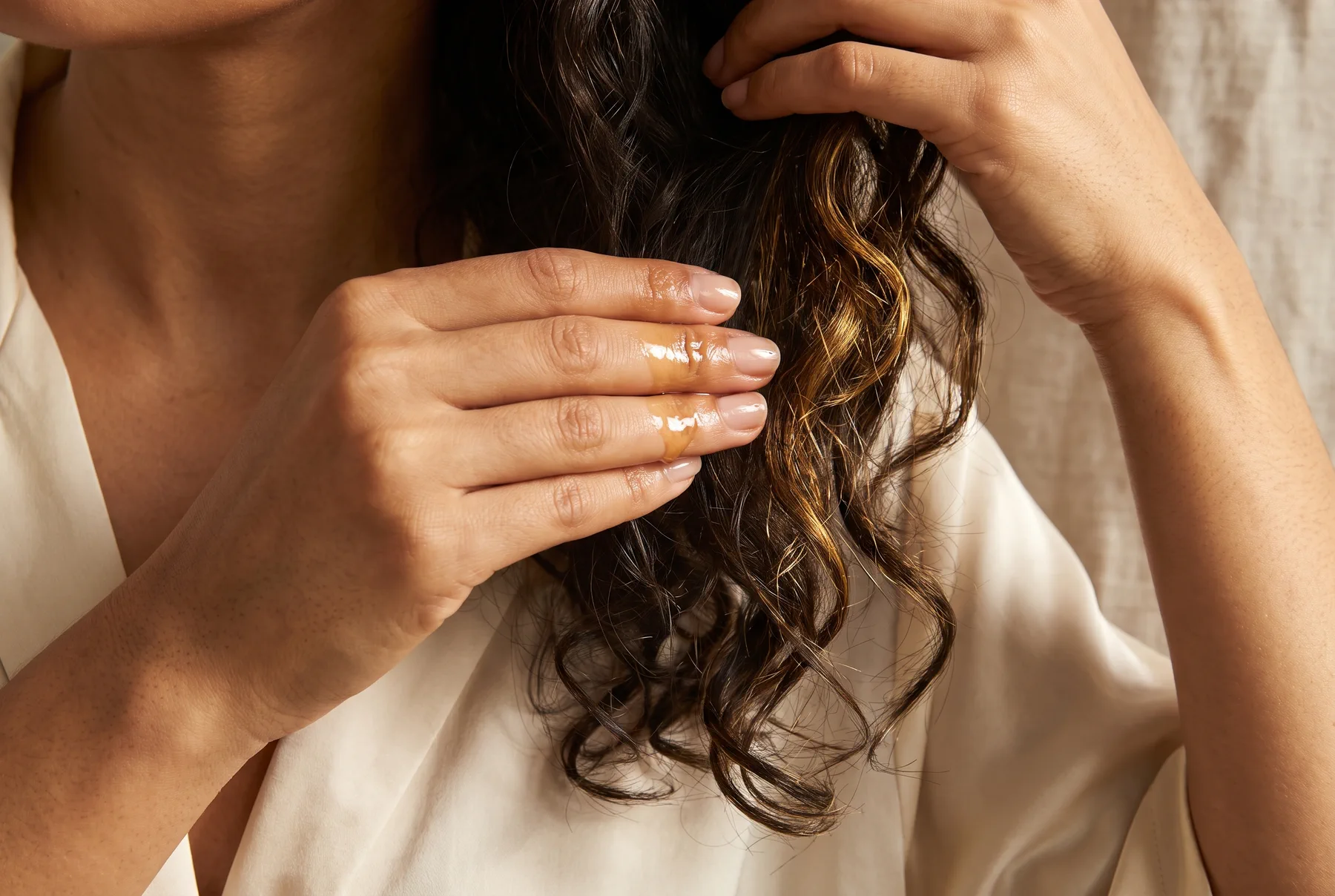
Straight hair makes distribution easy to see. It also shows excess quickly, especially when the strands are fine or density is low.
On wet or damp straight hair
Spread a small amount fully across both hands. Start at the lower ends, then use flat palms or fingers to move through the mid-lengths. Keep the first contact away from the roots. If using a comb, detangle gently from the ends upward.
On dry straight hair
Use only a trace for dry ends or selected flyaways. Touch the ends first, then use what remains on the hands to skim the surface. A full second application may separate strands and reduce movement.
Adjust by density
- Low density: keep the application localized and light.
- Medium density: distribute through lower lengths, then reassess.
- High density: divide into two or more broad sections before adding more product. This reaches inner lengths without coating only the top layer.
Rosemary oil for wavy hair
Wavy hair can lose shape when too much oil is raked through it after styling. Application motion matters as much as amount.
On wet or damp waves
Glaze a small amount over the lengths with open palms, then scrunch gently if that supports the intended wave pattern. If another styling product is already present, check whether the hair feels coated before adding more oil.
On dry waves
Press a trace into selected ends or skim over surface frizz. Avoid repeatedly pulling fingers through a finished wave pattern.
Adjust by strand width
- Fine waves: use the smallest starting amount and keep it below the upper lengths.
- Medium waves: distribute lightly, then add only to areas that remain rough-looking.
- Coarse waves: work through the ends and mid-lengths in sections, building gradually rather than beginning with a heavy application.
Rosemary oil for curly hair

Curly hair may combine several patterns on one head. Apply according to what each area needs rather than forcing every section into the same amount.
On wet or damp curls
Divide the hair into manageable sections. Spread a small amount over both hands, then glaze or use a gentle praying-hands motion through the lengths. Scrunch after distribution if you want to encourage the existing curl pattern.
Avoid rough, repeated raking when the hair is vulnerable to tangling. The American Academy of Dermatology notes that tightly curled or textured hair may be easier to brush when wet, while most other hair types should minimize wet handling. Use the detangling approach that suits the pattern and avoids force.
On dry curls
Warm a trace between the palms and press it onto selected frizz or dry-looking ends. Do not drag through the entire finished curl set. A fingertip amount can target one area without flattening the rest.
Adjust by density
High-density curls often need more sections, not one large dose. Low-density curls may need very little total oil even when individual strands feel coarse.
Rosemary oil for coily hair
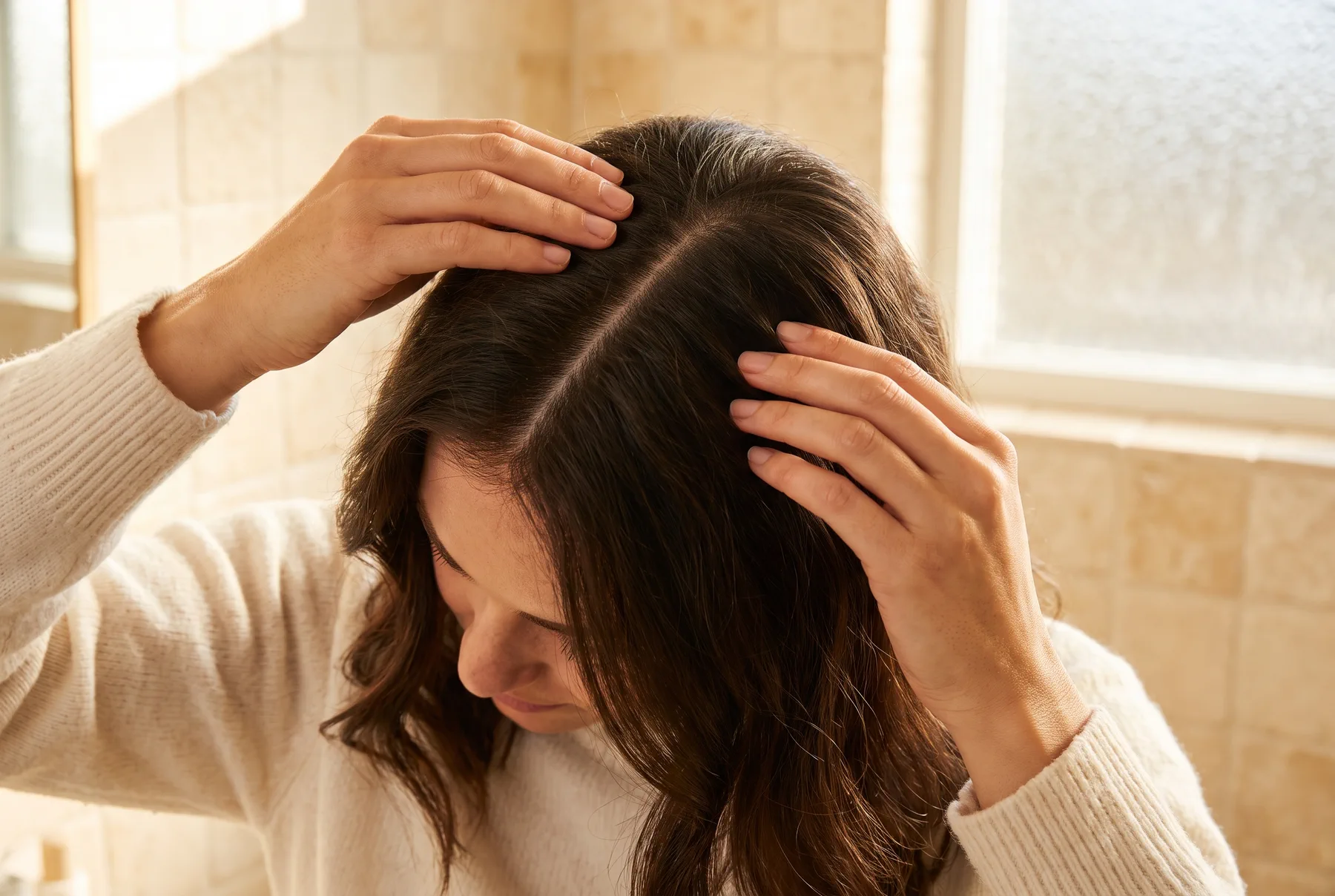
Coily patterns often benefit from patient sectioning because the outer surface can hide inner areas that received little product. That does not mean every coily head needs a heavy application.
On wet or damp coils
Work in sections that allow the hands to reach the lengths and ends without pulling. Glaze the product over each section, then smooth or scrunch according to the desired style. Add only after the first amount is evenly distributed.
On dry coils
Press a trace onto selected ends, twists, braids or visible frizz without repeatedly disturbing the style. If the hair already contains leave-in conditioner, cream or gel, consider the total product load.
Fine coily hair and coarse coily hair are different
Fine coils may be visually dense while the individual strands remain delicate and easy to weigh down. Coarse coils may accept more product in the lengths, but a gradual application still gives more control. Curl tightness does not reveal strand width by itself.
Fine, medium or coarse strands: change the starting amount
Fine strands
Use the smallest controlled starting amount. Spread it across the hands until almost invisible, begin at the ends and avoid placing the first application near the roots. On dry hair, use the residue on fingertips rather than dispensing automatically again.
Medium strands
Begin lightly and focus on even distribution. Medium strands do not guarantee a medium amount because density, length and existing products can change the total need.
Coarse strands
Work through the areas that feel rough or look dry, building the application in stages. Coarse hair may accept more product than fine hair, but excess can still dull movement or create buildup.
No strand-width category has an honest universal pump count.
Low, medium or high density: change the sectioning
Low-density hair
Use fewer, broader sections and less total product. Keep the application local to the lengths and ends. Avoid repeatedly smoothing the crown.
Medium-density hair
Split the hair when necessary for even distribution, especially if the outer layer receives most styling products. Check the underside before adding more.
High-density hair
Create enough sections for both hands to reach the inner lengths. Use a small amount in each area instead of dispensing one heavy dose for the entire head. Section count should follow the hair, not a fixed number from an online chart.
A practical adjustment matrix
| Hair combination | Starting method | Watch for | Best correction |
|---|---|---|---|
| Fine + low density + straight | Smallest amount, lower ends first | Flat roots, separated strands | Use less and keep farther from roots |
| Fine + high density + wavy | Small amount divided across sections | Oily surface but dry inner lengths | Section before adding; do not pour more on top |
| Fine + high density + curly/coily | Light section-by-section glazing | Curl collapse from repeated coating | Reduce total amount and preserve pattern with pressing or scrunching |
| Medium + medium density | Light baseline method | Uneven finish | Improve hand distribution before increasing amount |
| Coarse + low density + wavy/curly | Gradual application to rough areas | Heavy overall finish | Target only the areas that need support |
| Coarse + high density + curly/coily | Small amounts across several sections | Outer layer overcoated, inner hair missed | Divide more carefully rather than using one large dose |
| Any type + colour-treated or heat-styled | Target weathered lengths and ends | Too many overlapping leave-ins | Review the full routine and avoid automatic layering |
| Any type + dry-hair refresh | Use less than on damp hair | Stringy or oily finish | Use fingertip residue and stop earlier |
Wet, damp or dry: choose the moment as well as the amount
Wet or damp hair
This route supports detangling, manageability, frizz control and styling preparation. Water and sectioning can help distribute a small amount across more hair. Remove excess water gently before applying.
Dry hair
Use dry application for a precise finish: selected ends, surface frizz or flyaways. The amount should usually be smaller because the product is less dispersed by water.
Between wash days
Check what is already in the hair. Refresh only the areas that need it. If the hair looks coated, wait until cleansing rather than adding another layer.
For schedule guidance, read How Often to Use Rosemary Oil.
Colour-treated, heat-styled or damaged-looking hair
Hair condition can matter more than pattern. A straight, coarse, bleached length may need different placement from an untreated straight strand. A tightly curled section that has already received cream and gel may need less finishing oil than expected.
Bonding Rosemary Oil is positioned for damaged and compromised hair, thermal-damage care, heat protection and colour vibrancy. Apply it where the hair needs that styling and finishing support, particularly weathered lengths and ends.
Heat protection does not make unlimited heat harmless. Use controlled technique and the lowest effective setting for the result.
What about porosity?
Porosity is commonly used to describe how readily hair takes up and loses water or how weathered its surface feels. It can be a useful observation, but a floating-hair test does not provide a complete diagnosis. Residue, surface oils, previous treatments and the testing method can change what happens in a glass of water.
Use direct routine feedback instead:
- Does a small amount spread evenly?
- Do the ends remain rough after distribution?
- Does the product sit visibly on the surface?
- Does the hair become coated after repeated refreshes?
- Are chemical history and heat exposure concentrated in specific sections?
Adjust amount and placement from those observations rather than assigning the whole head a permanent label.
Common mistakes by hair characteristic
Fine hair: solving every concern with more oil
If the finish is flat or separated, reduce amount and frequency before rejecting the product. Placement lower on the lengths may help.
Dense hair: coating only the visible layer
Section first. More oil on the outer surface will not reach the hidden lengths evenly.
Curly or coily hair: disturbing a finished pattern
Press or glaze a trace over selected areas. Repeated raking can separate the pattern and create more visible frizz.
Straight hair: applying too close to the roots
Start at the ends and use the residue higher only if needed.
Damaged-looking hair: layering every repair product at once
Bonding treatment, leave-in cream, heat spray and oil can each have a role, but more layers are not automatically better. Until Celine Claire confirms the current layering order for Bonding Rosemary Oil and Heat Shield Hair Spray, follow each label and avoid prescribing both as a mandatory pair.
A 30-second hair check before application
- Pattern: Do I need smoothing, glazing, scrunching or targeted pressing?
- Strand width: How quickly does my hair show excess product?
- Density: Do I need sections for even reach?
- Condition: Which areas are actually dry-looking, frizzy or weathered?
- Current product load: What leave-ins are already present?
- Styling stage: Is the hair wet, damp, freshly styled or between washes?
Then begin with a small amount and let the finish answer the next question.
Frequently asked questions
Is Bonding Rosemary Oil suitable for all hair types?
Its wet, damp or dry leave-in method can be adjusted across straight, wavy, curly and coily hair. Suitability still depends on the individual's formula tolerance, amount, placement, other products and desired finish.
How much rosemary oil should fine hair use?
Begin with the smallest controlled amount, spread it fully over both hands and start at the ends. Avoid a universal pump count. Fine hair often shows excess quickly, especially on dry hair.
Can thick hair use more Bonding Rosemary Oil?
Possibly, but “thick” may mean coarse strands, high density or both. Section high-density hair first. Add gradually to coarse or long lengths rather than beginning with one large application.
Is rosemary oil good for straight hair?
Bonding Rosemary Oil can support softness, shine, manageability, frizz control and heat-styling preparation on straight hair. Use a light application through the lower lengths because straight hair can show excess easily.
How should wavy hair apply Bonding Rosemary Oil?
Glaze a small amount over wet or damp lengths, then scrunch if that supports the wave pattern. On dry waves, press a trace onto selected ends or frizz without repeatedly pulling through the style.
How should curly hair use it?
Work in manageable sections on wet or damp hair. Glaze or use a gentle praying-hands motion through the lengths, then scrunch or shape. On dry curls, target selected areas with a trace.
How should coily hair use it?
Section the hair so product reaches inner lengths and ends. Apply small amounts gradually, then smooth, glaze or shape according to the style. Do not assume tight coils always require a heavy dose.
Does curl type determine how much oil to use?
No. Curl pattern affects application motion, but strand width, density, length, condition and existing products also affect the amount. Fine coils and coarse coils may need different starting points.
Is high-density hair the same as coarse hair?
No. Density describes how much hair is present across the head. Coarse describes the width of individual strands. A person can have fine strands and high density or coarse strands and low density.
Should low-density hair avoid oil?
Not automatically. Use a very small amount, focus on the lower lengths and watch the finish. Avoid coating the roots or using a large dose intended for high-density hair.
Can I use Bonding Rosemary Oil on dry curls every day?
Use it when selected areas need a refresh rather than following a universal daily rule. Check the existing product load and use a trace so the curl pattern remains light and defined.
Should I apply it before or after curl cream?
Follow each label and use the smallest combination that achieves the desired finish.
Can I put Bonding Rosemary Oil on my scalp?
No scalp application is included in its approved method. Use it through wet, damp or dry hair, primarily the lengths and ends. The rosemary ingredient story does not create a separate scalp direction.
Does it work differently on colour-treated hair?
The product is positioned for colour vibrancy and damaged or compromised hair. Apply it to the areas that need manageability, softness, shine or styling support while following any service-specific aftercare.
Can it protect every hair type from heat?
Heat protection is part of the current product positioning. No maximum temperature should be claimed without approved testing. All hair types should use controlled heat and avoid unnecessary exposure.
Is the floating-hair porosity test reliable?
It is not a complete diagnosis. Residue, surface oils and testing conditions can affect the result. Routine observations such as spreading, buildup, dryness and chemical history give more useful context for oil application.
Sources
- Santos et al., 2022: Critical appraisal of global hair fibre characteristics supports moving beyond geo-racial classifications and considering curl type and cross-sectional dimensions.
- Loussouarn et al., 2007: Shape variability and classification of human hair supports objective hair-shape classification without relying on ethnicity.
- Wolfram, 2003: Human hair as a physicochemical composite supports common structural characteristics across human hair alongside visible differences.
- American Academy of Dermatology: Tips for healthy hair supports gentle handling, detangling from ends upward and controlled heat.
- American Academy of Dermatology: Hair styling without damage supports limiting wet handling for most hair while noting that tightly curled or textured hair may be brushed wet to reduce breakage.