

Small amount → warm between palms → smooth through lengths and ends → distribute evenly → leave in → style. The most important distinction: this is not an overnight scalp oil or a rinse-out mask. The rosemary story does not change the bottle’s actual directions.
What is Bonding Rosemary Oil designed to do?
Bonding Rosemary Oil is Celine Claire’s leave-in bonding and finishing oil for hair that needs a more polished, manageable finish. You may also recognize the name Tec Plex 7 Bonding Oil on its package or in older material.
Its role combines several everyday needs:
- helping detangle and improve manageability;
- smoothing the look of frizz and flyaways;
- adding softness and shine;
- supporting a more polished finish on thermally stressed hair;
- providing the product’s established heat-protection benefit without an unverified temperature claim;
- supporting the appearance of colour vibrancy;
- bringing rosemary into the brand’s healthy-looking growth, fullness and volume story without promising medical hair regrowth.
This combination is why the product can fit at more than one point in a routine. The amount and placement should change with the moment, but the core method remains the same.
The correct way to apply Bonding Rosemary Oil
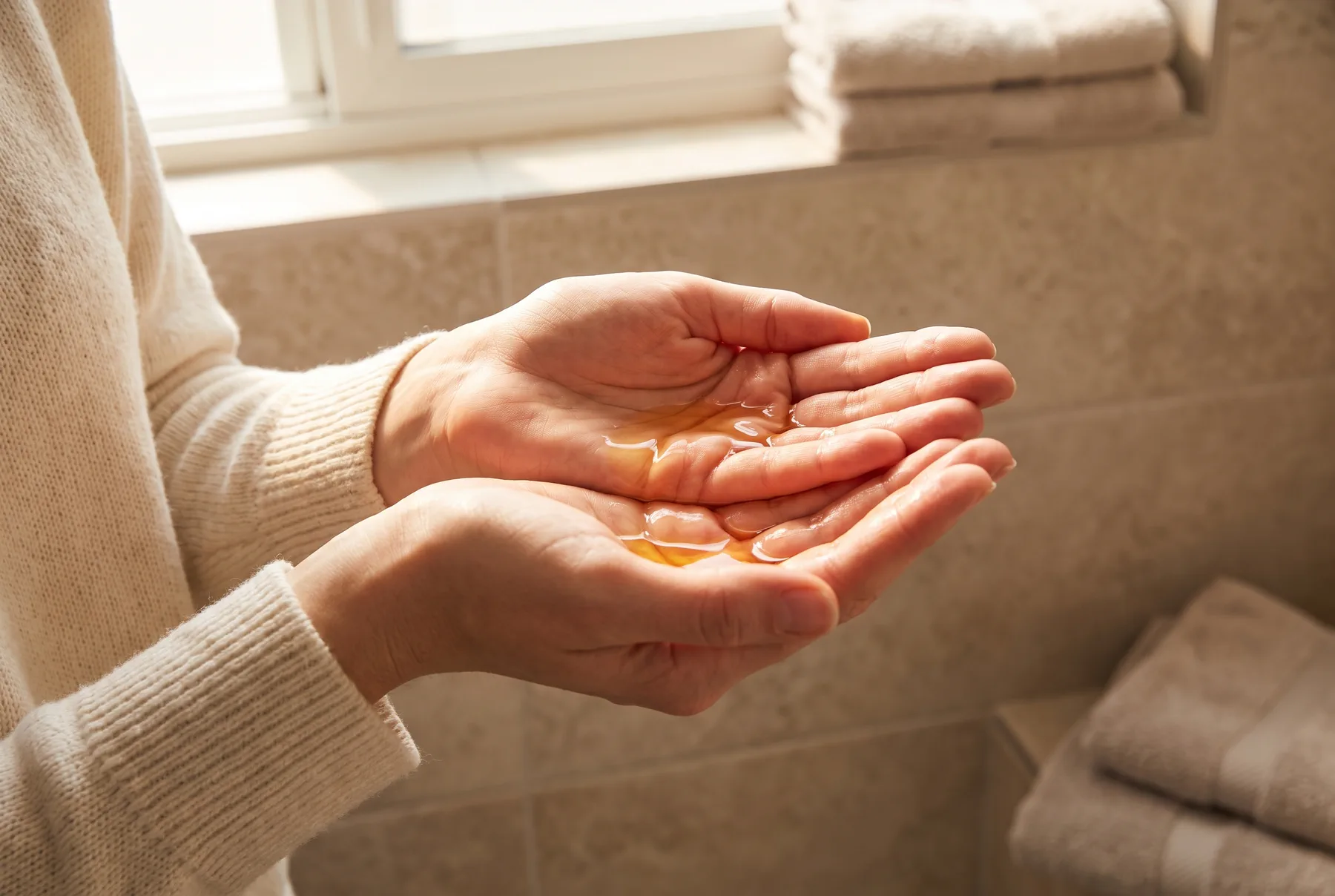
- Start with a small, controlled amount. The goal is an even veil, not visible saturation.
- Rub your palms together. Spread the oil across both hands before touching the hair.
- Begin where hair needs it most. Usually the mid-lengths and ends rather than the roots.
- Distribute without repeatedly coating one spot. Use flat palms and fingers, then gently comb or arrange the hair if appropriate for your texture.
- Add only if necessary. It is easier to build a little more than to remove excess.
- Leave the product in. Do not rinse it out.
- Style as desired. Follow the relevant route below.
Route 1: Use it on wet or damp hair before styling
Choose this route when detangling, manageability, frizz control and preparation for styling are the priorities.

Remove excess water · start conservatively
Hair may be wet or damp, but it should not be pouring with water. Press away excess moisture with a soft towel or T-shirt instead of rubbing aggressively.
Dispense a small amount into one palm. Fine, short or easily weighed-down hair should start especially conservatively. Rub both hands together until the product is distributed over the palms and fingers.
Apply to lengths and ends
Begin at the ends, where weathering and dryness are often most visible, then move upward through the mid-lengths. Avoid concentrating the first application at the roots.
Distribute according to your texture
- Straight or wavy: smooth with open palms, then use fingers or an appropriate comb to distribute.
- Curly or coily: glaze the surface with a gentle praying-hands or section-by-section motion. Scrunch or shape after distribution if it supports the desired pattern.
- Dense: work in sections so the outer layer does not receive all the product.
Leave in and style
Do not rinse. If heat styling, use controlled technique and the lowest effective setting. The American Academy of Dermatology advises low or medium heat and notes that excessive heat can damage hair. Bonding Rosemary Oil carries a heat-protection claim, but Celine Claire does not currently publish a tested maximum temperature for this article.
Route 2: Use it on dry hair as a finishing oil
Choose the dry-hair route when the style is complete but the ends look dry, the surface needs more polish or flyaways need control.

- Dispense a very small amount.
- Spread it thoroughly across the palms and fingertips.
- Touch the ends first.
- Lightly skim the remaining product over frizz or flyaways.
- Stop before the hair looks coated.
Dry hair reveals excess more quickly than wet hair, so a restrained application is usually enough. For localized flyaways, use the trace remaining on the fingertips rather than adding another full application.
Route 3: Refresh the lengths and ends between wash days
Bonding Rosemary Oil may also be used sparingly on dry hair between washes. This is useful when the ends have lost softness or the surface needs a small polish refresh.
- Work only where the hair looks or feels as though it needs support.
- Begin at the ends.
- Avoid automatically reapplying through every section.
- If the hair already feels coated, wash-day cleansing may be more useful than adding another layer.
A refresh is not the same as an overnight treatment. Do not saturate the scalp or leave a heavy application in place as a pre-shampoo ritual.
How much Bonding Rosemary Oil should you use?
There is no honest universal pump count for every head of hair. Length, density, strand diameter, porosity, existing products and whether the hair is wet or dry all affect the amount.
| Hair situation | Starting approach | What to observe |
|---|---|---|
| Fine, short or easily weighed-down hair | Begin with the smallest controlled amount | Stop when the ends and surface look smoother without separation or oiliness |
| Medium length or density | Begin lightly, distribute fully, then reassess | Add only to areas that still feel rough or look frizzy |
| Long, dense, coarse, curly or coily hair | Work in sections with a small amount at a time | Check that inner sections receive product without repeatedly coating the outer layer |
| Dry-hair finishing | Use less than a wet-hair application | The finish should look polished, not wet or coated |
| Between-wash touch-up | Target only the areas that need it | Avoid turning a local refresh into a full reapplication |
The practical test is the finish. If hair looks separated, flat or oily, the application was probably too generous or too close to the roots. If the product never reaches dense inner sections, divide the hair before adding more.
How to adapt the method to your hair
Fine or low-density hair
Keep the application light and concentrated on the lower lengths. Spread the oil across the hands thoroughly before contact. Do not begin at the crown or root area. On dry hair, use only the residue left on the fingertips for flyaways.
Thick or high-density hair
Sectioning matters more than applying a large amount all at once. Divide the hair into manageable areas and distribute a little through each section. This produces a more even result than coating only the visible surface.
Curly or coily hair
Apply in sections on wet or damp hair, glaze the lengths, then scrunch or shape according to the desired definition. Avoid rough raking when the hair is vulnerable to tangling. If using it on dry curls, press or smooth a trace over selected areas instead of dragging through the finished pattern.
Colour-treated hair
Use the oil as a leave-in finishing and manageability step while following the directions of the colour service and the rest of the care system. Its current product positioning includes support for colour vibrancy, but it does not replace colour-safe cleansing, conditioning or professional advice.
Heat-styled hair
Distribute through wet or damp lengths and ends before styling. Use the lowest effective tool setting and limit unnecessary repeated passes. If you also own Heat Shield Hair Spray, do not assume the two should always be layered in a particular order — follow each current label and use an approved Celine Claire layering protocol when one is available.
Bonding Rosemary Oil or Moroccan Argan Oil?
Both are oils, but they are not interchangeable instructions in different bottles.
| Question | Bonding Rosemary Oil | Moroccan Argan Oil |
|---|---|---|
| Core role | Leave-in bonding, styling and finishing oil | Multi-method argan oil treatment and finishing product |
| Main placement in this guide | Hair lengths and ends | Depends on the chosen approved argan method |
| Wet or damp use | Yes | Follow its own product directions |
| Dry finishing use | Yes | Follow its own product directions |
| Overnight scalp method | No | Moroccan Argan Oil has its own separate methods |
| Rinse after this application | No | Depends on the argan method selected |
| Main decision | Choose for bonding, heat-styling preparation, manageability and polished finish | Choose when the specific argan treatment or finishing route matches the goal |
Visit Moroccan Argan Oil for its exact instructions (the unusual spelling in that URL is intentional). For a full side-by-side decision, use Best Argan Oil for Hair or the Hair Quiz rather than combining both bottles without a clear purpose.
What rosemary means in this product
Rosemary is part of the product’s ingredient and brand story, but an ingredient story is not permission to invent a new application method.
A 2015 randomized comparative trial studied a rosemary oil preparation applied for six months by people with androgenetic alopecia. That study is relevant to broader rosemary research, but it did not test Celine Claire Bonding Rosemary Oil, its complete formula or the lengths-and-ends method on this page. It therefore cannot establish that this bottle treats alopecia or guarantees regrowth.
For this specific bottle, follow its product directions: a small amount through wet, damp or dry hair, especially the lengths and ends, then leave it in.
Seven common application mistakes
- Treating every rosemary product as a scalp oil. The ingredient name does not override the product format. Bonding Rosemary Oil is used here as a leave-in product for the hair lengths and ends.
- Beginning with too much. More product does not automatically create more softness or protection.
- Applying the full amount at the roots. This can make fine or easily weighed-down hair look flat. Start at the ends and move upward only as needed.
- Rinsing it out like a mask. This product is intended to remain in the hair.
- Using it as an overnight pre-shampoo treatment. That method belongs to different product directions. Do not transfer the Moroccan Argan Oil routine to Bonding Rosemary Oil.
- Assuming heat protection makes unlimited heat harmless. Excessive heat can still damage hair. Keep temperature and exposure controlled.
- Layering multiple products without checking their roles. Use the Hair Quiz or the Rosemary Bonding Ritual for a clearer route.
A 20-second application checklist
Before you finish, confirm:
- I began with a small amount.
- I spread it between both hands.
- I started at the lengths and ends.
- I distributed it rather than coating one spot.
- I added more only where needed.
- I left it in.
- I did not turn it into an overnight scalp treatment.
- If I used heat, I kept the setting and exposure controlled.
90 ml leave-in bonding, styling and finishing oil for the lengths and ends of wet, damp or dry hair. Never a scalp oil, overnight treatment or rinse-out mask.
Frequently asked questions
Can I use Bonding Rosemary Oil on wet hair?
Yes. Apply a small amount through wet or damp lengths and ends, distribute evenly, leave it in and style as desired.
Can I use it on dry hair?
Yes. Use a very small amount to polish the ends, soften the look of frizz or control selected flyaways. Dry-hair finishing usually requires less product.
Do I rinse Bonding Rosemary Oil out?
No. It is a leave-in product.
Can I put it on my scalp?
The application route in the current product master is through the hair, especially the lengths and ends. Do not turn it into a scalp massage or overnight scalp oil. Follow the current package directions if they are updated.
Can I leave it in overnight?
You can leave a normal styling application in the hair because it is a leave-in product, but do not saturate the scalp or use a heavy application as an overnight pre-shampoo treatment. That is not this product’s method.
How often can I use it?
Use it when your lengths and ends need its styling or finishing role, while watching how your hair responds and how much other product is already present. There is no required universal daily or weekly schedule.
How many pumps should I use?
Begin with a small controlled amount rather than following a universal pump count. Hair length, density, strand size, texture and whether it is wet or dry change the amount required.
Will it weigh down fine hair?
Any finishing oil can look heavy if too much is used or if it is concentrated near the roots. Fine hair should begin with especially little product and focus on the lower lengths and ends.
Does it protect hair from heat?
Heat protection is part of the current product positioning. No specific maximum temperature should be published without approved test documentation. Use low or medium heat where practical and avoid unnecessary exposure.
Can I use it with a flat iron?
Apply the product according to its directions before styling, but use a flat iron only on dry hair and keep heat controlled. The American Academy of Dermatology recommends low or medium settings and limiting frequency.
Can I use it on curly or coily hair?
Yes. Work in sections on wet or damp hair, glaze the lengths and then shape or scrunch according to the desired pattern. On dry curls, press a trace over selected frizz rather than disturbing the whole style.
Is it suitable for colour-treated hair?
Its product positioning includes colour vibrancy and manageability. Follow the directions of your colour service and confirm compatibility if your stylist has given you a specialized aftercare plan.
Does Bonding Rosemary Oil regrow hair?
Celine Claire’s established product story connects rosemary with healthy-looking growth, fullness and volume, but this product should not be presented as a guaranteed regrowth treatment or a treatment for alopecia. See a qualified healthcare professional for sudden, patchy or persistent hair loss.
Is it the same as pure rosemary essential oil?
No. It is a complete branded haircare formula with its own directions. Do not substitute essential-oil advice for the product label.
Is Bonding Rosemary Oil the same as Moroccan Argan Oil?
No. Bonding Rosemary Oil is used as a leave-in oil on wet, damp or dry hair. Moroccan Argan Oil has its own multi-method directions, which must not be copied onto this product.
Can I use Bonding Rosemary Oil with Heat Shield Hair Spray?
Do not assume a fixed layering order until Celine Claire approves one for the current formulas. Follow each current label and avoid overloading the hair.
What should I do if my hair looks oily after applying it?
Use less next time, keep the product farther from the roots and distribute it across both hands before touching the hair. If the hair is already coated, adding more product will not correct it.
Sources
- American Academy of Dermatology, “Hair styling without damage.” aad.org
- American Academy of Dermatology, “Tips for healthy hair.” aad.org
- Panahi Y et al., “Rosemary oil vs 2% minoxidil solution for the treatment of androgenetic alopecia: a randomized comparative trial,” 2015. pubmed.ncbi.nlm.nih.gov/25842469 — provides context for rosemary research. It does not test Celine Claire Bonding Rosemary Oil.