
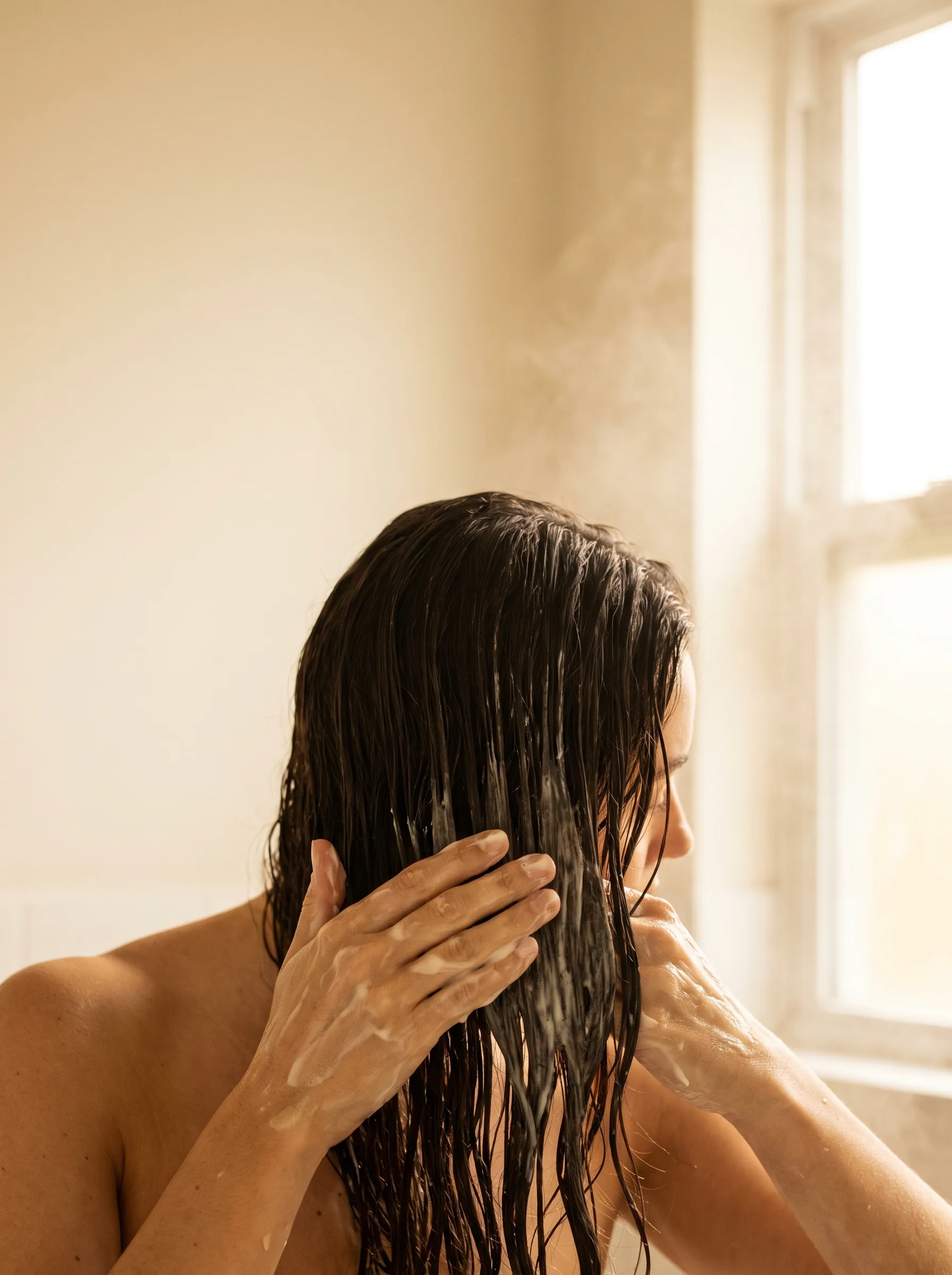
Rinse-out conditioner works during the shower and must be rinsed away. Leave-in conditioner goes on afterward and stays in the hair to support detangling, manageability and styling. They are not the same product, and one should not be converted into the other by adding water.
Many routines can use both: shampoo, rinse-out conditioner, rinse, towel-blot, then a small amount of leave-in. The right choice still depends on your hair, the finish you want and the directions on each bottle.
The difference at a glance
| Question | Rinse-out conditioner | Leave-in conditioner |
|---|---|---|
| When is it used? | In the shower after shampoo | After washing and towel-blotting |
| Does it stay in the hair? | No | Yes |
| Main routine role | Slip, detangling and conditioning before rinsing | Ongoing manageability, moisture support and styling preparation |
| Typical placement | Usually mid-lengths and ends; follow the exact label | Usually mid-lengths and ends on damp hair |
| How much? | Enough to coat the intended sections | Start with the smallest amount that distributes evenly |
| Can it replace the other? | Not automatically | Not automatically |
| Is it automatically a heat protectant? | No | No |
What rinse-out conditioner does
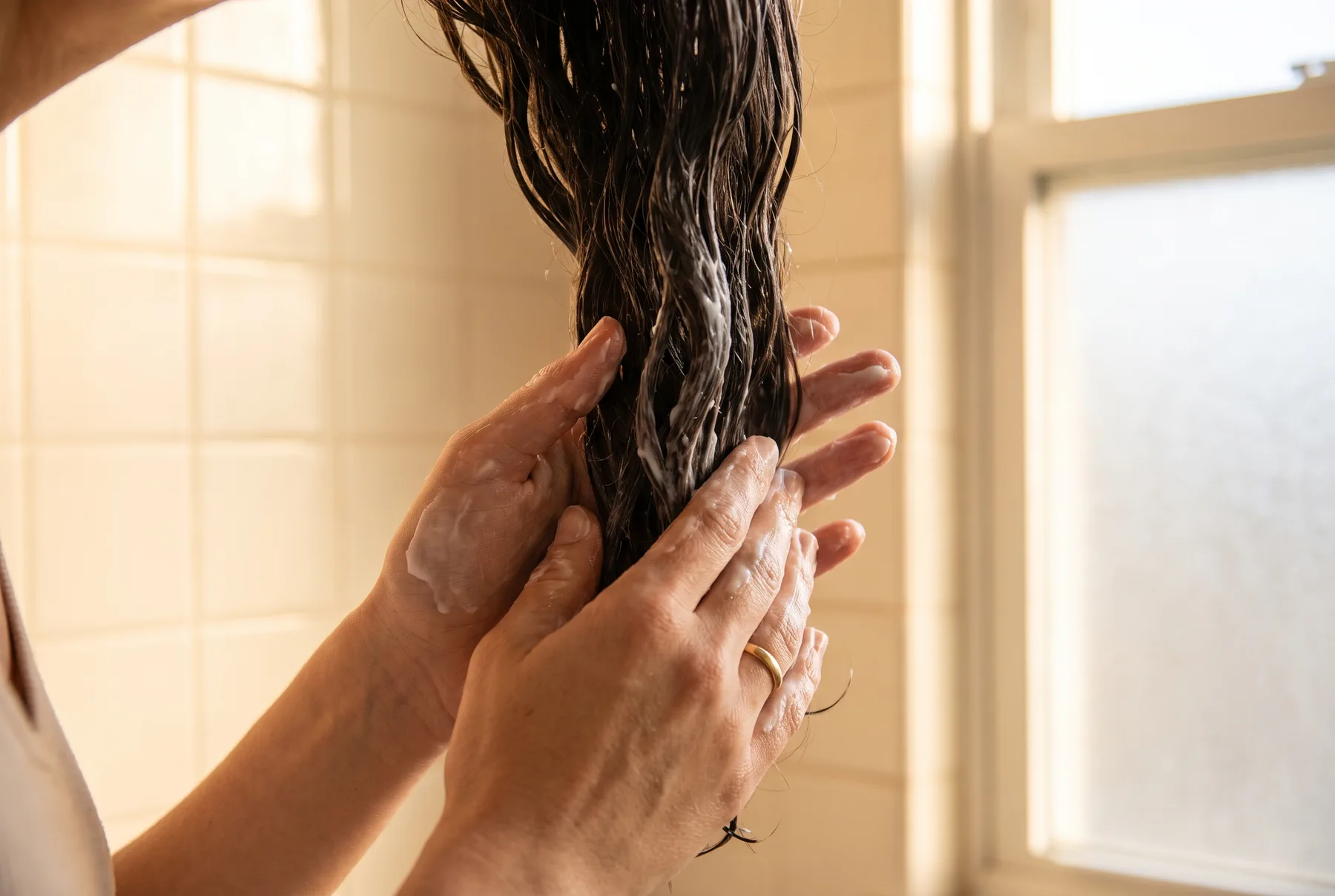
Shampoo removes oil, residue and debris from the scalp and hair. The lengths can feel rougher or more tangled afterward, particularly when they are long, lightened, coloured, curly or already weathered.
Rinse-out conditioner is used before you leave the shower. It coats and lubricates the hair surface, which can improve slip and make wet detangling easier. You leave it on for the time stated on the bottle, then rinse it thoroughly.
That rinse instruction is part of the formula's intended use. Leaving an ordinary shower conditioner in the hair can cause coating, a heavy finish or scalp discomfort. It is not a shortcut to making leave-in conditioner.
What leave-in conditioner does

Leave-in conditioner is applied after the shower, usually while the hair is evenly damp. It remains on the strands while the hair air-dries or is styled.
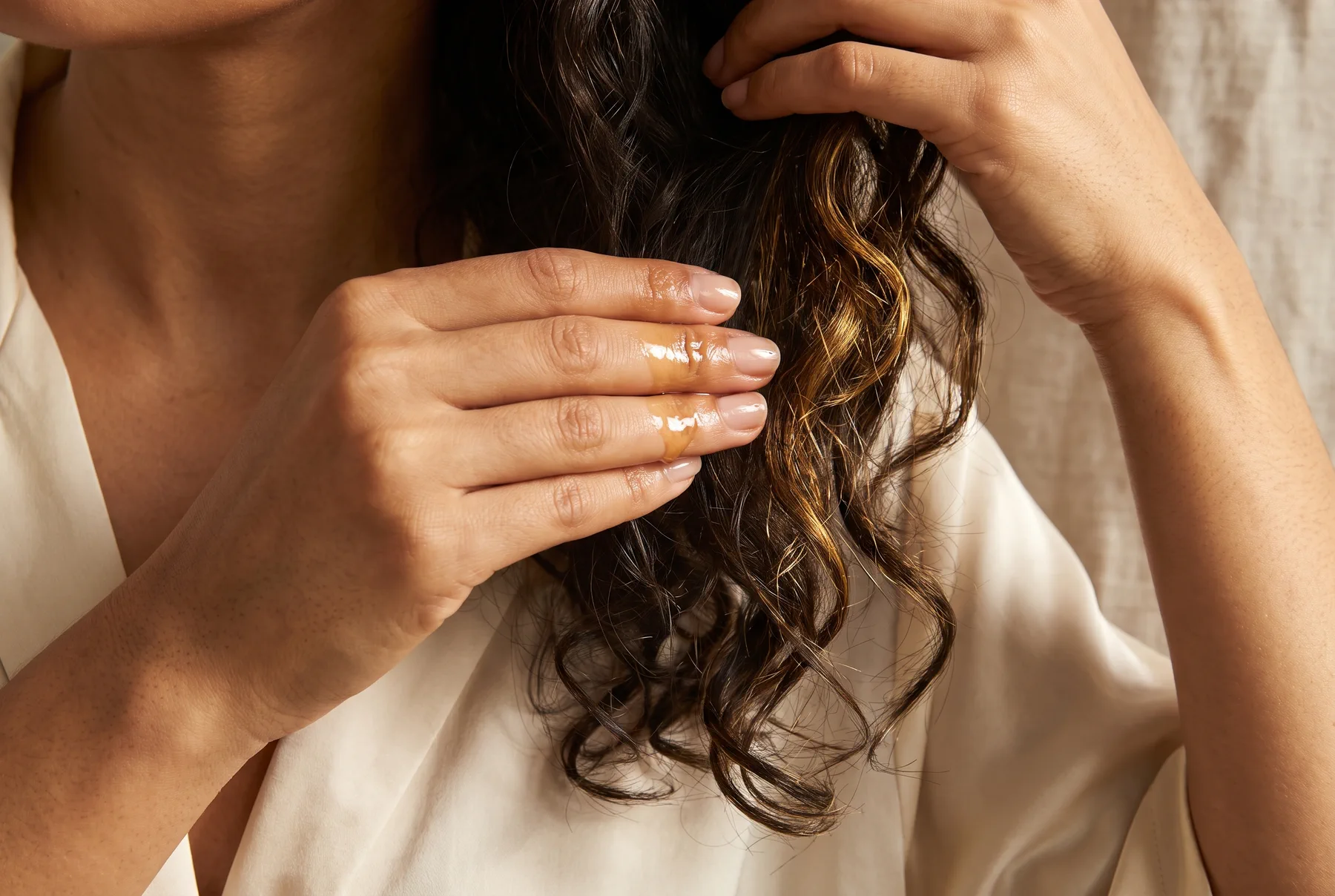
Its job is to extend manageability beyond the shower. Depending on the exact formula, it may help with detangling, softness, visible frizz, static, curl shaping or styling preparation. A small amount is usually more useful than coating the hair heavily.
Apply it where the hair needs it. For many people, that means the mid-lengths and ends rather than the scalp. Fine or short hair usually needs less. Dense, coarse, curly or very dry-feeling hair may need more careful sectioning, but the amount should still be built gradually.
Do you need both conditioner and leave-in?
You can use both when rinse-out conditioner gives useful shower slip but the hair still needs help with detangling, manageability or styling after towel-blotting.
A practical order is:
- Shampoo and rinse.
- Apply rinse-out conditioner according to its label.
- Detangle gently when the product has provided enough slip.
- Rinse thoroughly.
- Towel-blot without rough rubbing.
- Apply a small amount of leave-in through damp lengths.
- Add separate heat protection if heated tools will be used.
- Style and dry.
Using both does not mean using a large amount of each. The rinse-out step should rinse clean. The leave-in step should begin small and remain concentrated where the hair needs it.
When rinse-out conditioner may be enough
Rinse-out conditioner may be enough on a wash day when:
- the hair detangles easily after the shower;
- the dried finish feels soft and manageable;
- the style does not need extra cream or curl support;
- fine hair becomes flat when several conditioning layers are used;
- another compatible styling product already provides the needed finish.
Judge the dry result, not only how the hair feels while wet. If it dries soft, moves freely and styles easily, another conditioning layer may not be necessary that day.
When a leave-in step can help
Consider a leave-in after rinsing when:
- knots return during towel-drying or sectioning;
- the ends feel dry before styling begins;
- curls need a cream product for softer shaping;
- long or dense hair needs continued slip during styling;
- visible frizz or static returns as the hair dries;
- colour-treated or processed lengths need gentler handling.
Leave-in conditioner is cosmetic support, not a treatment for hair loss, scalp disease or ongoing breakage from an undiagnosed cause. Speak with a dermatologist when shedding, scalp irritation or breakage continues despite gentle care.
Can leave-in conditioner replace regular conditioner?
Not as a universal rule. A leave-in may be enough for some fine or easily weighed-down hair on some wash days, while dry, curly, long or processed hair may benefit from rinse-out slip followed by a controlled leave-in amount.
Start from the product directions and the problem you are solving. If detangling in the shower is difficult, skipping rinse-out conditioner may remove a useful slip step. If hair becomes limp after both, reduce the leave-in amount before abandoning conditioning entirely.
Can regular conditioner be used as leave-in?
No, unless the exact product label explicitly approves both uses. Rinse-out and leave-in formulas are designed for different contact and rinse conditions.
Do not pour ordinary conditioner into a spray bottle, add water and leave the mixture on the hair. Dilution does not turn it into a tested leave-in formula, and adding water outside a controlled manufacturing process can compromise the product.
Choose by hair type and desired finish
Fine or easily weighed-down hair
Use a lightweight rinse-out conditioner mainly through the lengths and ends. Rinse well. If more help is needed afterward, use a trace amount of leave-in on the driest sections instead of coating the roots.
The goal is not to avoid conditioner. It is to control weight and placement.
Dry, coarse or dense hair
Rinse-out conditioner can provide the slip needed for gentle detangling. After rinsing, divide damp hair into sections and add leave-in gradually. Sectioning often distributes a smaller amount more evenly than applying one large handful to the surface.
Wavy, curly or coily hair
Condition and detangle first, then rinse. Apply a curl-focused leave-in to damp sections and shape the pattern before air-drying or diffusing. Do not assume that a curl cream is also a firm-hold gel or heat protectant.
Colour-treated, lightened or chemically processed hair
The hair may need more slip and gentler handling. Use products approved for the exact service and follow their directions. If heat will be used, add a verified heat-protection step rather than relying on conditioner alone.
Match the Celine Claire conditioner to the job
For richer rinse-out hydration
Argan Oil Hydrating Conditioner is the richer rinse-out path for dry-feeling lengths. The current approved method is about five minutes before rinsing. Its current product directions also describe a ten-minute mask method. Check the sellable label before publishing or following either timing.
Explore Argan Oil Hydrating Conditioner
For lightweight rinse-out conditioning and volume
Moroccan Argan Oil Volume Conditioner is intended for fine, thin or flat hair that needs slip without a dense mask-like finish. Apply it through the mid-lengths and ends for 1 to 2 minutes, then rinse thoroughly.
Explore Moroccan Argan Oil Volume Conditioner
For keratin or Hair Botox maintenance
Keratin & Botox Conditioner is a rinse-out conditioner for the care routine that follows compatible salon services. Apply mainly through the mid-lengths and ends, use the verified dwell time and rinse thoroughly.
Explore Keratin & Botox Conditioner
For general leave-in softness and detangling
Moisturizing Cream Leave-In Conditioner, also named Multi Complex Hair Cream on the bottle, is the general leave-in path. Apply a small amount through damp mid-lengths and ends, detangle from the ends upward and do not rinse.
Explore Moisturizing Cream Leave-In Conditioner
For curl-focused leave-in care
Curl Essence combines leave-in conditioning with flexible curl-styling support. Use it after shampoo and rinse-out conditioner on towel-dried hair, distribute it evenly, scrunch, then air-dry or diffuse. It is not a rinse-out conditioner, oil, firm-hold gel or verified heat protectant.
Common conditioner mistakes
Leaving rinse-out conditioner in the hair
Follow the rinse instruction. If you need a product to remain after the shower, choose one formulated and labelled as leave-in.
Applying every product to the scalp
Most leave-ins should stay on the hair rather than the scalp. Follow product-specific directions because rinse-out placement can also vary.
Using the same amount for every hair type
Fine hair and dense curls rarely need identical quantities. Begin small, section when necessary and assess the fully dried finish.
Treating conditioner as heat protection
Only rely on heat protection when the exact product supports that claim. Celine Claire leave-in products should be followed by Heat Shield Hair Spray when the routine uses heated tools.
Adding more product to solve buildup
If hair feels coated, dull or limp, another conditioning layer may make the problem worse. Reduce the amount, keep products away from the roots and make sure the cleansing step removes accumulated residue when needed.
Frequently asked questions
What is the main difference between leave-in and rinse-out conditioner?
Rinse-out conditioner works in the shower and is rinsed away. Leave-in conditioner goes on afterward and remains in the hair for manageability and styling support.
Do I use leave-in conditioner before or after regular conditioner?
After. Apply regular conditioner, rinse it thoroughly, towel-blot and then apply leave-in to damp hair.
Can I use both at every wash?
You can if the hair benefits, but it is not mandatory. Adjust the leave-in amount or frequency if the dried result feels coated, greasy or flat.
Can I skip regular conditioner and use only leave-in?
Some hair may tolerate that routine, but it is not a universal replacement. Keep rinse-out conditioner when you need shower slip and easier wet detangling.
Can I leave regular conditioner in overnight?
Not unless the exact product label explicitly permits that use. Follow the stated dwell time and rinse direction.
Can I dilute rinse-out conditioner to make a leave-in spray?
No. Dilution does not change the formula into a leave-in product and may compromise it.
Does leave-in conditioner go on wet or dry hair?
Most leave-ins work best on towel-blotted, evenly damp hair, but the exact label decides. Celine Claire Moisturizing Cream and Curl Essence are applied to damp or towel-dried hair under their approved methods.
How much leave-in conditioner should I use?
Start with the smallest amount that distributes evenly. Fine or short hair needs less; dense or coarse hair may need more or section-by-section application.
Should leave-in conditioner go on the scalp?
Usually no. Concentrate on the hair, particularly dry or tangled lengths and ends, unless the exact label directs otherwise.
Is leave-in conditioner a heat protectant?
Not automatically. Check the exact product label for a heat-protection claim and use a dedicated product when needed.
Is Curl Essence a regular conditioner?
No. It is a leave-in conditioner with flexible curl-styling support. Use it after rinse-out conditioner and do not rinse it away.
What is the difference between conditioner and a hair mask?
Rinse-out conditioner is usually a regular wash-day step. A mask is a scheduled treatment with its own dwell time and directions. Read the exact label because some masks replace conditioner while others are followed by it.
Why does my hair feel greasy after leave-in conditioner?
The amount may be too high, the formula may be too rich, it may be too close to the roots or several leave-in products may be overlapping. Use less and reassess after the hair is completely dry.
Can fine hair use leave-in conditioner?
Yes. Choose an appropriate formula, start with a trace amount and focus on the sections that need it rather than coating the roots.
Can curly hair use both types?
Yes. Rinse-out conditioner can support shower detangling, while a curl-focused leave-in can support the pattern during styling.
Is Celine Claire made in Canada?
Celine Claire is a Canadian haircare brand. Individual manufacturing origin should only be stated when documented for the exact product.
Sources
- American Academy of Dermatology, “Dermatologists' top tips for using leave-in conditioner”:
https://www.aad.org/public/everyday-care/hair-scalp-care/hair/leave-in-conditioner-tips - Gavazzoni Dias, M.F.R., “Hair Cosmetics: An Overview,” International Journal of Trichology:
https://pmc.ncbi.nlm.nih.gov/articles/PMC4387693/ - França-Stefoni et al., “On Hair Care Physicochemistry: From Structure and Degradation to Novel Biobased Conditioning Agents”:
https://pmc.ncbi.nlm.nih.gov/articles/PMC9921463/ - Approved Celine Claire product masters for Products 004, 008, 012, 014 and 015.