

Argan, coconut, jojoba, castor and olive oils can all appear in haircare, but they do not perform the same job in the same way. If you want a small finishing step for dry ends, argan oil is often the more practical starting point. If you want a pre-shampoo oiling method, coconut oil has more direct hair-fibre research behind that specific use. Thicker oils such as castor or olive may suit deliberate wash-out routines better than a weightless finish.
The most important choice is not the ingredient name. It is the combination of formula, amount, placement and method.
Quick comparison
| Oil or formula type | Practical role | Texture tendency | Best starting placement | Important limit |
|---|---|---|---|---|
| Argan oil or argan hair oil | Finishing, softness, shine and smoother-looking ends | Light to rich, depending on formula | Lengths and ends | Read the full INCI; not every argan product is pure oil |
| Coconut oil | Pre-shampoo oiling or planned wash-out care | Rich and can solidify in cool rooms | Lengths before washing | Hair-fibre evidence does not mean it suits every finish or texture |
| Jojoba oil | Conditioning ingredient or measured oiling | Often described as light, but formula matters | Dry areas or lengths | A wax ester, not proof of identical behaviour to scalp sebum |
| Castor oil | Thick oiling mixture or controlled wash-out use | Very viscous | Targeted lengths or blended method | No reliable basis for promising hair growth |
| Olive oil | Rich pre-wash or mask-style use | Heavy for many fine textures | Dry lengths before washing | Easy to over-apply; culinary quality is not a haircare claim |
| Mineral-oil formula | Surface lubrication and shine | Can range from light to heavy | Lengths and ends | Does not share coconut oil's tested penetration mechanism |
| Silicone-based finishing serum | Slip, shine, frizz and surface smoothing | Usually designed for a controlled finish | Mid-lengths and ends | Not a plant oil; heat protection requires an exact label claim |
This table describes common tendencies, not guarantees. A blended product may feel completely different from its headline ingredient.
Start with the job, not the trend
Before choosing an oil, decide what the hair needs today.
For a polished dry-hair finish
Choose a product with clear leave-in directions and begin with the smallest stated amount. Argan-based hair oils are useful in this role because a measured drop can be spread over the ends and flyaways without turning the entire routine into an oil treatment.
For pre-shampoo care
A richer oil can be applied before washing when its directions support that method. Coconut oil is often discussed here because research on tested hair fibres found reduced protein loss under specific pre- and post-wash conditions. That finding does not mean coconut oil repairs all damage or is automatically best for every head of hair.
For scalp care
Do not assume every hair oil belongs on the scalp. Fragrance, essential oils and richer formulas may not suit a reactive scalp. Persistent flakes, burning, sores, itching or sudden shedding need an appropriate assessment rather than another oil layer.
For heat styling
Use a dedicated heat protectant unless the exact oil product is explicitly labelled and substantiated for heat protection. The fact that a product adds shine does not establish a protective temperature range.
For growth or hair loss
No finishing oil should be presented as a treatment for the many possible causes of hair loss. Oil may reduce rough handling or improve cosmetic appearance, but less breakage is not the same as increased follicle growth.
Argan oil: the flexible finishing choice
Argan oil comes from the kernels of the argan fruit associated with Morocco. Cosmetic argan oil contains fatty acids and tocopherols, but a finished hair oil may combine argan oil with other conditioning ingredients. That can change spread, shine, feel and the amount required.
Argan's practical advantage is versatility. Depending on the exact product directions, it may be used as a pre-shampoo treatment, a small shampoo addition, a leave-in step or a dry-hair finisher. Those are separate methods. More methods do not need to be stacked into one wash day.
For finishing, apply a very small amount to the ends first. Fine, short or low-density hair usually needs less than thick, long or high-density hair. If the roots collapse or look oily, placement and amount are the first things to change.
Argan oil vs coconut oil for hair
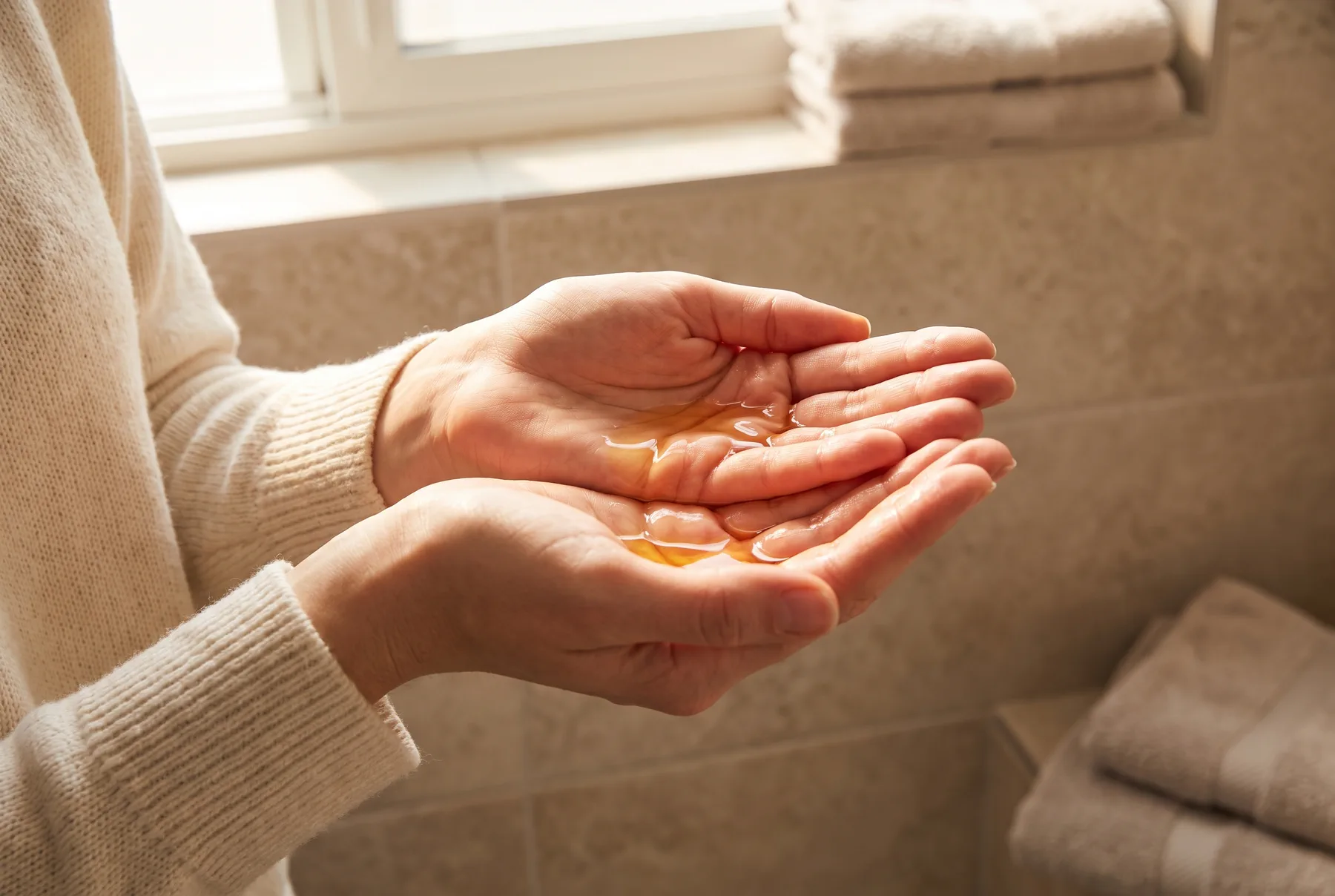
Choose argan when the goal is a controlled finish
An argan hair oil with clear leave-in instructions can be easier to dose over dry ends and flyaways. It fits after styling or as a small touch between wash days.
Choose coconut when the goal is a planned pre-wash method
Coconut oil's lauric-acid-rich structure has been studied for its interaction with hair fibres. In one frequently cited study, coconut oil reduced protein loss in the tested hair while mineral and sunflower oil did not. This is a reason to consider coconut oil for a measured pre-wash method, not permission to claim permanent repair.
Consider feel and climate
Coconut oil can feel richer and may solidify at cooler room temperatures. Some hair responds well; other hair feels stiff or coated. Argan formulas vary too, so neither ingredient name can replace a real application test.
Argan oil vs jojoba oil for hair
Jojoba is technically a liquid wax dominated by wax esters rather than a typical triglyceride plant oil. It appears in hair and skin formulas for conditioning and emollience.
Choose based on the finished product. A well-designed jojoba formula may spread lightly, while a concentrated product may still feel rich. Argan may be the simpler choice when the product gives exact finishing quantities and the goal is shine and smoother-looking ends.
Avoid the common claim that jojoba is “the same as human sebum.” Similarity is often used as marketing shorthand, but it does not establish identical behaviour or universal scalp compatibility.
Argan oil vs castor oil for hair
Castor oil is noticeably viscous. That thickness can make it useful in a controlled oiling blend or wash-out method, but it also makes accidental over-application easy, especially on fine or low-density hair.
Argan is generally easier to distribute as a finishing step when the formula and dose are appropriate. Castor oil is not a proven hair-growth treatment, and its texture should never be presented as evidence that it stimulates follicles.
If the goal is dry-end polish before leaving the house, begin with argan. If the goal is a rich pre-wash ritual and the scalp tolerates the formula, a castor-containing product may fit, provided its directions explain how to remove it.
Argan oil vs olive oil for hair
Olive oil is rich and familiar, but familiarity from the kitchen does not make any bottle ideal for hair. Cosmetic quality, packaging, fragrance and instructions still matter.
Olive oil may fit a wash-out treatment for thick or very dry-feeling lengths. It is more likely to overwhelm fine hair when used as a finisher. Argan is often easier to measure at one or two drops for ends and flyaways.
Neither oil permanently seals split ends or restores a broken hair fibre. Surface smoothing can make ends look neater until the next wash, while trimming remains the only way to remove a split end.
Argan oil vs mineral oil
Mineral oil is a purified hydrocarbon used in many cosmetic formulas. It can lubricate the surface and support shine, but it does not have the same composition or tested penetration mechanism as coconut oil.
That does not make it inherently bad. A cosmetic product should be judged by the complete formula, intended use, amount and individual response. “Natural” and “synthetic” are not reliable substitutes for performance or safety assessment.
Argan may appeal when the routine calls for a plant-derived oil and the product offers a controlled finishing method. A mineral-oil formula may be useful when its finished feel and directions suit the user. Read beyond the front label.
Argan oil vs a silicone finishing serum
Many products called hair oils are actually blends of plant oils, silicones, fragrance and other conditioning ingredients. Silicone-based serums can reduce friction, add slip and create a smooth surface finish. They are not the same thing as pure plant oil, and that difference is not automatically a flaw.
Choose the serum when you want predictable slip or styling polish and its directions match your routine. Choose a verified argan oil or argan-rich formula when you prefer its specific feel and documented methods. If either product claims heat protection, confirm that claim on the exact package rather than assuming every oil or serum provides it.
Which oil fits fine hair?

Fine hair usually needs less product, not necessarily a complete ban on oil.
Try this order:
- Choose a formula intended to remain in the hair.
- Start at the lowest documented amount.
- Spread it across both palms until they look almost bare.
- Touch the driest ends first.
- Keep it away from roots unless the method specifically calls for scalp use.
- Wait before adding more.
Argan is a practical first choice for this measured finish. Coconut, castor and olive oils may be easier to control as pre-wash steps because any excess is removed during shampooing.
Which oil fits curly, coily or dense hair?
Curly, coily and dense hair may need more conditioning and more careful distribution, but “more” should still be intentional. Divide the hair into sections and apply a small amount where it feels dry rather than pouring oil over the whole surface.
Oil does not replace water or a water-based conditioning step. If the hair is dry and tangled, start with the appropriate conditioner or leave-in. Add oil afterward when the goal is to soften the feel, reduce flyaways or slow the loss of that finished feel.
Pure oil or formulated hair oil?
A pure oil lists one oil in the ingredients. A formulated hair oil may include silicones, esters, fragrance, colourants and several botanical oils. The two formats can spread and perform very differently.
Neither is automatically superior. Ask:
- Is the full ingredient list available?
- Is the product intended to rinse out or remain in?
- Does it give a measurable starting amount?
- Is it packaged to protect the formula?
- Does the texture suit the hair's density and strand diameter?
- Are any heat, colour or scalp claims verified for the exact product?
The front label tells you the story. The INCI and directions tell you what you are actually using.
How Celine Claire Moroccan Argan Oil fits
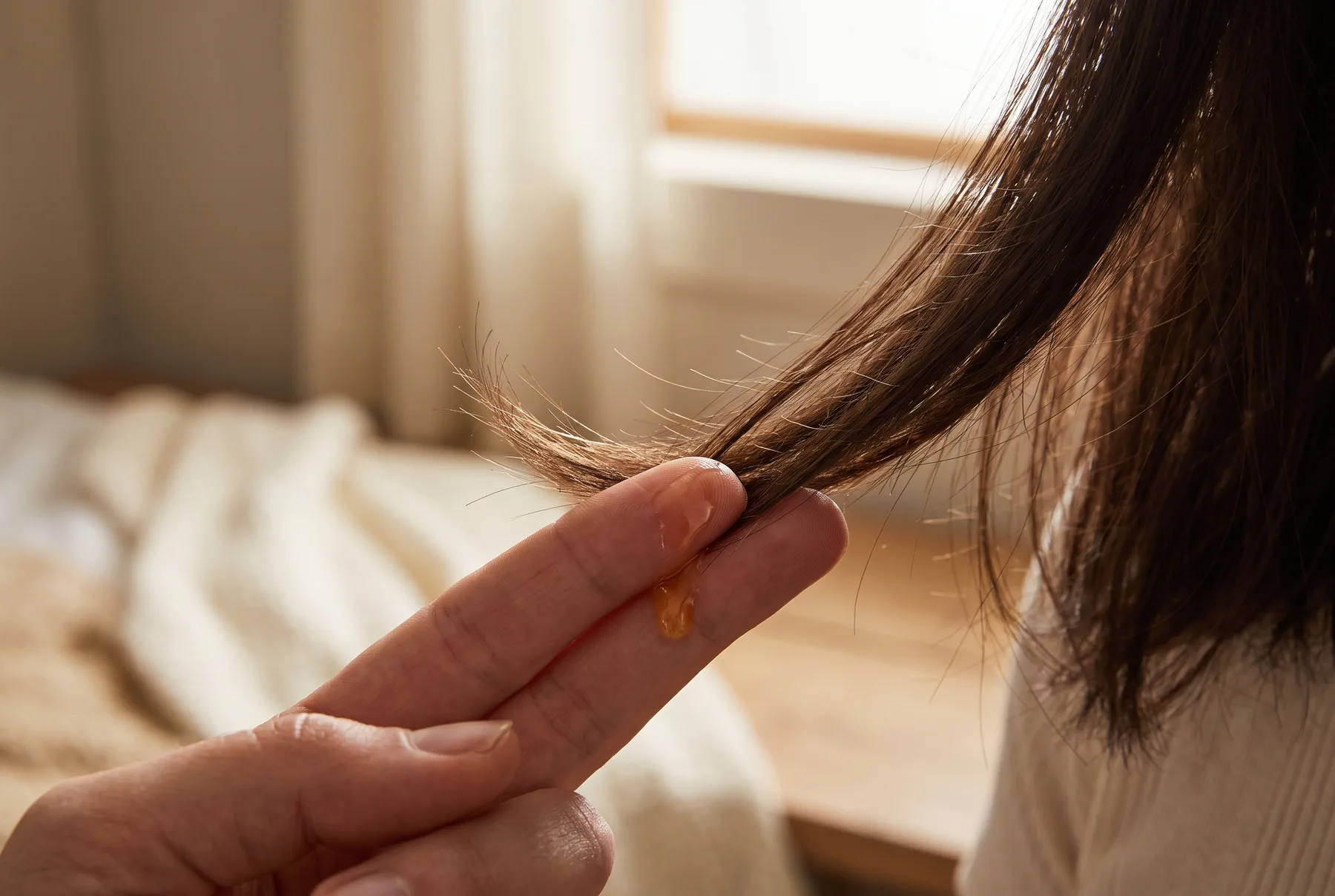
Celine Claire Moroccan Argan Oil is a 100 ml hair oil with four documented methods. Choose one method for the result you want:
- Overnight hair-and-scalp method: 8–10 drops, massage for approximately 10 minutes, wrap, leave overnight and shampoo in the morning.
- Shampoo boost: mix 1–2 drops into the normal amount of shampoo, then wash and rinse.
- Leave-in method: apply 2–3 drops after shampooing and towel-drying, then style.
- Dry-hair finishing method: smooth 1–2 drops lightly over clean, dry lengths and ends.
For a direct comparison with other finishing oils, method four is the relevant one. Start with one drop if the hair is fine, short, low-density or easily weighed down.
The current product record contains conflicting formula descriptions across sources. Review the current production ingredient list before describing it as pure, silicone-free or organic. The product name and method remain useful without guessing the formula.
A practical oil selector
Choose argan when you want measured shine, softer-feeling ends and a flexible finishing method.
Choose coconut when you want a deliberate pre-wash oiling method and like how your hair responds to its richer feel.
Choose jojoba when a jojoba-based finished formula suits your preferred texture and placement.
Choose castor or olive when you want a richer wash-out method and can control the heavier application.
Choose a silicone-based serum when slip and surface polish are the main styling goals and the complete formula suits your hair.
No choice has to be permanent. Test one method at a time so you can tell what changed.
Frequently asked questions
Is argan oil better than coconut oil for hair?
Neither is universally better. Argan often fits a lightweight finishing role, while coconut oil has stronger fibre research for specific pre-wash and post-wash oiling conditions. Choose by method and hair response.
Is argan oil lighter than castor oil?
Castor oil is generally much more viscous. A formulated argan hair oil is often easier to spread as a finisher, although the complete formula still determines feel.
Is argan oil or jojoba oil better for fine hair?
Either may work in a suitable formula and small amount. Exact directions, application amount and placement matter more than the ingredient name alone.
Can I mix different hair oils together?
You can use a professionally formulated blend. Home mixing makes dose, stability, fragrance and irritation harder to predict. If you experiment, patch-test where appropriate and change one variable at a time.
Can hair oil repair split ends?
Oil can smooth the surface and make split ends look neater temporarily. It cannot permanently fuse a split fibre. Trimming removes the split.
Which oil is best for hair growth?
Do not choose a finishing oil as a treatment for hair loss. Hair loss has many possible causes and needs appropriate assessment when it is sudden, patchy or persistent.
Can I put hair oil on my scalp?
Only when the exact product and method permit scalp use. Stop if the scalp becomes irritated, and seek qualified advice for persistent symptoms.
Can I use argan oil every day?
Use the exact product according to its directions and hair response. For a dry-hair finish, begin with the smallest stated amount and avoid stacking several oily leave-ins.
Should oil go on wet or dry hair?
That depends on the method. Celine Claire's leave-in method goes on towel-dried hair; its finishing method goes on clean, dry hair. Do not merge the quantities.
Is a hair oil a heat protectant?
Only when the exact finished product carries a verified heat-protection claim and directions. Otherwise use a dedicated heat protectant.
Is natural oil always better than silicone serum?
No. Plant oils and silicone-containing serums have different composition and performance. Judge the complete formula, use instructions and result.
Is Celine Claire Moroccan Argan Oil pure argan oil?
The current product sources conflict. Check the current production ingredient list before making a purity claim.
Is Celine Claire Moroccan Argan Oil made in Canada?
Celine Claire is a Canadian haircare brand. Do not claim the finished product is Made in Canada without current SKU-specific manufacturing documentation.
Sources
- Rele AS, Mohile RB. “Effect of mineral oil, sunflower oil, and coconut oil on prevention of hair damage.” Journal of Cosmetic Science. 2003. PubMed:
https://pubmed.ncbi.nlm.nih.gov/12715094/ - Dias MFRG et al. “Hair Oils: Indigenous Knowledge Revisited.” International Journal of Trichology. 2022.
https://pmc.ncbi.nlm.nih.gov/articles/PMC9231528/ - Abdalla S, Aroua MK, Gew LT. “A Comprehensive Review of Plant-Based Cosmetic Oils.” ACS Omega. 2024.
https://pmc.ncbi.nlm.nih.gov/articles/PMC11541506/ - American Academy of Dermatology. “Dermatologists' top tips for using leave-in conditioner.” Updated March 26, 2024.
https://www.aad.org/public/everyday-care/hair-scalp-care/hair/leave-in-conditioner-tips - Celine Claire Moroccan Argan Oil product master and live exact-product record:
https://celineclaire.com/product/morrocan-argan-oil/