

Build colour care around four separate jobs: cleanse when the scalp needs it, condition the lengths, tone only when unwanted warmth appears, and protect before heat, sun or swimming exposure.
Not every coloured shade needs purple shampoo. Not every wash needs a mask. The best routine changes according to what you see and feel today: oily roots, dry ends, yellow-looking warmth, roughness, fading or styling exposure.
The quick weekly framework
| What the hair needs | Routine direction |
|---|---|
| Colour looks balanced and hair feels comfortable | Regular compatible shampoo and conditioner |
| Colour looks balanced but lengths feel dry | Regular cleansing plus conditioner or a scheduled non-purple mask |
| Blonde or lightened sections look yellow | Scheduled purple shampoo or purple mask |
| Yellow warmth is stronger and hair tolerates both products | A conservatively timed full purple routine |
| Heat tools are planned | Verified heat protectant plus lowest effective heat |
| Swimming or strong sun exposure is planned | Physical protection, careful preparation and prompt post-swim rinse |
| Recent salon service | Follow the colourist's exact waiting period and aftercare first |
Give each wash one main purpose. Adding every treatment at once makes it harder to understand what helped.
Begin with the service you received
“Colour-treated” covers very different processes. A semi-permanent darker shade, permanent oxidative colour, highlights and extensive lightening do not leave every head of hair in the same condition.
Ask your colourist:
- when to complete the first wash;
- which cleansers are compatible;
- whether purple care suits the formula and final tone;
- when heat styling, swimming or another chemical service can resume;
- which areas are most porous or fragile;
- what change should trigger a professional correction rather than more home toning.
The exact service instructions outrank a generic schedule.
Wash according to the scalp, not a colour myth

There is no universal rule that all coloured hair must be washed once or twice per week. An oily scalp, frequent exercise, dry shampoo, styling residue, texture and density all affect frequency.
Wash when the scalp becomes oily, dirty, sweaty or coated. Apply shampoo mainly at the roots, massage gently with fingertips and let the lather move through the lengths while rinsing.
Very hot water can make a wash feel harsher. Use comfortably lukewarm water, rinse completely and avoid rough scrubbing through lightened ends.
No shampoo can guarantee that colour never fades. Washing, sun, heat, water chemistry and the colour service itself all influence how a result changes over time.
Use regular moisture care on most wash days
When the colour looks right but the hair feels dry, rough or harder to detangle, use a moisture-focused wash rather than adding more toning pigment.
A simple Celine Claire route is:
- Cleanse with Argan Oil Hydrating Shampoo.
- Remove excess water.
- Apply Argan Oil Hydrating Conditioner according to its current five-minute method.
- Rinse thoroughly.
- Towel-blot and add leave-in support only where needed.
- Apply Heat Shield before heated styling.
Schedule Argan Oil Hair Mask when richer care is needed. Follow its exact 2–3-minute direction and current instruction to follow with conditioner. Do not combine the Argan Mask with Purple Mask automatically.
Use purple products only for the right colour need
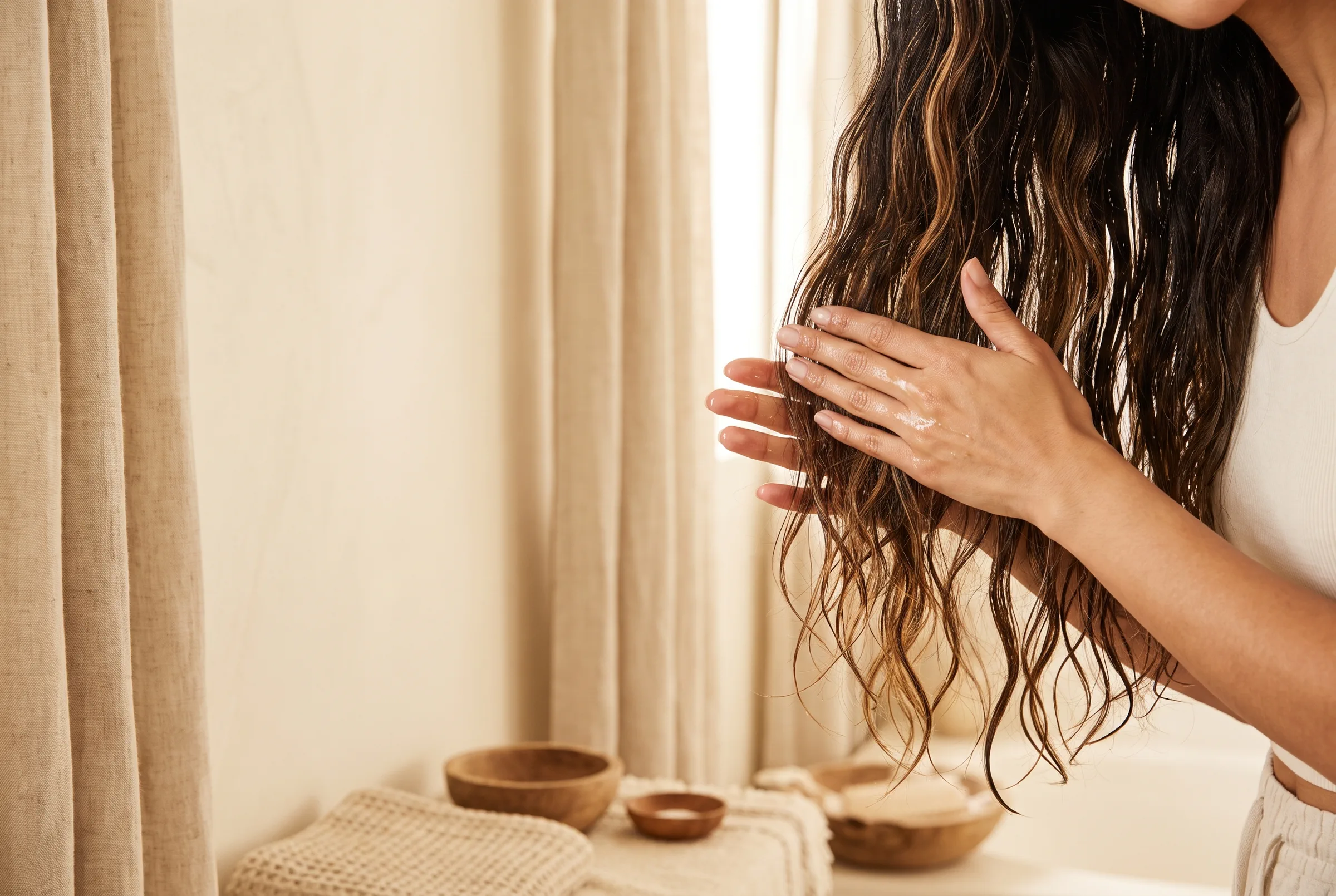
Violet pigment is most relevant when blonde, platinum, silver, grey, highlighted or lightened sections show yellow-looking warmth.
Purple shampoo and mask do not lighten hair. They deposit temporary pigment that can make yellow warmth appear more neutral. They cannot permanently correct uneven bleach, very orange colour or a major salon-colour problem.
For untreated brunette, red, copper or fashion-colour hair without blonde sections, a purple routine may provide little useful tonal change.
Choose purple shampoo, mask or both
Purple shampoo day
Choose Silver & Purple Shampoo when the hair needs cleansing plus temporary toning.
- Wear gloves.
- Apply to wet hair.
- Leave for one minute for subtle toning or up to five minutes for more intensity.
- Rinse thoroughly.
- Follow with compatible conditioner.
The current direction is once weekly.
Purple mask day
Choose Purple Mask when the hair needs toning plus a richer conditioning step.
- Cleanse with a compatible shampoo.
- Skip regular conditioner.
- Apply Purple Mask to wet target sections.
- Leave for no more than five minutes.
- Rinse thoroughly.
Use weekly or as needed. The older 10- and 20-minute directions do not control.
Full purple routine
Use both only when yellow-looking warmth is more visible and the hair has handled each product separately.
Start with conservative timing for both products. Very pale, porous or unevenly lightened sections may take pigment quickly, so test a hidden strand and assess the result after drying before repeating the full routine.
Condition for the hair's texture and density
Colour care should respect the existing pattern rather than treating straight hair as the default.
Fine or low-density hair
Use less conditioner, mask, leave-in and oil. Concentrate rich products through the ends and protect root volume. If the finish is flat, reduce overlapping layers before removing conditioning entirely.
Thick or high-density hair
Work in sections so the product reaches the inner layers. More product may be needed, but even distribution usually matters more than one large application.
Wavy, curly or coily hair
Detangle gently during the conditioning stage. Apply leave-in to evenly damp sections, then air-dry or diffuse with compatible heat protection. Purple care should tone the colour without brushing out or suppressing the natural pattern.
Protect before heat styling
Colouring and lightening can make some sections more vulnerable to roughness and breakage. Heat exposure adds another variable.
Before a blow-dryer, flat iron, curling iron or diffuser:
- Apply a verified heat-protection product evenly.
- Work in sections instead of coating only the surface.
- Use the lowest effective setting.
- Keep airflow or the tool moving.
- Limit repeated passes.
- Make sure hair is dry before a flat iron or curling tool touches it.
Celine Claire Heat Shield Hair Spray can be used on damp hair before blow-drying or dry hair before direct-contact hot tools. Allow any visible spray wetness to dry before using an iron.
Do not rely on ordinary oil or leave-in conditioner as heat protection unless the exact label supports that claim.
Care around sun and swimming

Sunlight can affect hair fibre and colour appearance, with lighter and processed hair receiving particular attention in dermatology guidance. A wide-brimmed hat or shade provides straightforward physical protection.
Before swimming, use a swim cap where practical. If your professional routine allows it, wet the hair with clean water and apply a compatible protective leave-in or oil method. After swimming, rinse promptly and cleanse as needed to remove pool or saltwater residue, then condition.
Do not schedule a major lightening service immediately before an intense sun-and-pool trip without discussing timing with the colourist.
If blonde hair develops a green cast after pool exposure, repeated purple product is not automatically the correction. Ask a colour professional, because the cause and corrective colour strategy differ from ordinary yellow warmth.
Finish without overloading the hair
Use leave-in conditioner for damp-hair detangling and styling support. Use Moroccan Argan Oil only through one of its separate approved methods.
For a dry-hair finish, spread one to two drops lightly through clean lengths and ends. Begin with one drop on fine, short or easily weighed-down hair. Keep it away from roots unless the chosen method specifically includes scalp use.
Oil can add polish and soften the feel of dry ends, but it cannot permanently fuse split ends or reverse chemical processing.
A flexible two-week rhythm
This example shows decisions, not a mandatory calendar.
Wash A: regular moisture care
Compatible shampoo, rinse-out conditioner, optional leave-in, heat protection when needed.
Wash B: tone if needed
Purple shampoo plus conditioner, or regular shampoo plus Purple Mask. Skip purple care when the colour already looks balanced.
Wash C: richer care if needed
Regular shampoo, scheduled Argan Oil Hair Mask, current follow-up conditioner instruction, then gentle styling.
Between washes
Use a trace of leave-in or finishing oil only on areas that need it. Avoid layering dry shampoo, cream and oil repeatedly over the scalp and roots.
The next two weeks may look different. Let scalp condition, tone and hair feel determine the sequence.
Signs the routine needs adjusting
- A violet or grey cast appears: pause purple products and reduce timing next time.
- Warmth remains orange or red: seek a colour-specific correction rather than extending violet-product timing.
- Hair feels coated or flat: reduce rich layers and finishing oil.
- Ends remain rough: review conditioning, heat, detangling and trim needs.
- Hair snaps or feels unusually fragile: pause aggressive styling and chemical services, then seek professional assessment.
- Scalp burns, swells or develops a rash after colour: stop exposure and seek medical advice.
Frequently asked questions
Does every type of colour-treated hair need purple shampoo?
No. Purple shampoo belongs mainly to blonde, silver, grey, highlighted or lightened areas showing yellow-looking warmth.
How often should I wash colour-treated hair?
Wash according to scalp oil, dirt, sweat, buildup, texture and professional aftercare. There is no universal weekly number.
How often should I use Silver & Purple Shampoo?
The current Celine Claire direction is once weekly.
How long should I leave purple shampoo on?
One minute for subtle toning or up to five minutes for more intensity.
How long should I leave Purple Mask on?
No more than five minutes under the current direction.
Do I use conditioner after Purple Mask?
No. Purple Mask is the conditioning step on that wash day.
Can I use purple shampoo and Purple Mask together?
Yes, when stronger toning is needed and both products suit the hair. Use conservative timing and do not stack them automatically.
What if my colour looks right but my hair feels dry?
Choose regular moisture-focused shampoo, conditioner or a scheduled non-purple mask instead of adding unnecessary violet pigment.
Can purple products fix orange hair?
Violet is most relevant to yellow warmth. Strong orange or red warmth may need a different professional colour strategy.
Does purple shampoo lighten hair?
No. It deposits temporary pigment and does not bleach or lift hair.
Can colour-treated hair use argan products?
Celine Claire positions its Argan Hydrating Shampoo and Conditioner for colour-treated hair. Follow current labels and your colourist's aftercare.
Do I need heat protectant on colour-treated hair?
Use a verified heat protectant whenever heat tools are used, along with the lowest effective setting and limited passes.
Can I use Moroccan Argan Oil before heat?
Only through an exact approved method and claim. Do not use an ordinary finishing oil as a substitute for Heat Shield.
What should I do after swimming?
Rinse promptly, cleanse as needed and follow with conditioning care. Use a swim cap and physical sun protection where practical.
Will these products stop colour from fading?
No product can guarantee zero fading. The service, washing, heat, sun, swimming and water chemistry all affect the result.
Is Celine Claire made in Canada?
Celine Claire is a Canadian haircare brand. Individual product origin requires current SKU-specific documentation.
Sources
- American Academy of Dermatology, “Coloring and perming tips for healthier-looking hair”:
https://www.aad.org/public/everyday-care/hair-scalp-care/hair/coloring-perming-tips - American Academy of Dermatology, “Must-try summer hair care”:
https://www.aad.org/public/everyday-care/hair-scalp-care/hair/summer-hair-care - Bloch LD et al. “Chemical and physical treatments damage Caucasian and Afro-ethnic hair fibre.” PubMed:
https://pubmed.ncbi.nlm.nih.gov/31237371/ - Approved Celine Claire product masters, Colour-Treated Hair concern master and Blonde Hair Routine master.