

A hair gloss is a temporary or demi-permanent treatment designed to add shine, refresh tone, or do both. It can be clear or tinted, applied in a salon or used at home, and formulated with or without a developer. The name alone does not tell you how it works. Read the product description, colour result, processing directions and safety warnings before deciding whether it suits your hair.
Gloss is useful when you want a polished surface or a subtle colour adjustment without asking for the same result as permanent colour. It cannot rebuild broken hair, lift dark hair several levels or guarantee grey coverage. Those jobs need different products or services.
- What clear and tinted glosses do
- Gloss versus glaze, toner and permanent colour
- Salon and at-home options
- A goal-based suitability guide
- Longevity and aftercare
- Safety and allergy precautions
- How Celine Claire products can support the routine
What does a hair gloss do?
“Hair gloss” covers more than one type of formula. Most glosses aim to make the hair surface look smoother and more reflective. A tinted formula may also deposit colour to refresh faded lengths, refine warmth, deepen an existing shade or add a translucent tonal effect.
Some salon glosses are demi-permanent colour services mixed with a low-strength developer. Other formulas deposit colour without the same process. Clear options focus on shine and feel rather than an intentional shade change. Brands may call a similar product a gloss, glaze, toner or colour refresh, so the label and consultation matter more than the category name.
Clear gloss versus tinted gloss

Clear hair gloss
A clear gloss is chosen when the main goal is shine, softness or a smoother-looking finish without intentionally changing the shade. It may be useful on natural or coloured hair, but it cannot correct brassiness or replace missing pigment because it does not supply the needed tone.
Tinted hair gloss
A tinted gloss deposits a shade or tonal direction. A colourist may use one to refresh a brunette, support copper richness, reduce the look of unwanted warmth or adjust blonde tone. The result depends on the starting colour, porosity and chosen formula.
Tint is not the same as lift. A deposit-focused gloss generally cannot turn dark hair blonde. It may also appear deeper or more intense on porous, lightened ends than on less porous roots. When the starting colour is uneven or the correction is high-stakes, salon formulation is the safer route.
Hair gloss, glaze, toner and colour compared
The industry does not use these words consistently. Ask what the actual service contains and what it is expected to change.
| Term | Typical job | Colour change | Commitment | Question to ask |
|---|---|---|---|---|
| Clear gloss | Add surface shine and a conditioned feel | None intended | Temporary or gradual fade | Does this formula contain pigment or developer? |
| Tinted gloss | Refresh or shift tone while adding shine | Sheer deposit or tonal change | Gradual fade | How will it read on my current level and porosity? |
| Glaze | Often a lighter, surface-focused shine or colour effect | Usually subtle | Often shorter, but terminology varies | Is this actually different from the salon's gloss? |
| Toner | Refine unwanted undertones after colour or lightening | Targeted tone adjustment | Product-dependent | Which undertone is being neutralized or added? |
| Demi-permanent colour | Deposit colour with limited or no lift, depending on system | More defined deposit | Gradual fade | Is a developer used, and what result is realistic? |
| Permanent colour | Change natural colour through a longer-lasting oxidative process | Deposit and possible lift | Regrowth or lasting colour remains | Is permanent colour necessary for my goal? |
These are working definitions, not universal rules. A salon may call its demi-permanent colour service a gloss, while an at-home brand may use “gloss” for a conditioning colour mask. Compare the instructions, not only the front label.
What are the realistic benefits?
More visible shine
A smoother, conditioned hair surface reflects light more evenly. The improvement is cosmetic and temporary. It can make hair look more polished without claiming that internal damage has been repaired.
A colour refresh between larger changes
A suitable tinted gloss can add back some tonal richness as colour fades. It may help a salon maintain a chosen brunette, red, copper or blonde direction without repeating a permanent colour service over every length.
A softer transition as colour fades
Many glosses fade gradually rather than leaving the same type of hard regrowth line associated with a permanent colour change. The exact fade pattern depends on the shade, starting colour and formula.
Tone refinement
A colourist can select a tone according to colour theory and the current canvas. Violet, blue, green, gold, copper and other directions serve different jobs. Choosing “cool” or “warm” from a screen without assessing the hair can produce an unexpected result.
A lower-commitment trial
A temporary or demi-permanent gloss can let someone explore a subtle tonal direction before making a larger change. “Lower commitment” does not mean risk-free or instantly reversible. Porous hair can hold colour longer or grab unevenly.
What a gloss does not do
A gloss cannot permanently repair split ends, reverse bleach damage, replace lost structural bonds or make every strand stronger. Conditioning ingredients may improve slip, softness and the appearance of roughness while the effect remains on the hair.
It is also not a straightening service. Hair may look smoother or less frizzy after conditioning and styling, but a gloss does not perform the same job as keratin treatment, Hair Botox, rebonding or permanent straightening.
Grey results vary widely. A clear gloss adds no colour. A translucent tinted gloss may alter the tone of grey or blend a small amount visually, but it should not be sold as guaranteed coverage unless the exact system documents that result.
Who may consider a hair gloss?
Natural, uncoloured hair
A clear gloss may suit someone who wants shine without an intended shade change. A tinted gloss can still affect natural hair, so confirm how much deposit is expected.
Faded colour-treated hair
Gloss is often used between larger colour appointments to refresh lengths and ends. It should match the existing colour plan rather than layer an unrelated shade over it.
Blonde, highlighted, silver or grey hair
A tinted gloss may refine tone, while a clear gloss may focus on shine. Very porous lightened hair can absorb colour quickly or unevenly. Ask for a strand test when the result is uncertain.
Brunette, black, red or copper hair
A tone-on-tone gloss may restore richness or adjust reflection. It will not create major lightening on a dark base.
Straight, wavy, curly and coily hair
Gloss services are available for every texture, but the service and styling should respect the hair's condition and pattern. Do not judge the result only by a heat-styled finish if the customer normally wears curls or coils. Ask how the hair will be evaluated in its usual state.
Fine or low-density hair
Choose a formula and aftercare that do not leave more coating than the hair needs. A gloss can add shine, but it should not promise new volume or density.
Salon gloss or at-home gloss?
Choose a salon when
- the colour is uneven, banded or previously corrected;
- the hair is heavily highlighted, bleached or very porous;
- the goal requires a precise neutralizing or tonal formula;
- grey blending or coverage is important;
- you do not know which colour family fits;
- another chemical service is planned;
- the scalp has reacted to colour before.
A colourist can assess the starting level, undertone, porosity and service history. Ask what product is being used, whether it contains developer, whether a strand or allergy alert test is needed and what maintenance is realistic.
Consider an at-home product when
- the change is modest and clearly described on the label;
- the product is made for consumer use;
- the starting colour matches the product's shade guidance;
- you can follow every safety, timing and application instruction;
- you are prepared for the result to vary across porous sections.
Do not buy a professional colour tube and improvise a developer, ratio or processing time. Do not mix different dye products. Consumer directions exist for a reason.
How to choose a hair gloss
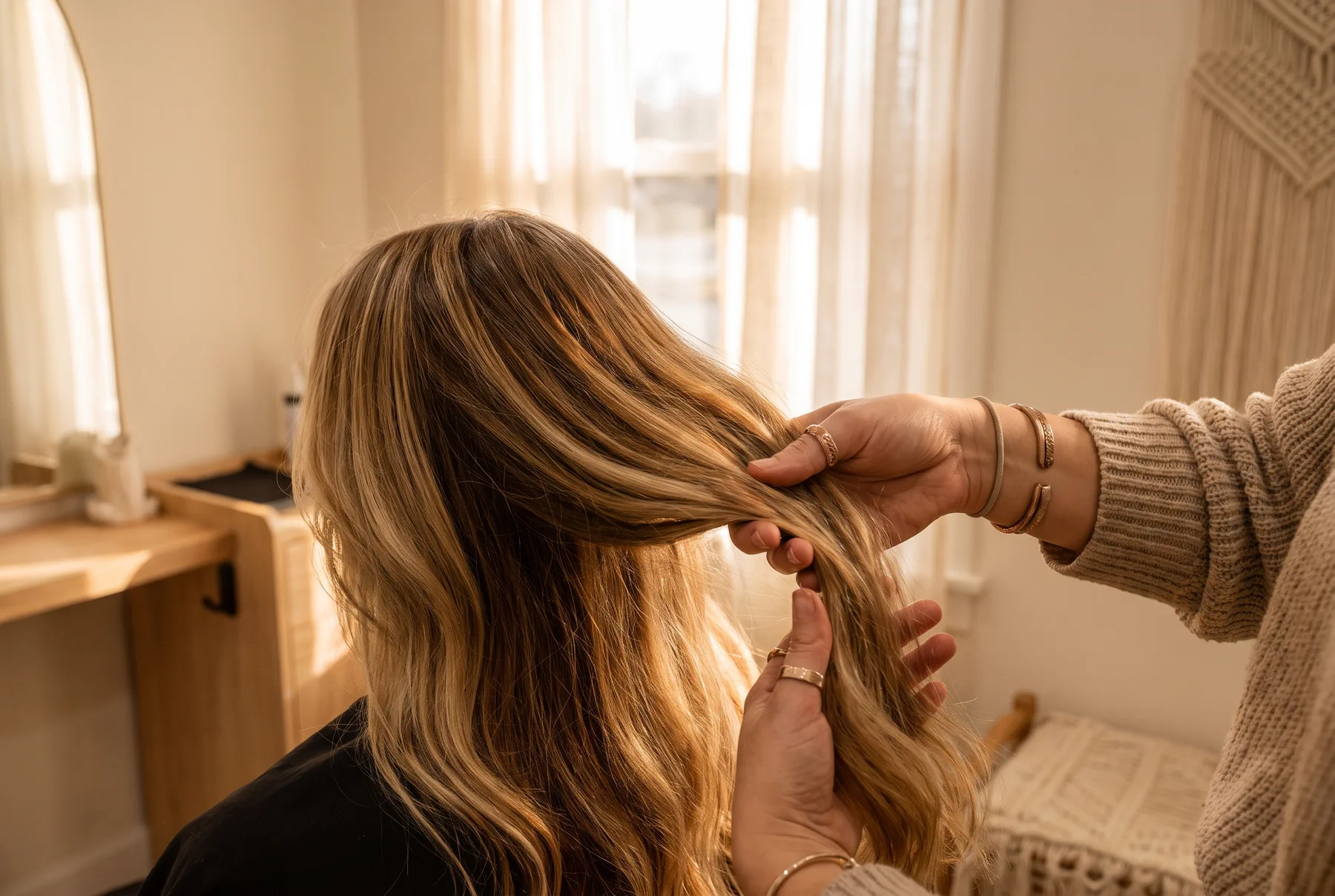
1. Name the actual goal
Choose one primary goal: clear shine, warmer tone, cooler tone, richer depth, faded-colour refresh or professional correction. “Make it glossy” is not enough information when pigment is involved.
2. Identify the starting colour
Record whether the hair is natural, permanently coloured, demi-coloured, highlighted, bleached, henna-coloured or previously corrected. Include the most recent service and any uneven sections.
3. Check whether the product is clear or tinted
Never assume a product called “gloss” is colourless. Read the shade name, swatches, suitable starting levels and expected result.
4. Check whether it uses a developer
Some gloss systems require a matching developer and professional mixing. Others are ready to use. Follow only the instructions for that exact formula.
5. Read the safety directions
Follow the manufacturer's preliminary test or allergy alert test before each colour application where directed. Wear gloves, protect the eyes and do not exceed the processing time.
6. Consider a strand test
A hidden strand can reveal whether porous ends become too dark, too cool or too warm. A satisfactory strand result does not replace an allergy alert test; the two checks answer different questions.
7. Plan the aftercare before applying colour
Choose a cleanser, conditioner, heat protection and toning schedule appropriate to the finished shade. Buying several products after the colour begins fading is a poor substitute for planning.
How long does a hair gloss last?
There is no universal four-to-six-week rule. A gloss may last several washes or several weeks depending on whether it is a surface treatment, colour-depositing conditioner, semi-permanent formula or demi-permanent salon service.
Fade is also affected by:
- how often the hair is washed;
- water temperature and cleansing strength;
- starting porosity and prior lightening;
- selected shade and depth;
- sun, swimming and repeated heat styling;
- the amount of pigment deposited;
- the manufacturer's formula and processing directions.
Use the product's stated range as an estimate, not a guarantee. Reapply according to its directions and the condition of the hair, not a generic calendar.
Hair-gloss aftercare
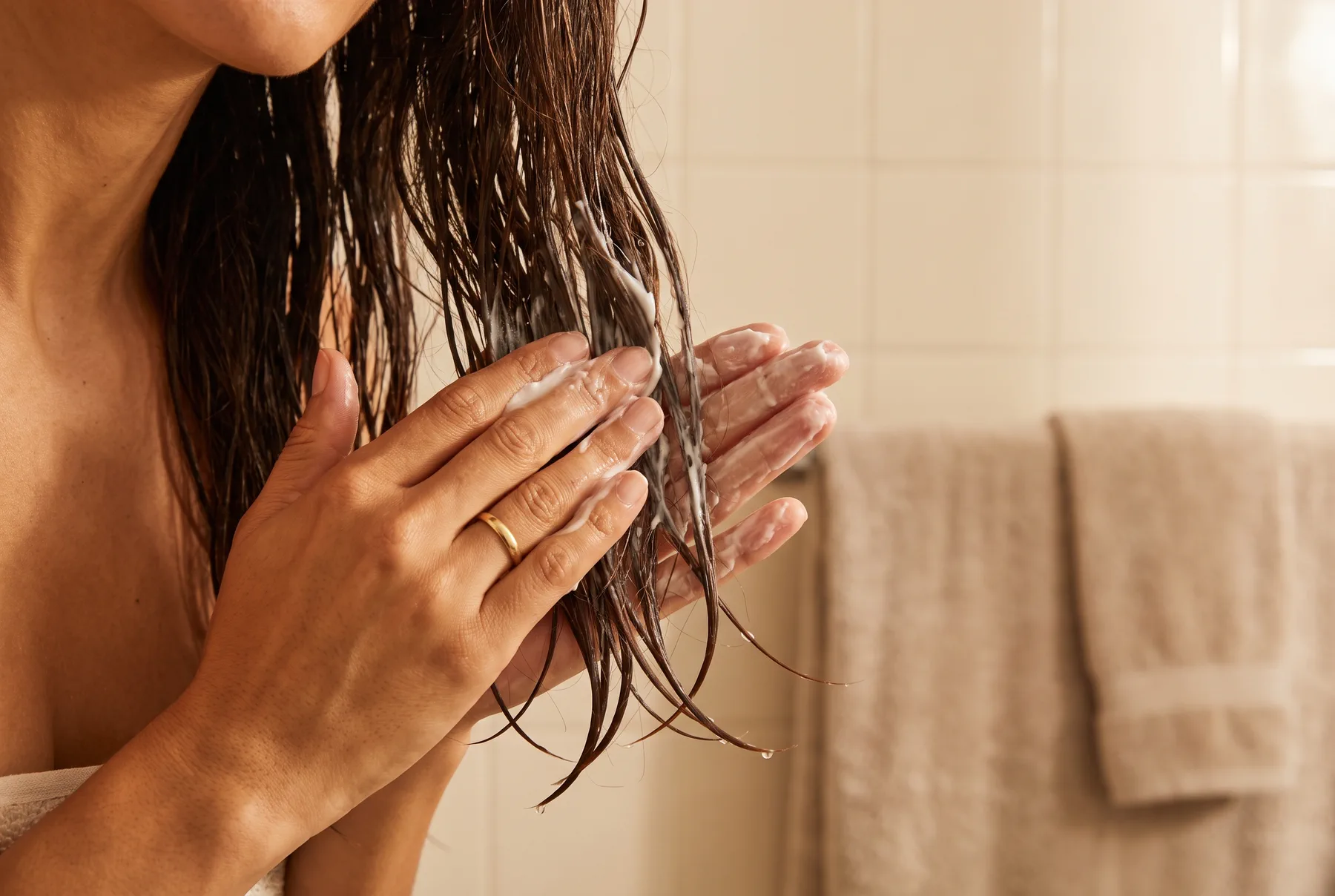
Follow the service directions first
The salon or manufacturer may specify when to shampoo after the service. Do not replace that timing with a universal online rule.
Wash according to the hair's needs
Lukewarm water and appropriate wash frequency can help reduce unnecessary dryness and rapid fade. A colour-compatible shampoo may be useful, but “sulfate-free” is not the only way to judge a formula. Use the cleanser that works with the colour service, scalp and hair type.
Condition the lengths
Colour-treated or porous hair often benefits from consistent conditioning. Apply the chosen conditioner according to its label and concentrate on the lengths where needed.
Use heat deliberately
High temperatures and repeated passes can leave coloured hair looking dry or dull. Apply a verified heat-protection product before hot tools and use the lowest effective tool setting for the style.
Protect the colour from avoidable exposure
Sun, chlorinated pools and frequent clarifying can affect colour and feel. Use practical protection based on the activity and follow the colourist's advice before swimming soon after a service.
Avoid stacking unnecessary tone
A tinted gloss, purple shampoo and purple mask all deposit or influence tone in different ways. Using every toning step automatically can push blonde or grey hair too cool or leave uneven deposit. Choose the step that addresses the current result.
Safety before colour-depositing gloss
Health Canada advises following the preliminary skin-test directions supplied with permanent and semi-permanent hair dyes before each use. Sensitivity can develop after previous uneventful applications.
Do not apply colour to an irritated, scratched, sunburned or damaged scalp. Stop and rinse if the product causes significant burning or rapidly increasing discomfort. Seek urgent care for breathing difficulty, facial swelling or another severe reaction.
Read every warning and ingredient list. Keep colour away from the eyes, never use scalp hair dye on eyelashes or eyebrows, wear gloves when instructed, use a timer and rinse as directed. A salon appointment does not remove the need to disclose previous reactions.
Where Celine Claire products fit
Celine Claire does not currently sell a verified hair gloss in its approved retail catalogue. The products below support care around colour and styling; none should be renamed or presented as the gloss itself.
For regular moisture-focused washing
Argan Oil Hydrating Shampoo and Argan Oil Hydrating Conditioner form a shampoo-and-conditioner path for dry or colour-treated hair. Follow each product's directions rather than treating them as colour depositors.
For scheduled moisture care
Argan Oil Hair Mask is a separate rinse-out mask for dry or damaged-looking hair. It is not a gloss and does not deposit a salon gloss shade.
For blonde, silver, grey or highlighted tone
Silver & Purple Shampoo provides highly pigmented cleansing and temporary violet toning. Purple Mask for Blonde Hair provides conditioning and temporary violet toning and replaces conditioner on mask day. Do not use both automatically after a tinted gloss; assess the tone first.
Before heat styling
Heat Shield Hair Spray is applied to damp or dry hair before hot tools according to its product directions. It does not extend colour permanently or replace temperature control.
For measured finishing care
Moroccan Argan Oil has four distinct methods. For a polished dry-hair finish, use one to two drops on clean, dry hair and avoid massaging that finishing method into the scalp. Do not combine all four methods automatically.
Browse the Colour-Treated Hair guide for a goal-based product path or use the Hair Quiz for product discovery.
Frequently asked questions
Is hair gloss the same as hair dye?
Some tinted glosses are forms of semi- or demi-permanent hair colour, while others are temporary colour-depositing conditioners. A clear gloss may contain no intentional tint. Read the actual formula and service description.
Does hair gloss contain peroxide or ammonia?
It depends on the product. Some glosses use a developer, and some do not. Some are marketed as ammonia-free, but that cannot be generalized to every gloss. Check the label or ask the colourist.
Can hair gloss lighten dark hair?
A deposit-focused gloss is not designed for major lightening. Moving dark hair substantially lighter usually requires a separate colour or lightening process and professional assessment.
Can I use gloss on natural hair?
Yes, if the selected product suits the goal and starting shade. Choose clear gloss when no intentional colour change is wanted, and review tinted results carefully before use.
Can I use gloss on colour-treated hair?
Gloss is often used to refresh colour-treated lengths or adjust tone. Previous colour, bleach and porosity affect the result, so correction work and uneven colour are better assessed by a professional.
Can I use gloss on curly or coily hair?
Gloss products can be used across hair textures. Choose a service compatible with the hair's condition and normal styling pattern, then use aftercare that does not overload or dry the hair.
Will hair gloss cover grey?
Coverage varies. Clear gloss adds no pigment. Some tinted or demi-permanent systems may blend a portion of grey, while others remain translucent. Confirm the documented grey result for the exact formula.
Can hair gloss repair damaged hair?
A gloss may make rough hair feel softer and look shinier through conditioning and surface effects. It does not reverse structural damage or permanently repair split ends.
Is hair gloss damaging?
Risk depends on the formula, existing hair condition and correct use. Any colour product can produce an unwanted result or reaction. Follow all directions and discuss fragile, heavily lightened or previously reactive hair with a qualified colourist or dermatologist.
Is a salon gloss better than an at-home gloss?
They serve different situations. A salon is valuable for custom tone, porous or uneven hair and correction. A consumer gloss may suit a modest change when the starting colour matches the label and every instruction can be followed.
How long should I leave hair gloss on?
Use only the processing time on the exact product or the colourist's service protocol. Leaving colour on longer does not guarantee more shine and can create an unintended result or irritation.
How often can I repeat a gloss?
Follow the formula's directions and consider how the colour is fading and how the hair feels. Do not repeat it automatically every four weeks because another gloss uses that schedule.
Should I shampoo immediately after a gloss?
Follow the exact aftercare directions. Salon and at-home formulas differ, so one universal waiting period is unreliable.
What is the difference between gloss and toner?
A toner is selected to refine an unwanted undertone or establish a desired one. A tinted gloss can perform that job while emphasizing shine, but salons and manufacturers may use the terms interchangeably. Ask what tone and formula are being applied.
What is the difference between gloss and glaze?
Glaze often describes a shorter-lived surface shine or colour treatment, while gloss often describes a demi-permanent deposit. The distinction is not standardized. Compare the ingredients, developer, result and expected fade.
Can I use purple shampoo after a gloss?
Only when violet toning still suits the current colour. A fresh tinted gloss may already have neutralized warmth. Adding highly pigmented purple products immediately and repeatedly can over-tone porous areas.
When should I avoid an at-home gloss?
Avoid improvising at home when the scalp is irritated, a previous dye caused a reaction, the hair is severely compromised, the colour is banded, correction is needed or the instructions do not clearly match the starting shade.
Sources
- Health Canada,
Hair dyeshttps://www.canada.ca/en/health-canada/services/cosmetics/hair-dyes.html - Health Canada,
Safety of Cosmetic Ingredientshttps://www.canada.ca/en/health-canada/services/consumer-product-safety/cosmetics/labelling/safety-ingredients.html - American Academy of Dermatology,
Coloring and perming tips for healthier-looking hairhttps://www.aad.org/public/everyday-care/hair-scalp-care/hair/coloring-perming-tips - U.S. FDA,
Cosmetics Safety Q&A: Hair Dyeshttps://www.fda.gov/cosmetics/resources-consumers-cosmetics/cosmetics-safety-qa-hair-dyes - Wella Professionals,
Shinefinity Zero Lift Hair Glazefor one current example of a professional acidic demi-permanent gloss systemhttps://www.wella.com/professional/en-US/shinefinity - L'Oréal Professionnel,
Guide to Hair Glossfor one current professional-brand terminology examplehttps://us.lorealprofessionnel.com/hair-mag/guide-to-hair-gloss - Existing Celine Claire article and WordPress REST metadata for migration history.
- Approved Celine Claire product masters for exact aftercare roles.